Panic Is Not a Policy: A Reply to Neal Gabler on AI
The most interesting question about AI is not what it will do to us, but what it may allow us to do that was impossible before.
|
Listen To This Story
 |
Every transformative technology arrives with its own funeral oration, composed in advance and mistaking unease for prophecy. A couple of months ago, here in WhoWhatWhy, my colleague Neal Gabler wrote one for artificial intelligence — eloquent, alarmed, and, like every oration in the genre, at least as revealing about the fear as about the thing feared.
The genre is ancient. Socrates warned that writing would hollow out memory and leave us the conceit of wisdom in place of the thing itself. The printing press was going to drown Europe in heresy — and it did unsettle a few thrones, just before it produced the Enlightenment. The railroads were a satanic intrusion. Electricity would burn us in our beds. The automobile would poison the air and shatter the family. The telephone, the radio, the television, the internet — each summoned a prophet to announce that the men behind it were soulless and the human spirit about to be extinguished.
Every one of those prophets was eloquent. Most were wrong. But the catalog proves nothing on its own: That prior alarms were overblown is no guarantee this one is, and it would be its own fallacy to pretend otherwise.
The catalog matters for a different reason. It exposes a recurring habit of mind — one that mistakes the disruption every powerful tool causes for proof of malice in whoever built it, and that never troubles to show why the contemporary case differs from the ones that cried wolf.
The genre’s weakness is not that it is always wrong. It is that it rarely does the work of distinguishing a real cause for alarm from a reflex. And this particular oration refuses that work on principle.
Watch the central move. Gabler establishes, with great care, that he is not arguing about AI itself — “a very complicated subject,” he concedes — but only about the men who own it. This is meant to sound modest. In fact, it is the whole trick. It keeps the apocalyptic charge against the technology — the images Gabler himself reaches for: the atomic bomb, Oppenheimer, “Death, the Destroyer of Worlds” — while disclaiming any duty to argue that the technology is in fact dangerous.
The doom is loaded into the men and detonated there. It is ad hominem polemic in the robes of moral philosophy, and stripped of costume, it reduces to this: I do not like these people, therefore the thing they build must be poison.
That is not analysis. It is a mood — a mood excused from the one task that could make it an argument, which is to show that the machine, and not merely its owners’ manners, is the danger.
And it rests on an assumption about markets that dissolves on contact: the belief that these men grow rich by making us miserable — that the trillion-dollar prize is extracted from a populace its makers despise. This is the true engine of the essay.
But contempt is not the mechanism that can carry the argument. Adam Smith settled that at the butcher’s counter two and a half centuries ago: The system does not run on the butcher’s benevolence, and it does not fail on his contempt. You may loathe your customer and grow rich only by serving him.
Two hundred million people did not click buy because Jeff Bezos loved them; the computer in your pocket, beyond the reach of any fortune in 1985, sits in a billion hands because it is useful, not because anyone was adored. Whether these men despise us is a question about their souls. It is not a question about whether the thing works.
Here the sharper objection deserves its hearing — the one available to Gabler, which he declines to make. There are goods whose adoption proves nothing: heroin, the slot machine, the feed engineered to keep the thumb moving, where “people chose it” is no defense at all because the choosing was the consequence of a manufactured dependency.
That is a serious argument and, if AI is heroin, it is the argument to make — name the needle: the job it deletes, the wage it breaks, the weapon it makes decisive, the deception it runs, the market it captures. Show the mechanism, and regulate the mechanism you have named.
But the essay does none of that. It does not diagnose a mechanism; it indicts a character. It offers the contempt of the dealers in place of the pharmacology of the drug — and contempt, however valid, is not a pharmacology.
Adoption is presumptive evidence of value. It can be rebutted, but only by naming the specific means through which a choice was engineered rather than freely made. The essay names none. It asks us to convict the technology on the biographies of its owners.
And here is the serious reply, the one the essay’s own method invites: Perhaps the biographies are all we have. The machine is still molten; its future forks in a thousand directions; and if we cannot yet read the thing, then the character of the few hands on it is not a trivial clue to where it will run. Watch the stewards, the reply goes, because their intentions are the best evidence of the outcome.
Granted — and grant the whole of it. Grant that the car is built to do 200 and the driver has been drinking. Every part of that picture is an argument for taking the keys: for the license, the limiter, the guardrail, the officer at the on-ramp. The more dangerous you believe the machine, and the less you trust the hands on it, the more — not less — urgent the case for constraint becomes.
What none of it argues for is standing on the shoulder and narrating the wreck as fate. Yet that is where the essay goes: Having declared the men all-powerful, it pronounces them unstoppable in the same breath. My fear is that they can’t be stopped, it says. That is not vigilance. It is surrender in the accent of alarm, and it abandons the single response that uncertainty genuinely licenses: the hard, unfinished labor of governing what no one yet understands.
The real question — who will regulate this, and who among them cannot be bought? — is the one the essay’s fatalism refuses even to ask.
Its own examples turn in its hand. It reaches, as the genre requires, for the robber barons — Andrew Carnegie’s Pinkertons, the Gilded Age cruelty. But what did they leave behind? Not better men; the Gilded Age improved no one’s character, and the inequality it bred came roaring back the moment the restraints slackened. What it left was infrastructure — steel, rail, oil, electrification, the physical nervous system of the modern economy, the very apparatus that funded the Progressive reforms the essay admires.
The Progressives did not strangle the goose; they regulated it while it kept laying. The income tax, antitrust, the Federal Reserve — corrections applied to an engine that never stopped producing.
That the restraints later wore thin is no case against the engine; it is a reminder that ropes fray, that even the strongest guardrails can need repair — or even improvement. The essay wants the reform without the engine, the restraint without the thing being restrained: a Progressive Era with nothing for the Progressives to do.
Then enters the star witness, and the witness is the pope. Not, to be fair, the Inquisition — Gabler enlists one modern and humane pontiff, a man who would surely have stood with Galileo against his jailers rather than beside them. Grant it. It only sharpens the problem, because it means Leo himself believes some errors must be corrected — Galileo’s judges chief among them.
So when his encyclical warns that human “error” is sacred, and that to correct it is to deny life itself, the principle cannot mean quite what it says, or its own author would have to leave Galileo under house arrest.
There is a truth in that reverence for error worth conceding without a flinch: A life in which nothing can go wrong is no life, and a game in which no shot can stray is not worth playing. The possibility of failure is what gives an achievement its stakes.
But that is a reason to keep error possible — not a reason to keep affliction uncured. The word “error” is quietly doing two jobs and hoping we won’t notice: It holds the chosen imperfection of the golfer, which no one would dream of automating away, in the same hand as the unchosen affliction — the pandemic, the famine, the illiteracy — that human beings have labored to repair in every century we have record of.
Revere the first without limit. To sanctify the second is to indict medicine, engineering, law, and science, the whole long labor we call progress. A philosophy that hallows error and forbids its repair is not humility. It is surrender, and it should answer to that name.
But the tell — the moment the case turns on itself — comes at Dario Amodei. Here, by the essay’s own account, is a man running one of these companies who takes the stakes with deadly seriousness, refuses certain uses out of conscience, and says plainly that no one can be fully certain how the thing will behave.
Skepticism about him is entirely fair: Conscience can be a posture, and it remains to be seen how much survives contact with the balance sheet. There is even a shrewder suspicion on offer — that the doom-talk is itself a sales pitch, the mogul advertising a product so potent it frightens its own maker, and Gabler is hardly the only one to have noticed it.
Grant that too. But it backfires: If the danger is only a sales pitch, then repeating it as prophecy means falling for it. Gabler can’t have it both ways. Either the danger is real, and he has to show how it works — or it’s hype, and he’s the one who bought it.
But the essay does not argue the skepticism so much as perform it. The conscience is waved off as marketing; the honesty about uncertainty is read as recklessness. Heads, the reckless oligarch is a monster; tails, the careful one is a fraud — and a charge that no conduct could ever answer is not a judgment. It is a grudge.
Notice what the performance throws away. If no one can be certain what AI will become — and no one can; that much of the alarm is honest — then apocalyptic certainty is as unearned as the boosters’ optimism, and the only defensible posture is the provisional one. “No one can be sure” is that posture. The essay punishes the single figure in it holding the epistemically honest position.
So we reach the word it hurls at the men it fears: disconnection — dissociated, in Noah Hawley’s line, from cause and effect, from meaning and history.
It is a strange charge to aim at the only people in the story who build things, because building is nothing but cause and effect — the daily, unforgiving discipline of watching what you make collide with the world and break, and fixing it, and watching it break again.
Whatever else may be said of them, the people shipping these systems are pressed against consequence in a way that judgment from a distance never is.
There is a disconnection in this drama. It does not sit where the essay places it. It sits in the posture of the piece itself: prophecy delivered from outside the act of making — certain of the outcome precisely because it never has to answer for being wrong.
The essay closes on Oppenheimer’s borrowed thunder — they have become Death, the destroyer of worlds.
Whether what is being built is a world or a bomb genuinely remains to be seen; that much the alarm gets right, and no honest observer should pretend otherwise.
And here the honest form of caution is not refusal but arithmetic: You weigh the risk against the reward and act on the balance. The essay performs half the sum — every risk tallied in full, the reward waved off as vague. That is not a weighing but a thumb on the scale.
Its stronger caution deserves stating, because the essay never quite does. The worry is not that the world is fine. It is that pouring more power into a world whose wisdom has not grown to match it may be a leap from the frying pan into the fire — new force in the same unreformed hands.
Related: God Damn AI
That worry is real, and it is the right one. But look where it points. If the danger is power outrunning wisdom, the answer is to build the wisdom up around the power — the rules, the institutions, the constraints that ratchet a tool toward its better uses.
That is difficult, and it is exactly the trouble that refusal spares us. And “fine as it is” is never neutral: It is fine for whomever is already comfortable, and it freezes every unsolved problem where it lies for everyone who is not — the undiagnosed, the untranslated, the ones for whom the status quo was never a mixed bag but a locked door.
But if the outcome is unknown, condemnation delivered in advance is not caution. It is the oldest refusal there is — the one voiced at the mouth of every cave, beside every press, in front of every machine that ever frightened someone who could not yet imagine using it.
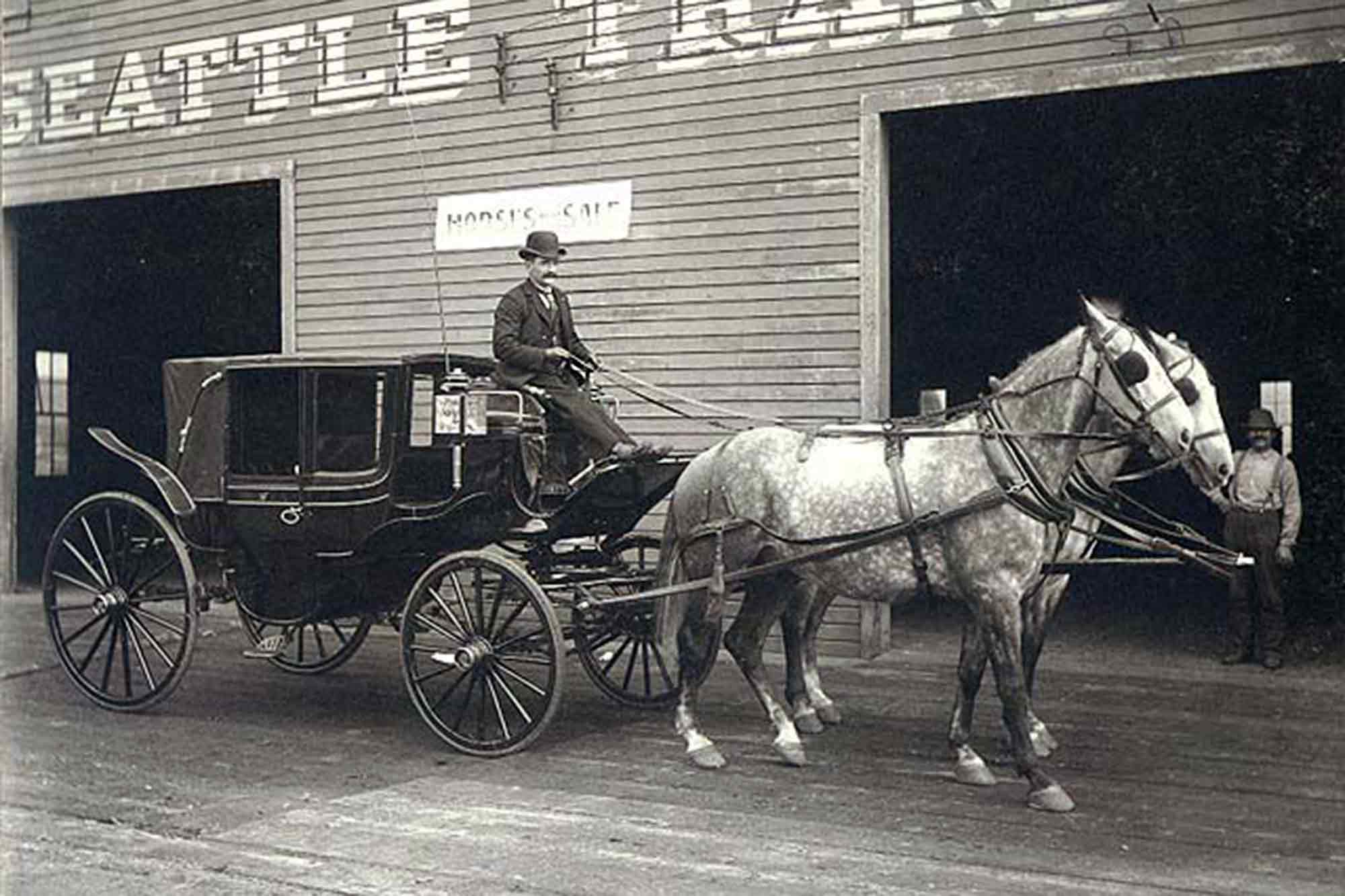
The prophecy may even prove right; one day one of them will. The question never asked is how it could be known so soon — or what, in the meantime, we mean to do besides despair. The automobile made roadkill of plenty; the answer was the seatbelt, the traffic light, the speed limit, not the return of the horse. The rest of us, belted in, got where we were going.