‘Broadview Six’ Defendant Opens Up About the Toll of Being Targeted by DOJ
The experience of being charged with a felony by the Trump Administration for protesting ICE left Michael Rabbitt, a member of the “Broadview Six,” shaken but not ready to give up.
|
Listen To This Story
 |
Michael Rabbitt was on vacation in Portugal in October 2025 when he learned he and five others had been charged with felony conspiracy for attending a demonstration outside an ICE detention center in Broadview, IL.
While the indictment has since been dismissed because of prosecutorial misconduct, his story serves as a cautionary tale about the lengths to which the Trump administration is willing to go in order to punish Americans for protesting.
From worrying about losing his job and racking up a massive legal debt to fears that he might not even be allowed back in the country, the local Democratic politician’s life has been upended since he participated in the protest last fall.
While Rabbitt and his co-defendants have prevailed, the administration has brought hundreds of similar cases against people who have protested ICE and its tactics.
According to a New York Times analysis of federal court filings, out of over 400 immigration-related assault cases the Justice Department has filed since the start of President Donald Trump’s second term, nearly half have crumbled — with defendants either acquitted or the charges against them dismissed.
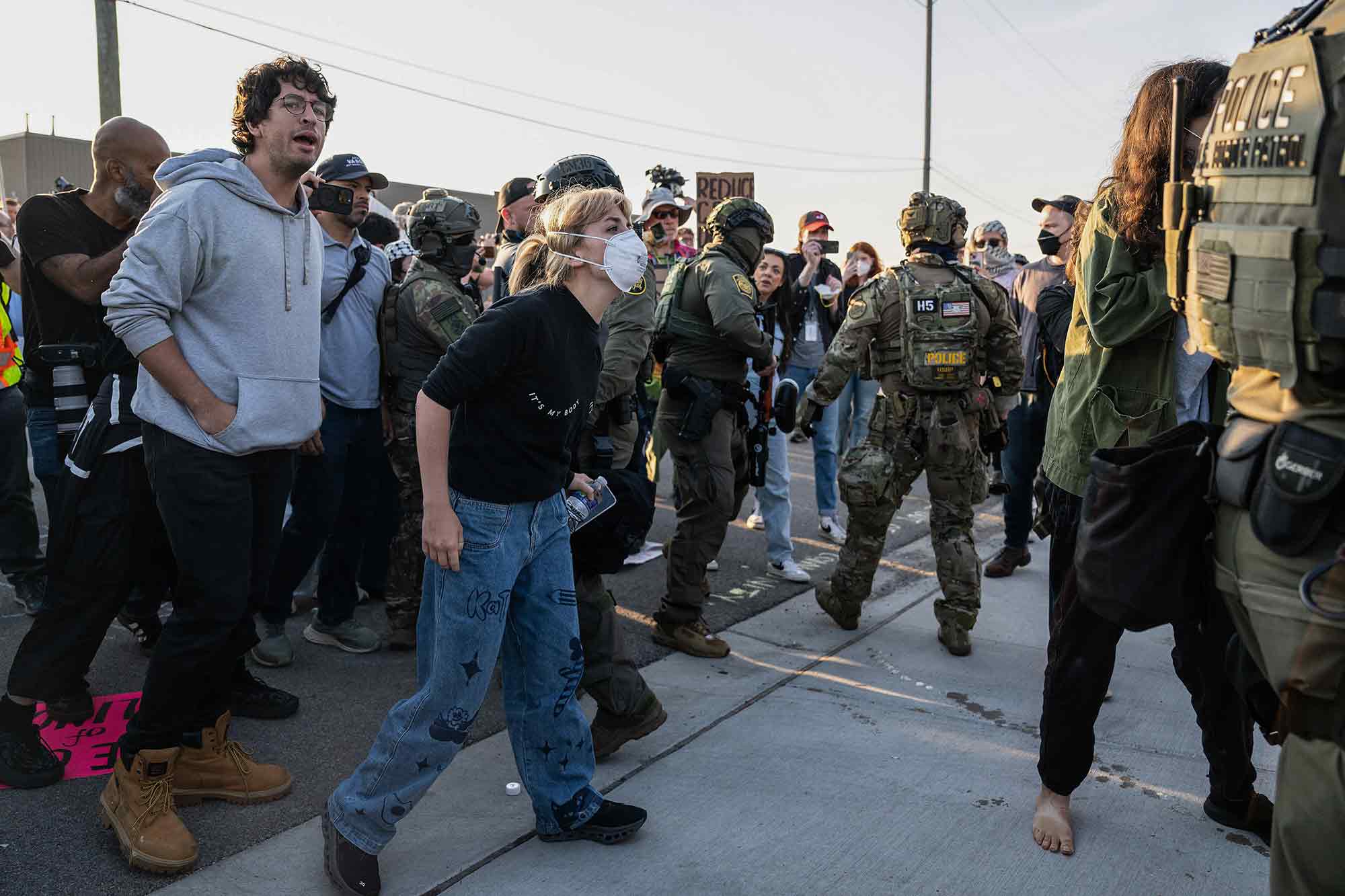
In the case of the Broadview Six, as Rabbitt and his co-defendants have become known, they were indicted for conspiracy to impede or injure an officer after a crowd of protesters they were part of blocked a federal agent’s car from entering the detention center, and the word “pig” was scratched on the vehicle.
A month after the case against him unraveled, Rabbitt spoke to WhoWhatWhy about how it affected his life personally, professionally, and financially.
“There’s uncertainties about the stress and personal toll it takes on you — you don’t know how that’s going to affect you in the future, and it takes a lot out of you,” he said.
Even though the case has been dropped, Rabbitt amassed $300,000 in legal debt. A GoFundMe campaign was created to help him pay his lawyers.
Another source of stress for Rabbitt was the potential impact this case might have on his reputation. Today, he still works as a local politician.
There were also more mundane matters.
“I probably had to make 10 court appearances, and every time I had to go to court, I had to take a day off of work,” Rabbitt said. “I didn’t have a lot left from having taken our vacation to Portugal, but what I did have remaining got wiped out from having to go to court so often.”
Through it all, he kept a positive outlook.
“I was pretty confident that we would prevail because the charges were just so ridiculous. … I just couldn’t see how a jury would convict us on that,” Rabbitt said.
Yet a similar case that he pointed to played out differently after a confrontation in Spokane, WA, where three protesters were charged and convicted of the same charges levied against the Broadview Six.
“I would still always tell people that I was optimistic, but that there was certain uncertainty and risk,” Rabbit added.
The last of the charges against the Broadview Six were dropped on May 21, and now the prosecutors themselves could face repercussions after the grand jury transcripts showed serious prosecutorial misconduct.
In their effort to get the grand jury to bring charges, prosecutors made a number of serious missteps: they told the grand jurors they would never ask a jury to charge someone if they did not think there was probable cause (an extra-evidentiary practice known as “vouching”); they narrated videos of the events on September 26 in a way that characterized the defendant’s intent; they dismissed jurors who disagreed with their case and they had conversations with jurors outside the courtroom — all actions that are prohibited in grand jury proceedings.
George Rohde, who teaches classes on power and protest at DePaul University in Chicago, said that while this certainly is not the first time protesters faced criminal prosecutions, he is interested in the national conversation concerning cases like this one.
Rohde said that the combination of events, specifically the amount of media attention surrounding the Broadview Six, makes cases like this historically significant, and tests how the courts work within the executive power of the government.
Amy Chiang, who works with the National Lawyers Guild and defended many of those who were arrested at Broadview, said she thinks the DOJ’s efforts to discourage protesters have not worked, and while people are discouraged, they will continue to fight for their beliefs.
“They go into it knowing that we’re in an uphill battle, but I still think that people are willing to be out there and get arrested,” she said.
In part, that may be because, as in the case of the Broadway Six, the administration’s prosecutors have a poor track record.
Chiang noted that, in many of the cases that were later dismissed or abandoned, “The government’s version of the story and people’s cell phone videos are vastly different.”
Prosecutors in Minnesota based the charges on the fact that defendants worked together to alert people of ICE agents’ whereabouts and to block access to their Minneapolis headquarters.
Rohde also said this case would have different implications for different communities.
While the prospect of facing serious legal consequences may keep some from protesting, he thinks the Broadview Six case also bolsters awareness of the importance of civic engagement, and that protests draw public attention and can impact the way law enforcement agents do their job.
Rabbitt understands both points of view.
He pointed out that activism entails a risk that some people are not willing to take.
As for himself, despite his own ordeal, Rabbitt said he isn’t going to stop fighting.
“These charges are designed to chill protest, to curb activism, and it’s not going to deter me,” he said. “I’ve been an organizer and activist for decades, and have been passionate about fighting for social justice and human rights and I’m going to continue to do so.”
For him, this is also a personal issue because his mom emigrated from Ireland when she was just 13 years old.
“I will continue to protest,” Rabbitt said. “I will continue to fight against the Trump administration and all of its destructive ways.”
This story was written by a member of our Mentor Apprentice Program (MAP). It gives aspiring journalists an opportunity to hone their craft while covering national and international news under the tutelage of seasoned reporters and editors. You can learn more about the MAP and how you can support our efforts to safeguard the future of journalism here.