UK Leads Trio of Countries to Sanction West Bank Settlements
A group of Western democracies on Tuesday announced targeted sanctions against Jewish settlers in the West Bank and individuals and businesses that support them.
|
Listen To This Story
 |
Citing the “unacceptable policies of the current Israeli government” and the suffering of Palestinians that is “a scar on the conscience of the world,” new British Prime Minister Andy Burnham on Tuesday announced that his government, together with those of France and Canada, is putting in place a package of sanctions aimed at punishing illegal Israeli settlements in the occupied West Bank.
The three countries will ban the trade in goods from these settlements and sanction “individuals and companies that support, facilitate or profit from” them.
“A two-state solution to the Israeli-Palestinian conflict is critical for peace, stability and security in the Middle East and beyond,” said Burnham, Canadian Prime Minister Mark Carney, and French President Emmanuel Macron, in a joint statement. “It is a fundamental national interest for Canada, France, and the UK to protect and secure this outcome.”
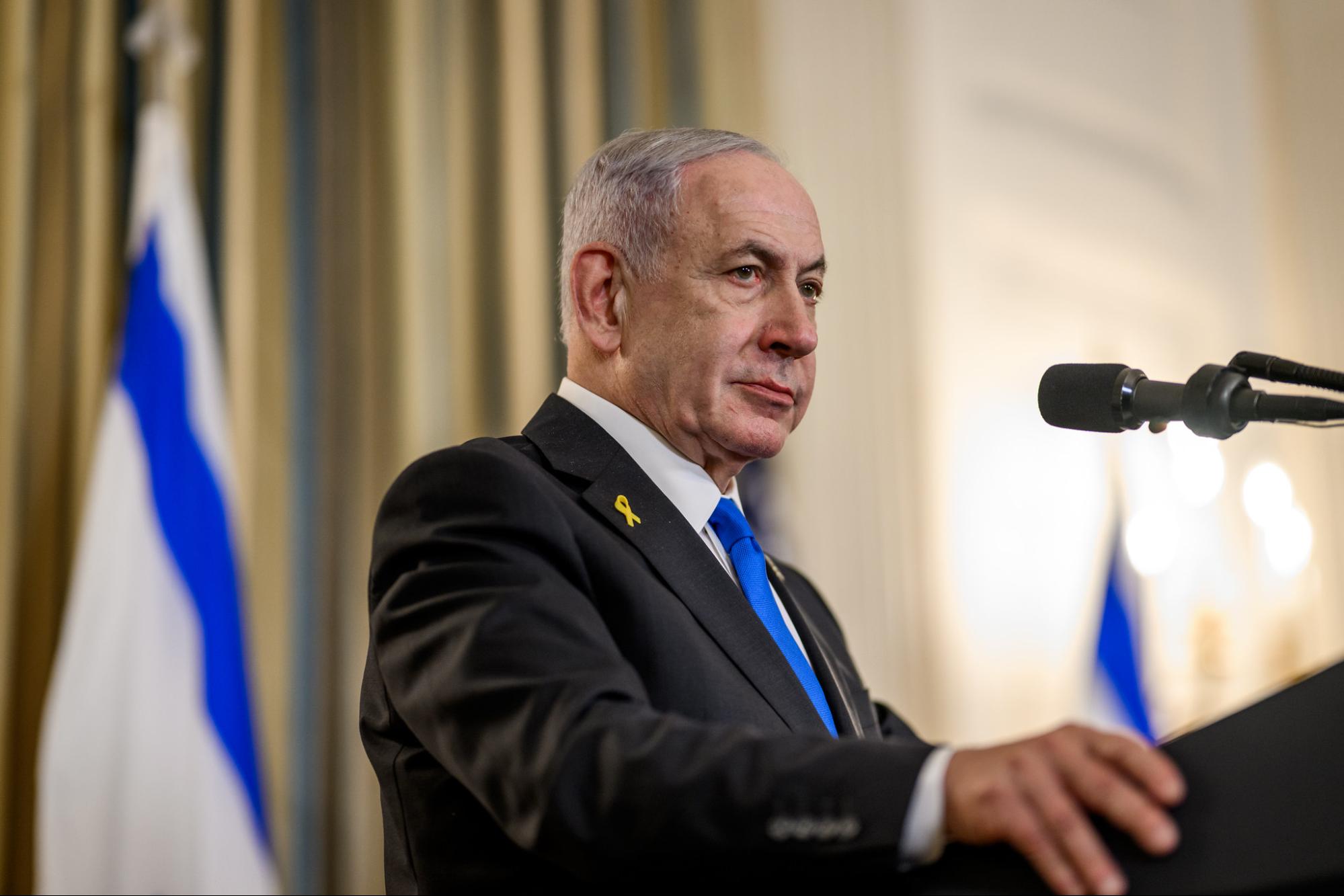
They added that the actions of the regime of Prime Minister Benjamin Netanyahu, as well as the increase in settler violence that it either allows or aids, “pose a direct and urgent threat to that vision for peace.”
The three leaders were careful to note that these sanctions were carefully aimed at the settlers themselves and those who help them.
“In taking this coordinated action, we reiterate our desire for a close and productive partnership with Israel, our enduring support for the Israeli people and our unwavering commitment to Israel’s security,” they pointed out. “We support a safe and secure Israel, living alongside a safe and secure Palestine.”
That gets to the heart of why it is so difficult for international leaders to criticize Israel, which is surrounded by current or former enemies. Trying to hold any government in Tel Aviv to account is fraught with the risk of being labeled as antisemites.
However, as public opinion has shifted against Netanyahu and a government that has killed tens of thousands of Palestinian civilians since the October 7 terrorist attacks in which Hamas murdered about 1,200 people, European leaders and Democrats in the US have become more outspoken about the atrocities Israel is committing.
Following the release of the statement, several other European countries, including Spain, Ireland, Belgium, Norway, Sweden, Portugal, Finland, Poland, and Iceland, said they would join the sanctions.
For his part, Burnham went a step further.
“Before I became Prime Minister, I said our country’s response had been too slow and simply not good enough. That’s why I committed to changing the government’s approach,” Burnham stated. “I will not stand by as the horrific suffering continues to grow and the prospect of a two-state solution — the best hope for peace and stability in the region — comes under attack.”
In a strongly worded statement of his own, he pointed out that Netanyahu’s current regime had approved more of these settlements over the past four years than other Israeli governments over the previous two decades. In addition, Burnham noted that the United Nations has already reported more than 1,500 incidents of settler violence this year.
One of them in particular captured global headlines.
It was the case of an American Palestinian family whose home was besieged by Jewish settlers. In a rare instance of breaking with the Netanyahu regime, US Ambassador to Israel Mike Huckabee called that siege a “horrific act of terror.”
Generally, however, the global community has turned a blind eye toward these settlers and given Israel a pass. While the actions of the UK, Canada, and France may be largely symbolic, that is now starting to change.
“For too long, we have been hesitant to act, fearful of being accused of being anti-Israel,” Burnham stated, who stressed again that these sanctions are targeted and that “the Israeli people are not responsible for the actions of their government.”
In response, Israel announced that it would close the British Consulate General in East Jerusalem.