What Can We Learn From Venezuela’s Misfortunes?
Risks don’t go away just because we’ve decided not to pay attention.
|
Listen To This Story
 |
So many catastrophes have hit the US in rapid succession lately that the true dimensions of the twin earthquakes that tore through Venezuela a week ago have been edged out of the headlines.
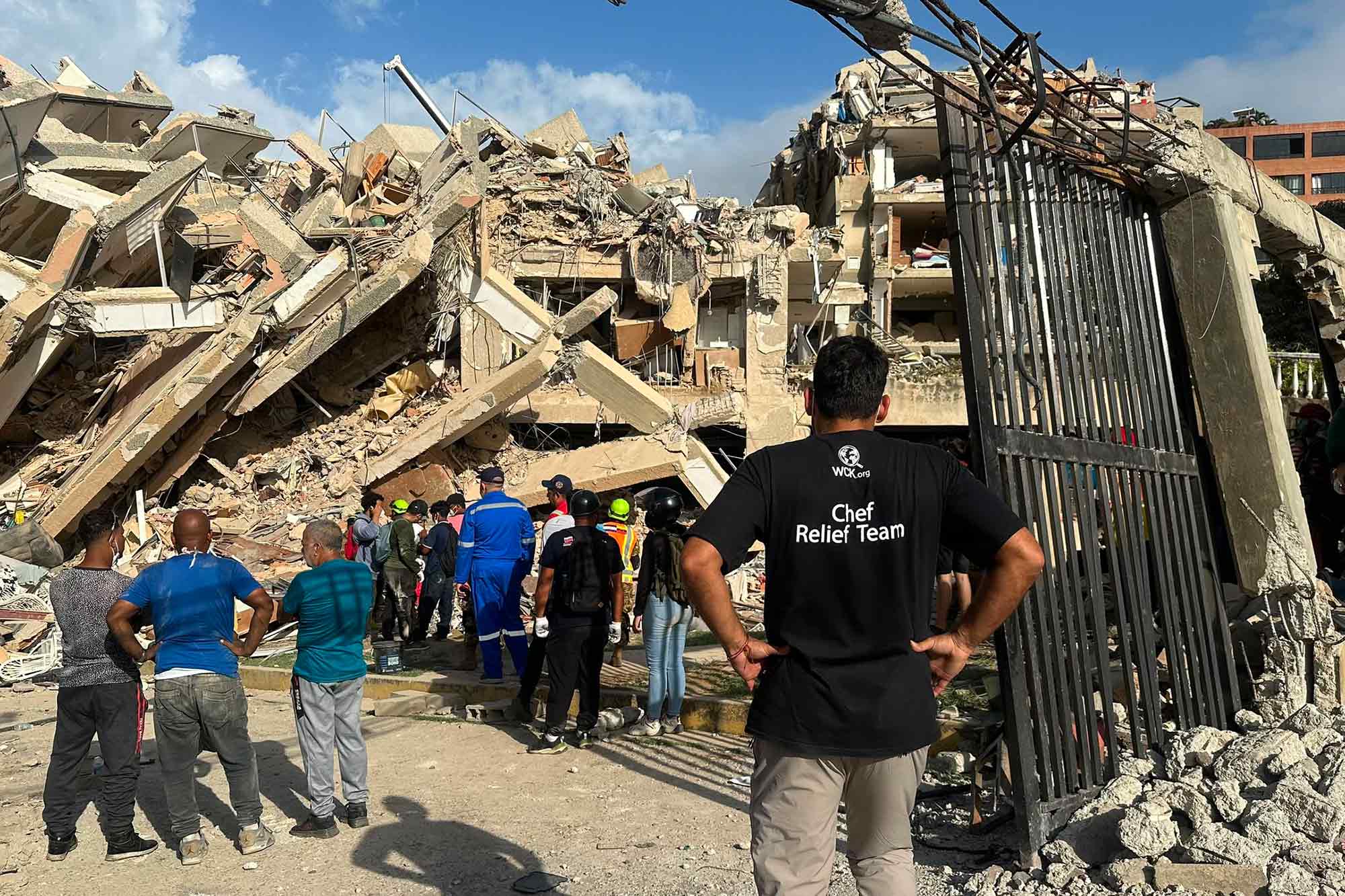
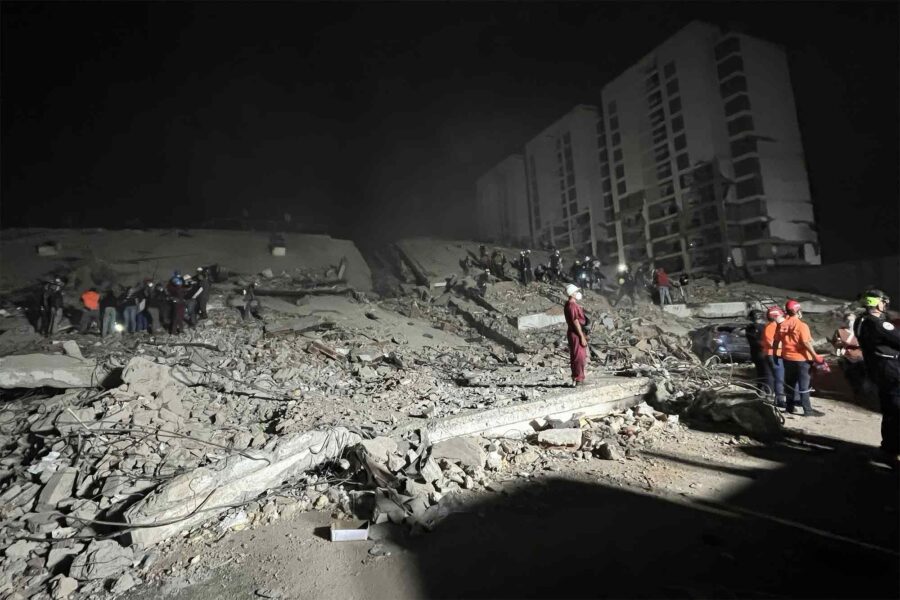
No one questions that the quakes rank as a major disaster. The official death toll, originally reported as a few hundred, now stands at more than 1,700. Another 50,000 or more are still unaccounted for.
So, ordinarily, Venezuela would rate as a major catastrophe, and there is no doubt the quake is just that. But how can a tragic act of God or nature in Venezuela compete for an American audience with President Donald Trump’s obvious intention to sabotage upcoming crucially important legislative elections?
Add to that the lingering economic aftershocks from Trump’s self-inflicted war against Iran and his Napoleonic bad taste in redecorating Washington — ranging from disfiguring the White House to transforming the reflecting pool, which visually links the Capitol to the Lincoln Memorial, into an actual swamp.
And if that were not bad enough, you have Vice President JD Vance visiting the Nixon Library and suggesting that, in the current climate, Watergate doesn’t look that bad, and that maybe Richard Nixon’s crimes were overrated. Then there is the Supreme Court’s use of legal sophistry to overturn more than a century of precedent in order to give Trump a green light to wreak even more havoc.
Given all that, who has time to think about Venezuela?
In the best of times, we recognize that tragedies affecting other people in distant lands are unfortunate, but after a brief moment of empathy and reflection, we get on with the life that immediately affects us. Robert Frost captured this dynamic hauntingly in the last lines of his poem “Out, Out—,” in which a community beholds a young boy killed in a mishap involving a buzz saw: “And they, since they / Were not the one dead, turned to their affairs.”
That is, until we find ourselves victims caught up in a comparable catastrophe. In a sense, every disaster presents an opportunity to learn more about the universe in which we are attempting to survive. The sin is in ignoring the lesson that the disaster offers us at such high cost.
There is nothing we can do to prevent an earthquake, or any other so-called act of God, from happening. But if we are smart, we can learn and be better prepared as a result.
That goes for Donald Trump as well as the general public.
Until last week, Trump had repeatedly bragged about his brilliant kidnapping of Venezuela’s leftist President Nicolás Maduro and his wife. Once Trump intervened in Venezuela’s government and engaged in “regime change,” the US to a certain extent became responsible for the new government’s actions.
When the quake hit and Venezuela proved incapable of responding effectively, it was not just Venezuela’s government that was at fault; it was the US government as well.
After abducting the Maduros, Trump installed a successor regime made up of Venezuelan politicians whom he knew were unpopular but who would not interfere with his efforts to gain control of Venezuela’s oil. As a result, in the minds of many Venezuelans, Trump shares the blame for their government’s tragically inept response to the earthquake.
In the hours and days after the quake hit, Venezuela’s government largely remained frozen in shock. In the absence of heavy, earth-moving equipment, ordinary citizens used hand tools, and their bare hands, to dig through the rubble of pancaked high-rise buildings. A survivor told the BBC, “I could hear my son calling from under the rubble. It was not the quake that killed him; it was negligence.” The government had the industrial-scale equipment needed to clear the wreckage, but it had no plan of action to get the equipment to the disaster site.
Learning From Calamities
Disasters on the scale of the Venezuelan earthquake have many bitter lessons to teach. The first such event I covered as a journalist occurred in 1980 in a city in northwestern Algeria then known as El Asnam (now called Chlef). It registered 7.1 on the Richter scale (which measures the magnitude of the energy released) and X on the Mercalli scale (which measures the intensity of the effects on the ground). It was the worst quake to hit Africa’s Atlas mountain range since 1790, and it killed more than 2,600 people. When you arrived on the scene, the first thing that you noticed was the sickly sweet smell of rotting human corpses.
The region had suffered a similarly devastating quake in 1954. At that time, the city, then known as Orléansville, was still part of a French colony. Back then, many geologists believed that earthquakes resulted from pressure suddenly building up beneath the earth’s surface. Once the pressure was released, the wisdom held, the danger had passed. Plate tectonic theory — the notion that the “solid” surface of the earth rests on individual plates floating on magma, a subterranean region of molten rock — had met with resistance at first. It did not reach full acceptance until the late 1960s.
It’s now known that earthquakes result when the plates collide. The French architects who built high-rise buildings in El Asnam couldn’t have known that, so they built the city’s high-rise buildings on columns that resembled stilts. When the quake hit, the stilts gave way and the multistory buildings pancaked to the ground. Uncovering the collapsed floors was like opening a can of sardines, with crushed bodies at each level.
Miraculously, one wooden house was left straddling a 6-foot-wide chasm opened by the quake. The wooden beams had enough flexibility to resist the initial shock, and the integrated structure had held together independently of the ground sliding beneath it. Its survival held a lesson for future planners: Plate tectonic theory taught architects to anticipate the way the earth moves in a quake and to build accordingly. But for the dead of El Asnam, the knowledge arrived too late.
We tend to refer to earthquakes by the legalistic phrase “act of God” — which implies that nothing can be done in the face of such disasters. But that is not true. You cannot prevent an earthquake, but in most cases you can take precautions that mitigate the harm.
The second major quake that I covered was in the Allai Valley in Pakistan’s North-West Frontier Province. The quake, registering 7.6 on the Richter scale, sheared off the sides of mountains and killed an estimated 80,000 people. Hundreds of thousands were rendered homeless and risked freezing in the approaching winter. The Pakistani administration was for the most part paralyzed.
A number of international nongovernmental organizations rushed to provide immediate aid, and their presence prodded the government into action. When I reached the mountain villages where the quake was centered, the reasons for the high death toll became apparent. When a tribesman built a house, he simply piled flat rocks on top of each other to make the walls. There was no mortar or cement. The roof was made by laying logs across the top of the walls and then piling several feet of dirt on top of that. When the quake hit, the walls separated and the logs, weighted down by several hundred pounds of compressed dirt, crushed the inhabitants.
If a quake hit at night or during lunchtime, an entire village might be wiped out to the last person. These tribesmen had been living in the region for thousands of years. How had they never analyzed the danger and found another way of building their houses?
We tend to refer to earthquakes by the legalistic phrase “act of God” — which implies that nothing can be done in the face of such disasters. But that is not true. You cannot prevent an earthquake, but in most cases you can take precautions that mitigate the harm.
For centuries, Japan specialized in designing wooden buildings flexible enough to withstand the shock of most quakes. Instead of nails, traditional Japanese architecture relies on interlocking wooden joints that create structural flexibility. Japan’s traditional ishibadate technique places wooden columns directly onto loose stones rather than fixed footings, allowing the building to slide or tilt slightly to dissipate shockwaves. Traditional walls were made of lightweight woven bamboo and mud; sliding doors were made of paper to limit internal damage.
Modern buildings, especially in quake-prone California, rely on similar techniques. Beams and columns of the latest buildings are designed to sway flexibly when subjected to sudden shocks. The X-shaped cross-bracing seen on buildings like San Francisco’s Transamerica Pyramid and Hong Kong’s Bank of China, designed by I.M. Pei, has been engineered to hold everything together when external forces twist the structure. Massive steel, rubber, and lead bearings serve as shock absorbers to isolate modern structures in quake-prone regions from underground seismic waves.
All new structures in California are required to meet stringent building codes developed to resist quakes. The damage comes from older buildings built before current knowledge became available.
Ignoring Risk, Sandbagging Science
As the American Boy Scouts used to say, it pays to be prepared, yet not everyone is on board with that philosophy. At an international conference on disaster management, sponsored by the World Economic Forum in Geneva a few years ago, it was generally acknowledged that natural disasters are increasing in frequency and severity, owing in large part to climate change. No one doubted that a major disaster could destroy a company’s fixed assets. Everyone more or less agreed that a comprehensive emergency plan is crucial to survival, yet most participants admitted that they had assigned the development of their emergency plans to newly hired interns at the bottom of the executive ladder. These new recruits were the least able to make their concerns heard by their bosses.
The US prided itself on having a reasonably good record in emergency preparedness until the Trump administration began cutting back the federal government’s role in disaster relief, not to mention sandbagging the scientific research directed at mitigating and responding to the effects of climate change.
One CEO summed up his company’s point of view: “I’m not going to spend good money on something that will very likely never happen.” At least he was honest. But the experience in Venezuela and events in the United States, ranging from Hurricane Katrina in 2005, which nearly destroyed New Orleans, to the growing number of wildfires and floods in the western United States, are proof that these things do happen, and they are happening with a much greater frequency than anyone experienced in the past.
The US prided itself on having a reasonably good record in emergency preparedness until the Trump administration began cutting back the federal government’s role in disaster relief, not to mention sandbagging the scientific research directed at mitigating and responding to the effects of climate change.
Many of the cuts to these federal agencies have effectively blinded Americans to the dangers facing them. Like the quake survivors in Venezuela, we are likely to find ourselves wringing our hands when the next disaster in our own backyard catches us unawares.
Donald Trump insists that disaster response is best left to the individual states. He apparently forgets that the federal government, which is his responsibility to manage, was created precisely to deal with problems that are beyond any state’s capacity to handle.
In a way, Trump is like the CEO who said he didn’t want to spend money on something that hadn’t yet happened. But mitigating risk is precisely what the insurance industry is designed to do, and what foresighted governments do for their people. Venezuela is a prime example of what happens when a government fails to be prepared.
Each disaster has a lesson to teach. Whether the US public is too busy, or too distracted, to demand such foresight is another matter altogether.
William Dowell is WhoWhatWhy’s editor for international coverage. He previously worked for NBC and ABC News in Paris before signing on as a staff correspondent for Time magazine based in Cairo. He has reported from five continents — most notably during the Vietnam War, the revolution in Iran, the civil war in Beirut, Operation Desert Storm, and in Afghanistan.