Topsy-Turvy Primary Season Continues With DSA Surprise in Florida
Tuesday's primaries featured surprises as well as good and bad news for both Democrats and Republicans.
|
Listen To This Story
 |
Tuesday’s primaries in Florida and Alaska had a little bit of everything: the surprising victory of a Democratic socialist in the Sunshine State’s Senate race, another incumbent biting the dust (and Republicans being happy about it), and not just one but two Dan Sullivans advancing to the general election in the Last Frontier. In addition, a couple more candidates endorsed by Donald Trump flamed out, and it looks as though a Pennsylvania Democrat flipped a state House seat in a district the president had won by 18 percent.
The big headline on Wednesday morning will be that Democratic socialist Angie Nixon, who was heavily outspent, defeated Alex Vindman of Trump Impeachment, Part 1 fame and will be the Democrat’s nominee to take on incumbent Sen. Ashley Moody (R-FL), who was appointed by Florida Gov. Ron DeSantis (R) to fill the seat held by Marco Rubio before he became Secretary of State.
Compared to Rubio, Moody is a woeful candidate and might have been vulnerable in this political environment if a strong Democrat had emerged. However, there are no strong Democrats in Florida, so Nixon’s victory may be a blessing in disguise for the party.
It stands to reason that a lot fewer national donors will throw money at this race now that Vindman, who testified against Trump in the first impeachment trial, is out. These are resources that can go to other, much more winnable campaigns.
While Nixon’s victory was characterized as a major upset elsewhere, Vindman lacked Florida roots and was simply not a good candidate.
Elsewhere in the Sunshine State, Rep. Cory Mills (R) lost his primary, which has Republicans breathing a major sigh of relief. The lawmaker, who is under investigation by the House Ethics Committee and has faced withering criticism from some members of his own party, would have been a liability in the fall.
Therefore, it could be said that both party establishments won by losing Tuesday night.
Speaking of losing, it wasn’t a great evening for Trump. The president, who loves to tout the winning record of Republicans he endorses (primarily because he usually stays out of competitive races and only backs candidates who seem certain to win), suffered a few setbacks.
In Florida’s 19th congressional district, his favorite, Catalina Lauf, lost the race to succeed Rep. Byron Donalds, who will be the GOP’s gubernatorial candidate.
In addition, Trump had backed Mills in February but apparently forgot to withdraw that endorsement.
Furthermore, Megan Degenfelder, the president’s pick to become Wyoming’s next governor, also lost her primary.
And then there was Alaska. In the state’s unique system for selecting their senators, governor, and lone member of the House of Representatives, candidates of all parties run in a “jungle primary,” and the top four candidates advance to a runoff that uses ranked-choice voting.
Tuesday’s results show that this is a real opportunity for Democrats to flip one of the GOP seats they need to win the Senate.
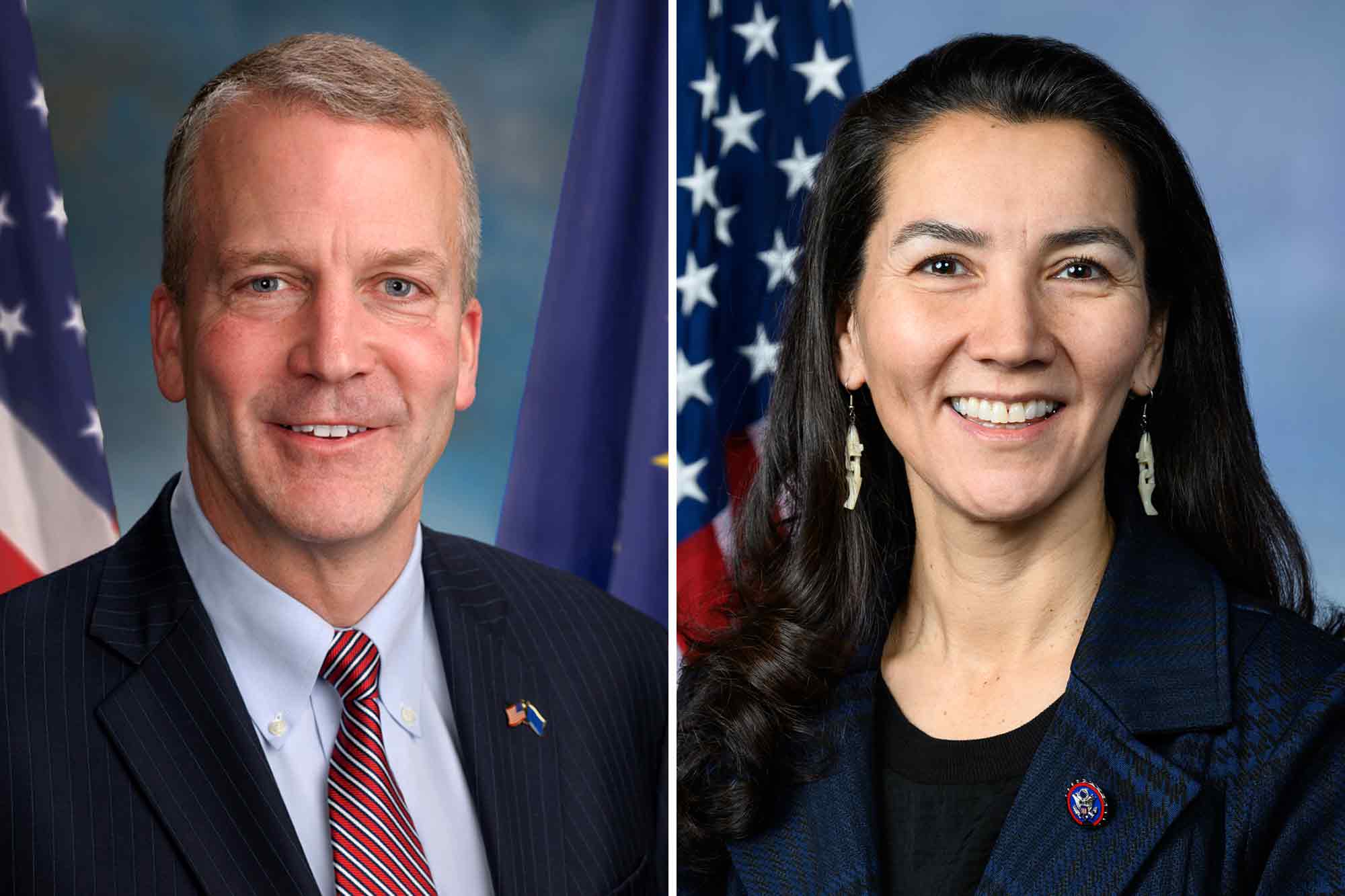
With nearly 80 percent of the votes counted, former Rep. Mary Peltola (D) is leading incumbent Sen. Dan S. Sullivan (R) by more than four points. Another Dan Sullivan, this one a retired schoolteacher, also looks to advance, while the fourth spot is too close to call with Democrat David Leslie ahead of another Republican by a few dozen votes.
All of that bodes very well for Peltola. If the results stand, she has to be considered a slight favorite in the midterms.
Finally, in a result that should have Republicans across the country worried, it looks as though Democrats flipped yet another legislative seat, this one in Pennsylvania. With more than 95 percent of ballots counted, their candidate, Brendan Dukes, is ahead by 88 votes. If he holds on, he would prevail in a district Trump won by 18 points in 2024.
This is an extremely encouraging sign for the Democrats. While much of the spotlight is on control of Congress, flipping seats in state legislatures is also incredibly important for them. For example, when the GOP won hundreds of seats in 2010, it immediately used its newfound power to redistrict key swing states and pass voter suppression laws.
While winning the House and possibly the Senate is the key to holding the Trump administration to account and providing much-needed oversight, securing majorities in state legislatures in places like Michigan, Wisconsin, and Pennsylvania, and denying the GOP veto-proof majorities in other battlegrounds like North Carolina, are crucial for securing future gains.