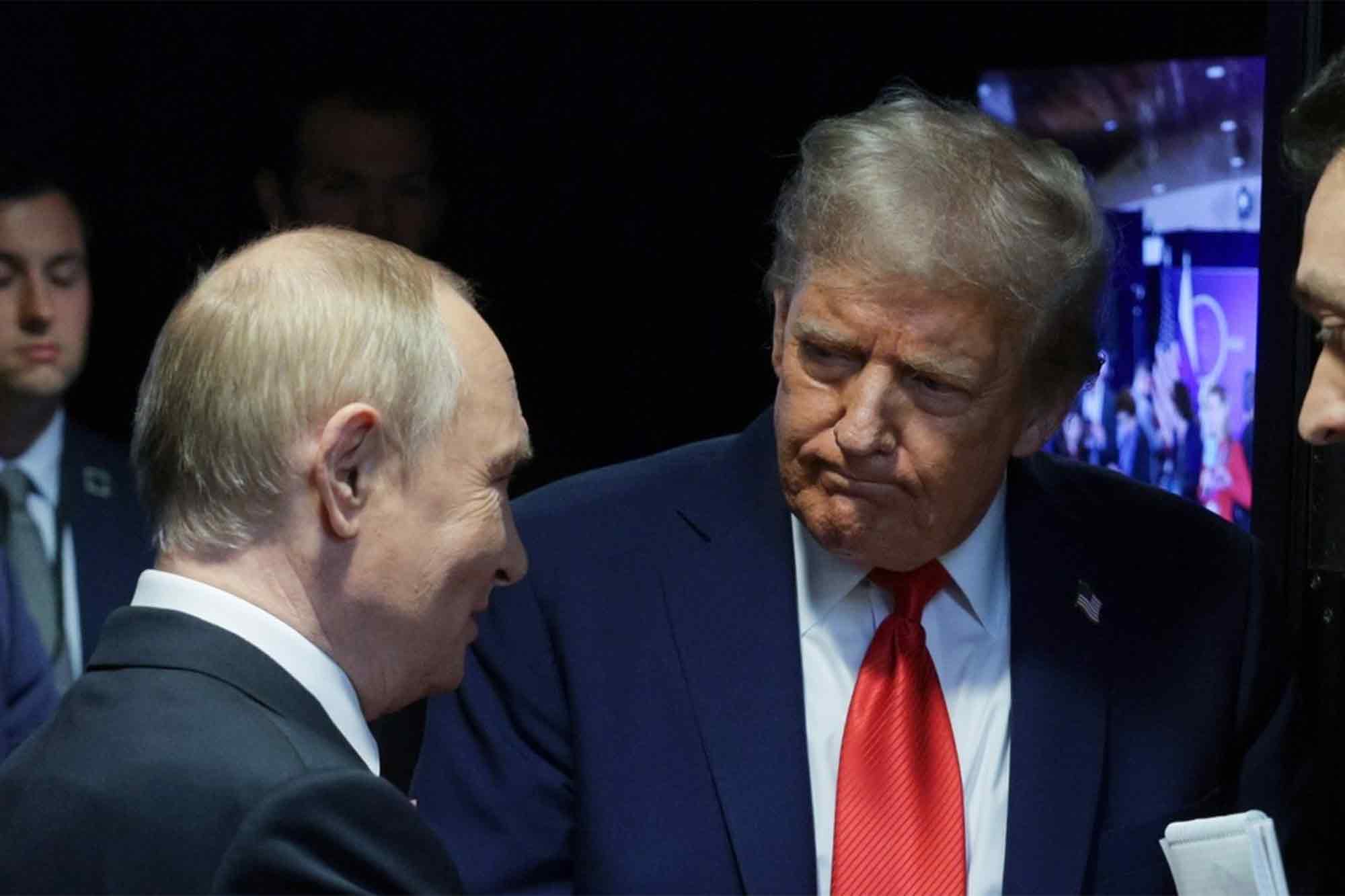
Angry at Ukraine, Trump Defies Congress and Waives Sanctions on Russia
Trump turns to Russia’s Putin for support, in the hope that Russian diesel fuel can make up for shortages resulting from his war with Iran.
|
Listen To This Story
 |
It’s hardly a secret that Donald Trump does not like Ukraine. The question is whether Trump’s decision to cut Ukraine off from satellite warnings of missile attacks and to shut down its internet links through Starshield is just a momentary fit of spite or marks a definitive shift in US policy toward both Ukraine and Europe.
Signals from the White House have been mixed. With midterm elections fast approaching and Trump’s popularity scraping bottom, Trump may not have much choice. A disaster in Ukraine just before the midterms could be the last piece of bad news that effectively shuts down an already faltering political career.
Trump may be clinging to the hope that forcing Ukraine to stop its drone attacks against oil refineries in Russia will somehow reduce fuel prices in the US. It is hard to see how that will happen, but Trump nevertheless seems determined to pressure Ukraine into surrendering.
At a recent meeting in Florida, Steve Witkoff and Jared Kushner reportedly warned Ukrainian officials that Trump might shut off intelligence information if the attacks against Russian refineries didn’t stop. That is in fact what happened last week. The impact was serious, but probably more damaging to Trump than to Ukraine’s President Volodymyr Zelenskyy, who immediately responded that Trump’s gesture was a weak decision.
To a conspiracy theorist, Trump’s actions might seem to follow the scenario in John Frankenheimer’s classic 1962 film, The Manchurian Candidate. In that story, a presidential candidate, brainwashed and hypnotized, is manipulated by a foreign power into achieving the presidency in the hope that he will eventually destroy his own country.
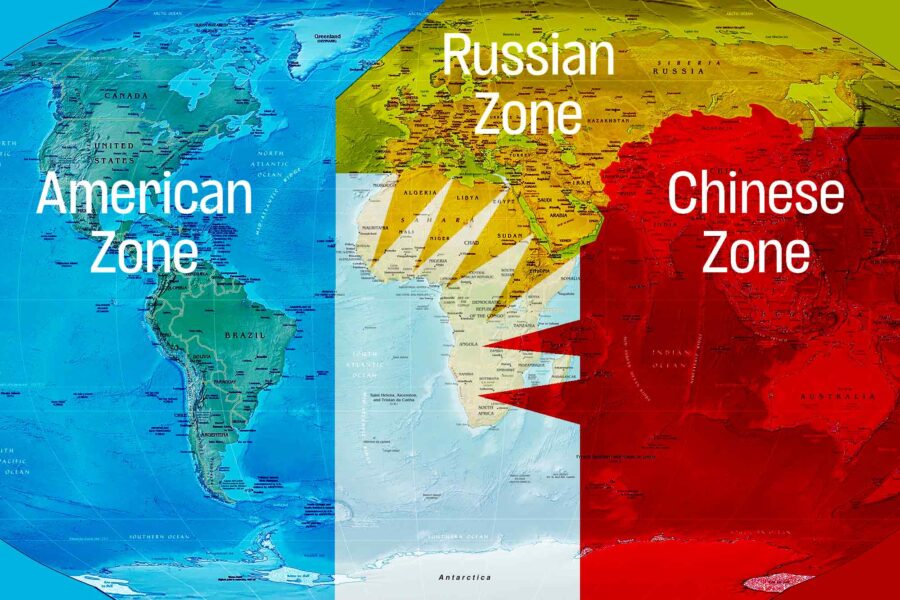
A more likely explanation is considerably less dramatic. A number of foreign policy analysts have suggested that we are now experiencing a de facto realignment of global power that effectively divides the world into separate zones of influence.
According to this scenario, conflict is avoided by an informal understanding that the most practical road to peace is for each global power to focus on its own territory, and avoid meddling on each other’s turf.
Under this arrangement, China gets to do what it wants in Asia; the US has absolute freedom to do whatever it wants in North and South America; and Russia is free to grab what it wants in Europe, the Middle East, and Africa. As long as everyone stays in their own zone, complaints are kept to a minimum, and big-power conflicts are avoided.
Specifically, in this suggested quid pro quo arrangement, Trump gets to engage in regime change in Venezuela, divert the country’s oil to his purposes, and possibly take over Cuba. In exchange, the US is expected to look the other way while Russia pounds Ukraine into oblivion, and Xi Jinping makes a play to finally take over Taiwan.
The deal might not seem that attractive to smaller countries, like Ukraine, that value their independence, but in the transactional world where might makes right — which Trump, Putin, and Xi seem to favor — it makes brutal sense.
Ironically, George Orwell described just such an arrangement in his novel, 1984. In Orwell’s account, no one really knew if the leader, dubbed Big Brother, actually existed or was simply an artificially constructed figurehead. But his image was everywhere, the perfect object for a cult of personality.
Public dependence on the government was enhanced by maintaining a vague sense of international conflict that was never resolved. A massive surveillance system immediately detected any deviation from the government line. Anyone who didn’t agree with the system was instantly disappeared. History was continuously rewritten, and the public’s vocabulary was reduced and absorbed in a new language called “Newspeak,” on the theory that a public that lacked the means to express itself would show less resistance.
Orwell had no real notion of artificial intelligence or the sophisticated surveillance system developed by today’s Palantir, but he was prescient enough to see where the future was headed.
Although the idea of global collusion to apportion the world’s population into easily manageable sectors might sound preposterous, it closely resembles a previous arrangement in February 1945, during the closing days of World War II. Ironically, the international conference that closed the deal then was held in Ukraine, near Yalta, on the southern coast of Crimea. It was attended by Franklin Roosevelt, Winston Churchill, and Josef Stalin, and the focus was on how to divide Europe, and more specifically Germany, once the war had finally ended.
Roosevelt had the mistaken notion that he still needed help from Russia to defeat the Japanese Imperial Army in Asia. It was impossible for Roosevelt to know at that time that the atomic bomb would effectively end Japanese participation in the war. He was mortally ill and would die on April 12, a little more than two months later.
He had authorized development of the atomic bomb as early as 1942, but he couldn’t foresee that it would actually work, and in any case, the bomb was not ready for testing until three months after his death, in July 1945. In the meantime, Stalin, a shrewd political strategist, appeared to hold the cards that would eventually determine an Allied victory or defeat in the Pacific.
The final declaration of the Yalta Conference stated that once the war was finished, each European country would be allowed to establish its own government.
The Allies kept to their word. Stalin did not. Within three to four years, Stalin had taken Eastern Europe prisoner and was doing his best to take over Western Europe. Stalin had three times as many troops as the Allies on the ground, and there was little anyone could do to stop him. The Cold War was officially launched, and by 1955, Eastern Europeans were effectively trapped behind a deadly barbed-wire frontier that Churchill dubbed the “Iron Curtain.”
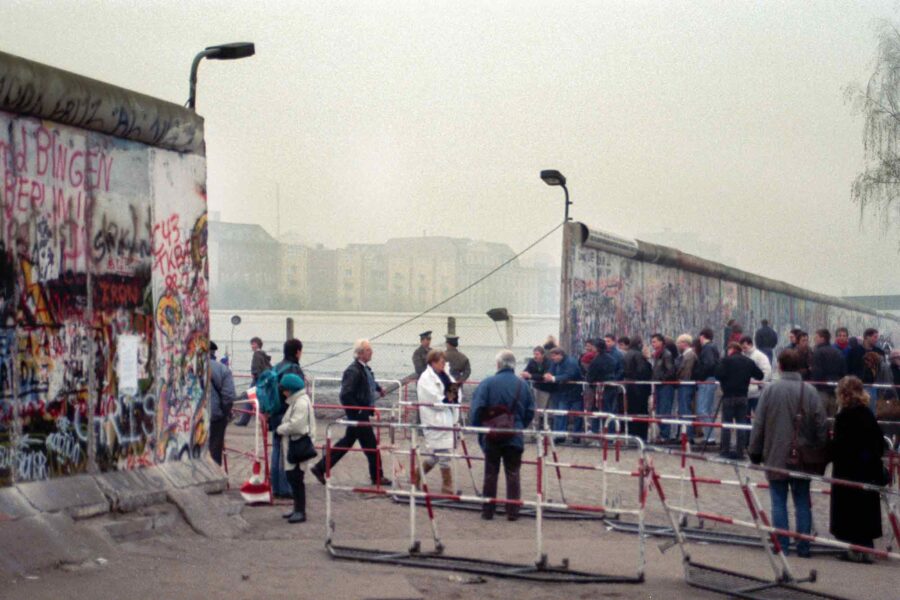
In 1961, the East German government, under Russian control, hastily erected the Berlin Wall to keep its citizens from massively defecting to West Germany. Nearly three decades later, in November 1989, the Berlin Wall was torn down by angry citizens. Less than two years later, the Soviet empire, created to a large extent by Stalin, also collapsed, not so much because Mikhail Gorbachev introduced perestroika (“restructuring”) reforms, but because the Soviet system had proven itself to be economically unsustainable.
Russia’s real problem was not communism so much as totalitarianism, which prevented the changes and adaptation Russia needed to meet the challenges of the modern world.
Through all of this, Vladimir Putin, a career intelligence officer, had risen to the rank of lieutenant colonel in the KGB. He was posted in East Berlin under cover, ostensibly as a translator. His real job was to work with East Germany’s dreaded secret police, the Stasi, which had replaced Hitler’s Gestapo. The difference was that the Stasi’s politics were communist, while the Gestapo’s were fascist. The operations and tactics were the same. Putin was there to make sure that the apparatus understood that Moscow was calling the shots.
As the system began to collapse, Putin quit the KGB, where he had already worked for 16 years. Returning to his home in St. Petersburg, he became an adviser on international relations to the city’s mayor, Anatoly Sobchak, who had incidentally drafted the constitution for the new Russian federation.
The Russian economy was in such bad straits during the early 1990s that Putin later admitted he had occasionally been forced to drive a taxi at night to supplement his income.
Putin gradually rose through the ranks of the St. Petersburg administration until the mayor, Sobchak, was voted out of office in 1996. After the defeat, Putin moved to Moscow and began working for Boris Yeltsin, who had won the 1991 election as the newly created Russian Federation’s first president and, incidentally, the first publicly elected head of state in Russia’s history.
In 1998, Yeltsin made Putin director of the FSB, the replacement for the KGB. The move gave Putin access to the reins of power in the new Russia. A short while later, he became head of Russia’s Security Council, and was then appointed prime minister.
Yeltsin, who was an uncontrolled alcoholic and was under growing pressure after a series of financial crises, resigned the presidency in 1999, and Putin became acting president. Three months later, in March 2000, he was elected president. He has effectively been in charge of the Russian Federation ever since, at times alternating between the posts of president and prime minister.
Before taking office in 1999, Putin denounced Communism as a “blind alley.” He also rejected Western ideas of democracy, explaining that Russia needed a government more in line with its own history and conditions.
The “compromise,” sometimes called “sovereign democracy,” lets him run the government the way he wants. In the spirit of the czars who preceded him, he wants to recreate the empire that vanished under Gorbachev and perestroika. Russia’s totalitarian tendencies resumed under Putin.
Donald Trump made his first trip to Moscow in July 1987, ostensibly to scout a site for a luxury hotel he planned to call Trump Tower Moscow. After returning to the US, he began buying full-page newspaper ads in the New York Times and Washington Post criticizing US foreign policy and NATO allies.
Trump’s ideas about government clearly resonate with Putin’s. Trump’s problem is that the approach is at odds with American history and the American system that has emerged over the last two centuries. Russia’s aspirations are historically and philosophically at odds with those of the United States.
Trump’s repeated attempts to ingratiate himself with authorities in Moscow led to suspicions that he might have been recruited by the KGB. An exhaustive investigation by former FBI chief Robert Mueller found no evidence of any formal relationship, although it was obvious that Trump had profited handsomely from Russian oligarchs anxious to buy and sell luxury real estate, a preferred way to launder Russian rubles into hard currency.
Since Trump and his family have amassed nearly $2 billion in profits during his second term as president, it’s unlikely that he still needs Russian financing. What seems more likely is that Trump actually believes that foreign leaders, such as Putin and Xi, respect him and can be taken at their word.
History argues that this is rarely the case.
The Russians didn’t need to recruit Trump. Their objective was to knock the US off of its pedestal as “Leader of the Free World.”
Trump, they realized, was likely to accomplish that without any outside interference. Former Secretary of State Madeleine Albright pointed out that Trump perfectly fit the Moscow definition of a “useful idiot.” In fact, an unwitting asset, easily controlled by a judicious application of flattery at the right times and places.
So far, the Russian analysis appears to be correct. However, from a global perspective, the displacement of the US as a superpower may not be as bad as it sounds.
The dominant role played by the US in world politics over the last 80 years was largely the consequence of a historic anomaly. World War II left the US as the last major economic power standing, and that gave it undue influence over world events.
Despite the damage caused by Trump, the US is still in relatively good shape economically. Instead of being the leader of the free world, we might be better served by being considered first among equals.
The practical answer to resolving the high price of diesel fuel is to resolve our differences with Iran through negotiations. That is pretty difficult as long as Trump and his purblind MAGA crowd are in office.
Sometimes resolving a seemingly intractable problem simply requires a new administration. Russia and China are led by strong, dictatorial leaders, who don’t allow them that option. The result can be an interminable stalemate like Putin’s pointless war against Ukraine, or Trump’s expensive folly in Iran.
Luckily, democracies can change course. All it takes in a democracy is to vote in an election.