Rubio’s Campaign to Undermine War Crimes Court Gains Traction in Africa
Chad's withdrawal from the International Criminal Court is the latest evidence that the US is engineering an influence campaign to undermine the court that prosecutes the kind of crimes Donald Trump keeps threatening Iran with.
|
Listen To This Story
 |
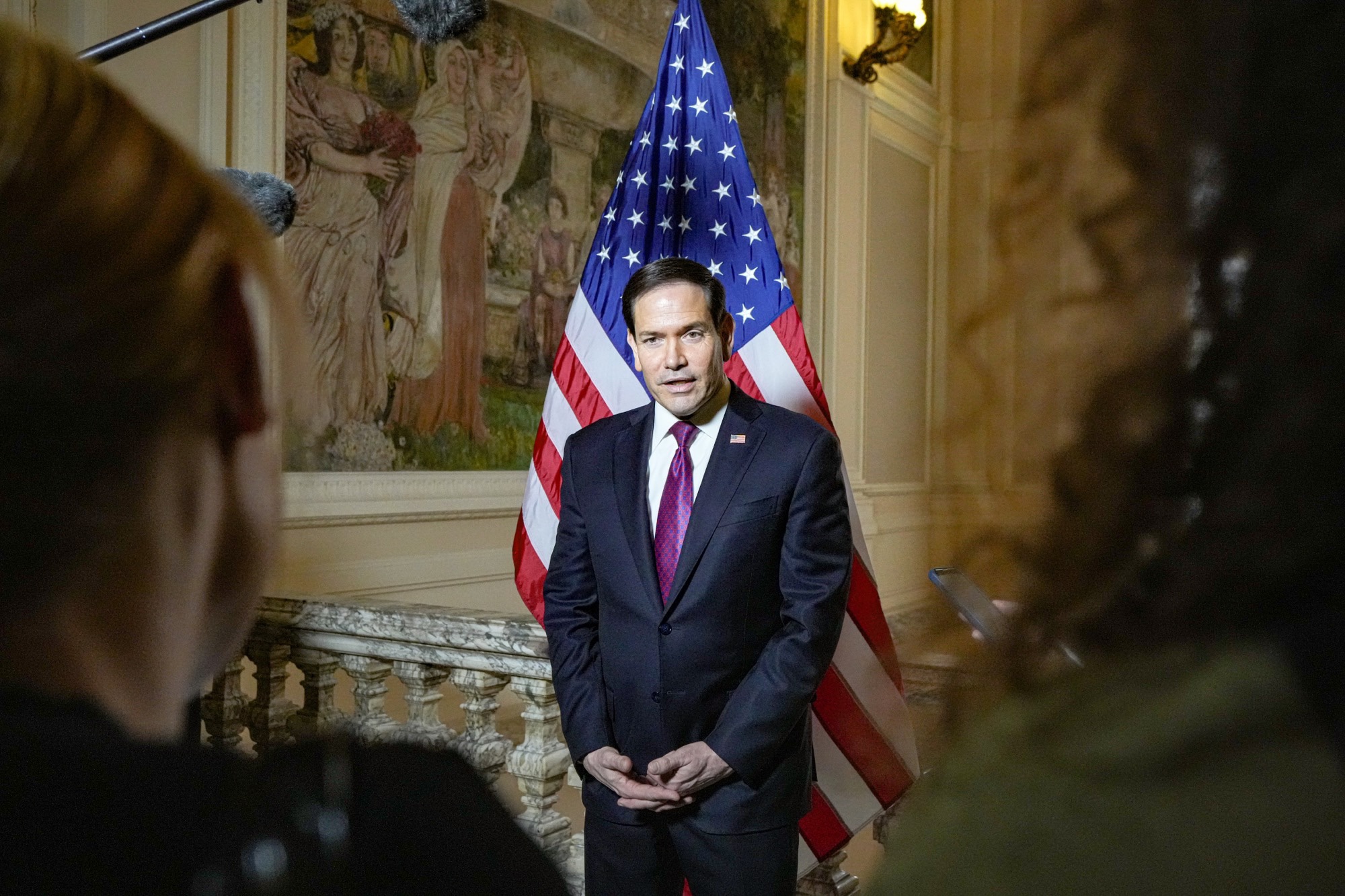
Earlier this month, amid Donald Trump’s repeated threats of committing war crimes against Iran, Secretary of State Marco Rubio vowed to dismantle the court that prosecutes these types of violations of international law — “brick by brick, if necessary.” And, as Chad’s announcement on Monday that it plans to withdraw from the founding treaty of the International Criminal Court (ICC) shows, he is putting his money where his mouth is.
The West African nation said in a letter to the United Nations that its decision is based on the court’s “limited and uneven” effectiveness and what it perceives to be an anti-African bias. However, just last week, Chad’s government stated that the issue of the ICC came up in a call between its minister of foreign affairs and a high-ranking US state department official.
“The American side expressed its concerns about the functioning of this institution and requested a review by Chad of its accession to the Rome Statute,” according to the readout of the call. “The Minister of State recalled that Chad shares certain concerns relating to the functioning and selectivity of the Court, while reaffirming its attachment to the principles of State sovereignty.”
What is especially noteworthy is that, according to Chad’s government, it was the US that requested the call, which is strong evidence that the Trump administration is actively lobbying other nations to abandon the court that adjudicates the worst international crimes.
Unsurprisingly the state department’s Africa Bureau applauded the move it clearly had urged Chad to make.
“The United States welcomes Chad’s decision to withdraw from the ICC and join the growing number of nations reclaiming their sovereignty from this flawed institution,” it stated. “As [Secretary Rubio] has stated, the United States will never surrender its sovereignty to an unaccountable global tribunal, and we are launching a comprehensive, whole-of-government campaign to end the ICC’s illegitimate overreach. We call on all other ICC members to withdraw from the Rome Statute.”
Venezuela announced on Saturday that it also plans to withdraw from the war crimes court. The state department applauded the country’s interim government for participating in the “American-led efforts to dismantle the corrupt and worthless ICC.”
That decision was hardly surprising seeing how the South American nation is not much more than a puppet regime of Washington right now.
On Monday, for example, Trump bragged that the US is “taking in a lot of money — billions and billions of dollars from Venezuela.”
Is that legal? That would be a question an international criminal court could sort out.
Human rights activists strongly criticized Chad’s decision, with Tamara Aburamadan, the international justice counsel at Human Rights Watch, saying it is “a blow to justice for victims of serious international crimes.”
She added that the “ICC is a critical court of last resort for those victims around the world.”
What makes Chad’s withdrawal particularly painful is that it is home to many witnesses of war crimes in the Darfur region of neighboring Sudan. If the government in N’Djamena no longer recognizes the war crimes court, the court may lose access to those witnesses.
Earlier this month, in an address to the UN security council, ICC Deputy Prosecutor Nazhat Shameem Khan reported from a trip to Chad and said that there has been a “breakthrough” in the investigation of crimes against humanity in Darfur.
This, Khan said, included “crucial interviews of key witnesses that have allowed the Office to draw a direct link between recent crimes committed in Darfur to high-level perpetrators.”
For what it’s worth, none of the countries that have withdrawn from the ICC are run by high-caliber leaders.
Chad is governed by Mahamat Déby, the son of longtime ruler Idriss Déby, who came to power through a military coup but has since won a disputed election, and his main challenger was imprisoned.
The governments of the three African nations that withdrew last year — Niger, Mali, and Burkina Faso — were all toppled by military coups.
And then, of course, there is Venezuela, which is run by Rubio.
In other words, this is not the kind of company you keep if you want to portray yourself a champion of international justice.
Then again, this clearly isn’t about international justice; it’s about evading it.