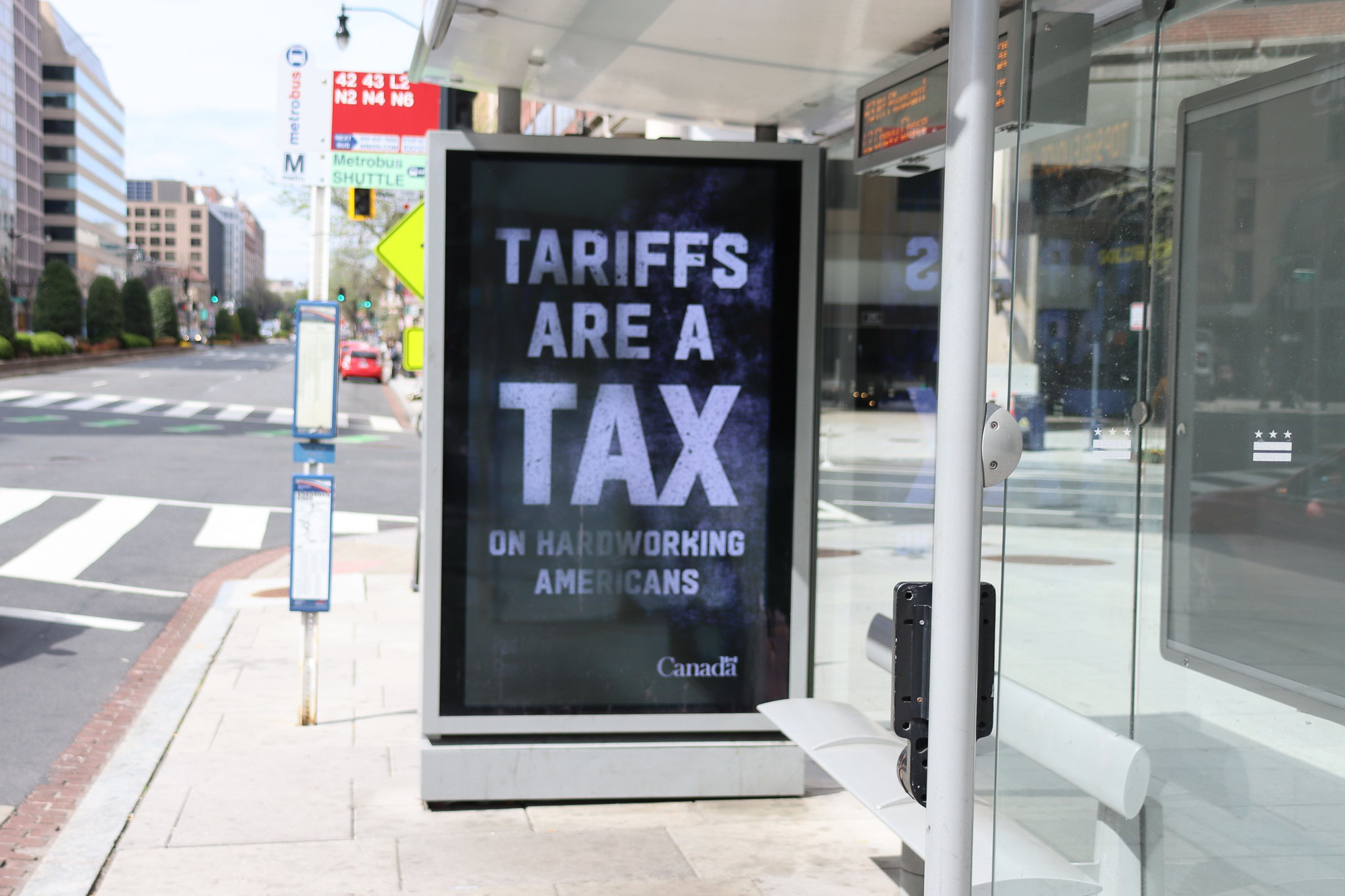
US, Canada Trade Accusations Over Collapse of Tariff Talks
US and Canadian officials are blaming each other for their failure to reach a deal that would have staved off the implementation of billions of dollars in new tariffs that will make a variety of goods more expensive for consumers in both countries.
|
Listen To This Story
 |
Canada’s Prime Minister Mark Carney announced Friday night that he had suspended negotiations between his country and the US over an agreement that would have prevented an escalation in the trade war between the neighbors.
Last month, Donald Trump imposed $20 billion in new tariffs on a variety of Canadian goods. These were supposed to go into effect on Wednesday, but the president had paused them for three days because progress had been made on a deal.
However, those talks have now collapsed, and both sides are blaming each other.
“[Our] goal has been to secure the best deal for Canadians, never a deal at any price or on any deadline,” Carney said, adding that his country recognized that “America has changed” under Trump.
While the prime minister noted that the two sides had made progress, in the end, that was not enough. Specifically, he blamed “last minute changes” in the terms the US proposed that were “unfair, uneconomic, and called into question the reliability of any deal.”
And that highlights the problem any country has that is trying to reach any type of arrangement with an erratic US president who can change his mind on what he wants to do at any time — whether that relates to his tariffs, the war with Iran, or the marble he wants to use in his ballroom.
With friends and foes alike, Trump is just as likely to tout a looming deal as he is to threaten them with annihilation or annexation in the next breath.
However, Canada and Iran are also two examples that this “strategy” (for lack of a better word) doesn’t always work.
While Trump has successfully bullied many other trading partners while ruining long-standing partnerships in the process, Carney in particular has stood up to him.
Under his leadership, Canada has forged new trade agreements with other countries to reduce its dependence on the US.
On Friday, Carney noted that this strategy is bearing fruit.
“Our existing free trade deals already provide Canada with preferential access to 1.5 billion consumers, and we are on track to double that market access by the end of this year,” he said.
As for the new tariffs that Trump has imposed on his country, the prime minister vowed that Canada would match them “dollar for dollar.”
Meanwhile, US officials offered a different version of what happened.
Trade Representative Jamieson Greer called the collapsed talks a “missed opportunity” for Canada and blamed Carney’s government.
“Despite the US offer to Canada to receive the best treatment of any major exporter to our market, new demands and walk backs of other commitments by Canada have upended the careful balance reached in the past days,” he said.
The impasse also does not bode well for talks on a new US-Mexico-Canada Agreement (USMCA). During Trump’s first term, the three countries had renegotiated the North American Free Trade Agreement, which the president touted as a major success at the time. Earlier this year, however, the US did not agree to automatically extend the deal “in its current form” beyond its 2036 expiration date.
What all of this means for US consumers, who bear the brunt of the burden of the tariffs Trump imposes on other countries, is that they will pay more for many Canadian goods ranging from dairy products to alcoholic beverages and car parts.