With the World Cup in the Books, America Can Give Itself a Pat on the Back
An epic World Cup ended Sunday, and there is a lot of praise to go around.
Unfortunately, one of the great World Cups in history ended on an ugly note when some of the defeated and badly overmatched Argentinian players lost their cool after the final whistle and attacked their victorious counterparts on the pitch.
But their lack of sportsmanship should not detract from what was an amazing tournament that had a bit of everything: a worthy champion, the game’s stars performing at the highest level, underdog stories, heartbreak, and controversy.
More than anything, it brought the world together and gave a fractured nation something to rally around.
And, as Mexico’s President Claudia Sheinbaum pointed out, the tournament also served as an example of neighborly cooperation.
“The three host countries — Canada, the United States, and Mexico — have shown that, when we work together, we are capable of turning great projects into reality and leaving a legacy of cooperation, friendship, and hope for the world,” she said.
For purposes of this column, we’ll focus on the US, especially because it was the biggest question mark ahead of the World Cup.
How much would Donald Trump try to interject himself in a spectacle that wasn’t about him? Would there be ICE raids at stadiums? How would an increasingly xenophobic country treat its visitors?
We raised some of these questions at the onset of the tournament and are delighted to say that our concerns were (mostly) unfounded.
Back in 2018, when actions he took during his first term cast doubt on such things, Trump assured FIFA boss Gianni Infantino that the US would host the World Cup in an “open and festive manner” and that “all eligible athletes, officials and fans from all countries around the world would be able to enter the United States without discrimination.”
While that last part didn’t happen, the American people really stepped up and deserve a lot of praise. They welcomed fans from across the globe with open arms and presented the US in its best light.
In return, they earned the of appreciation of guests who enjoyed what the country has to offer: kindness, air conditioning everywhere, super-sized meals, and ranch dressing.
Perhaps this experience can serve as a reminder that the US is a nation of immigrants and that good things can happen when you embrace foreigners and what they have to contribute.
The (mostly) Democratic mayors of the host cities, many of which have been portrayed as crime-ridden hellholes in the conservative media, also should get credit for how smoothly the tournament went.
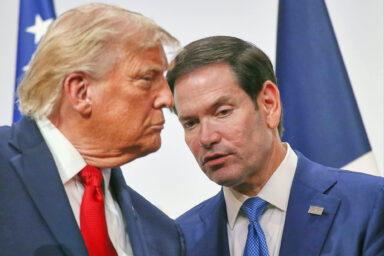
It’s more of a mixed bag for Trump, although we have to grade him on a curve.
While he was responsible for one of the tournaments sourest notes — his phone call to Infantino to get the red card of an American player reversed, i.e., the kind of political interference that is taboo — the president showed remarkable restraint for a someone who usually wants to make everything about himself.
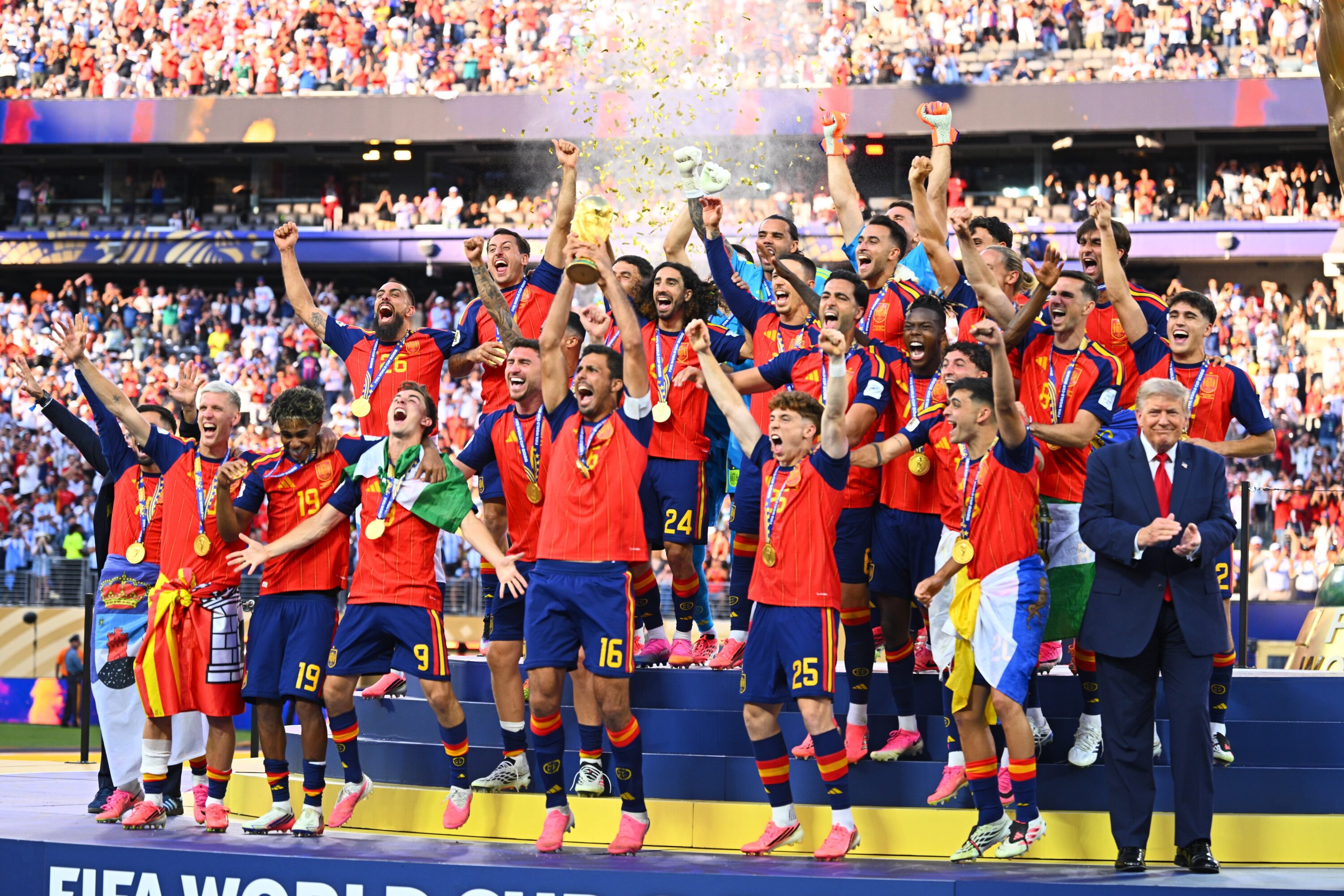
This was perfectly illustrated by how he lingered on the stage, off to the side, as Spain celebrated its victory.
Still, considering how bad it could have been, the president also came out ahead, in no small part because the economy got a shot in the arm by all those visitors spending billions of dollars – much of which went to local businesses in the host cities.
We are not sure if the US is going to learn any lessons from this experience, for example, about working with neighbors instead of threatening them, realizing that Americans are on the same team, and the benefit of allowing foreigners into the country.
That may be asking a bit much.
However, stranger things have happened. After all, the team of tiny Cabo Verde was the only one that played Spain in this World Cup and managed not to lose.