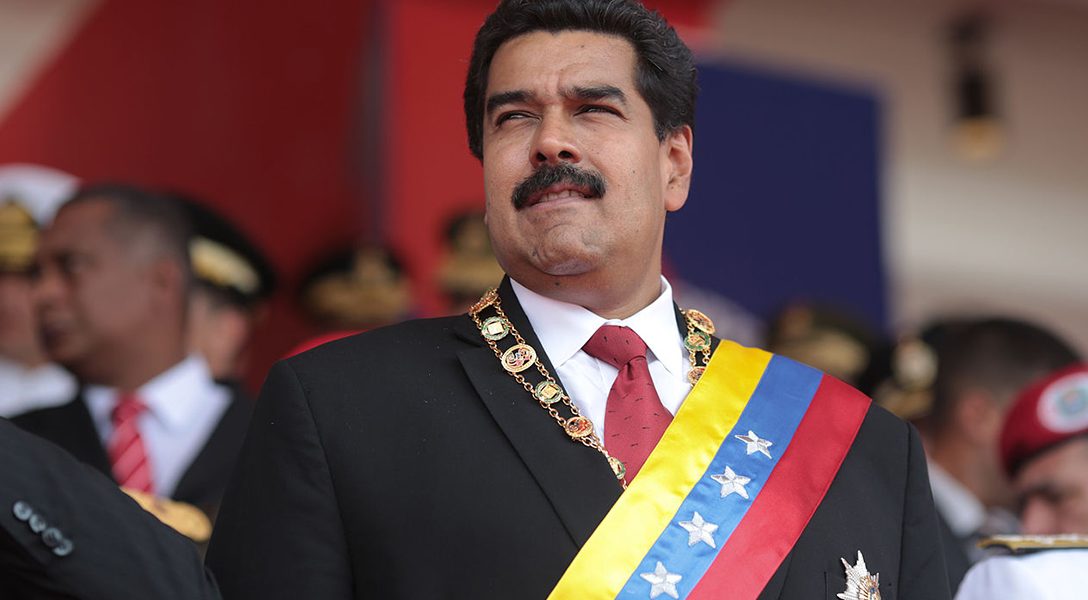
The United States launched large-scale overnight strikes against Venezuela that led to the capture of the country’s leader, President Nicolás Maduro, Donald Trump announced early Saturday morning.
|
Listen To This Story
 |
The United States launched large-scale overnight strikes against Venezuela that led to the capture of the country’s leader, President Nicolás Maduro, Donald Trump announced early Saturday morning.
According to the US president, Maduro and his wife are being flown out of the country.
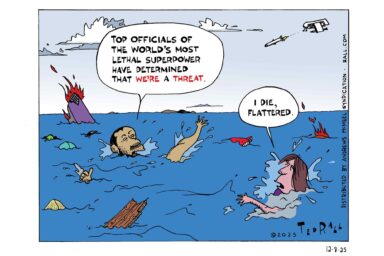
The attack followed months of threats from Trump and a massive military buildup in the region.
Ostensibly, the president targeted the South American country because he held Maduro responsible for an “invasion” of Venezuelan immigrants and for participating in “narcoterrorism.”
Last week, for example, he said that Venezuela has sent “hundreds of thousands of people in from jails, from prisons, from mental institutions, and insane asylums.” Trump has made this claim repeatedly without presenting evidence to back it up. In addition, it is not clear whether he understands the difference between “claiming asylum” to escape a repressive regime and an “insane asylum.”
However, the US president has recently let it slip that Venezuela’s oil reserves also play a role.
“America will not allow Criminals, Terrorists, or other Countries, to rob, threaten, or harm our Nation and, likewise, will not allow a Hostile Regime to take our Oil, Land, or any other Assets, all of which must be returned to the United States, IMMEDIATELY,” he stated last month.
The attack and the arrest of Maduro contradict the US president’s past rhetoric that he would stop wars and not start them.
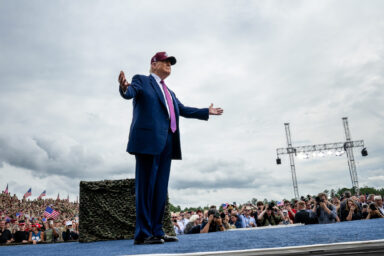
Trump, who has been angling for a Nobel Peace Prize, has referred to himself as the “president of peace.” As part of his stump speech, he claims to have stopped eight wars during his first year in office. However, most of them either weren’t wars to begin with or haven’t ended.
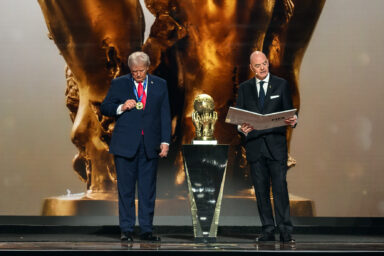
In any case, this attack, coupled with the strikes on Iran, Syria, Nigeria, Yemen, Somalia, and Iraq (as well as those on boats in the Caribbean and the Pacific) that he ordered in 2025 likely mean that he can kiss that Nobel Peace Prize goodbye. Fortunately for Trump, he is still the inaugural recipient of the peace prize of soccer’s governing body, FIFA, which has not yet weighed in on the overnight attacks.
It should also be noted that the authority to declare war rests with Congress and not the president.
However, both Democratic and Republican presidents have blurred that line so much over the past few decades that it is essentially nonexistent.
That being said, Trump seems to have taken a real liking to using the US military to show how powerful he is.
It remains to be seen what the fallout from the attack on Venezuela will be.
In 2024, the country voted for a change in direction from the socialist regimes of Maduro and his predecessor Hugo Chavez. However, Maduro ignored the results of the election and stayed in office to continue his authoritarian rule.
Therefore, on the one hand, it is positive to see regime change in the once-prosperous, oil-rich country.
But regime change to what?
Gangs and cartels are one of the most powerful forces in Venezuela, so they could use the vacuum that Maduro’s removal will likely cause to take even greater control of the country.
And if the Trump administration wants to install its own ally as the head of the government in Caracas, that’s the exact kind of “nation building” that the president has rejected in the past (and that rarely turns out well). If that is the plan, then the US may have to put boots on the ground to counterbalance the firepower of the Venezuelan military and the heavily armed cartels.
Finally, it should be noted that, while the nation often rallies behind a president in times of conflict, Americans feel very strongly about not wanting to go to war with Venezuela.
In a recent poll, more than 60 percent of them, including two-thirds of independents, said they oppose US military actions inside the country.