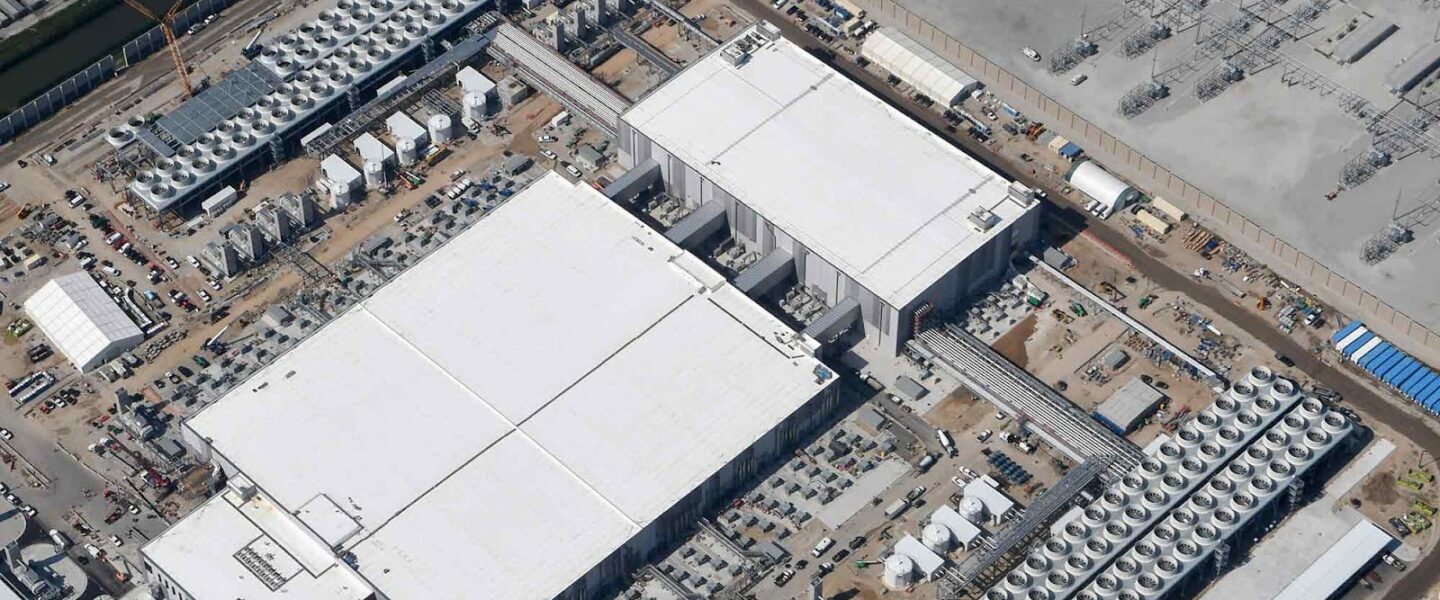
Generative AI isn’t inevitable, and people are already fighting hard to keep power-hungry data centers out of their communities.
|
Listen To This Story
 |
If you listen to the proponents and funders of generative artificial intelligence, widespread adoption is all but inevitable. It’s not, but the world is still facing an unprecedented push for more data centers and supporting infrastructure for the industry. Every call for a new data center includes another implicit ask: more power. The power demands behind generative AI are staggering, and they’re only supposed to increase. In Virginia, Georgia, and South Carolina, 65 percent of new load growth is coming from data centers to fuel the AI bubble. Generative AI is a tool of authoritarianism in the United States, but there are ways to push back — and people are doing so right now.
Generative AI shows all the signs of being a bubble that’s eventually going to burst, and do serious damage to the economy when it does; even the head of Google’s parent firm has acknowledged that it would hurt the whole economy if it goes. Most AI startups are losing money; companies investing in AI aren’t seeing returns. The largest companies are facing major lawsuits over their use of copyrighted material, and the most famous AI company in the world is burning cash: It looks like it lost $11.5 billion dollars just in the second quarter of this 2025.
Operation Stargate, President Donald Trump’s initiative, is supposed to fund 10 new data centers, each requiring more power than the whole state of New Hampshire. The plans are absurd. In order to prove the worth of this technology, we have to completely rebuild our energy grid and reorient everything toward data centers. It would be like building the transcontinental railroad before anybody had even ridden on a steam engine — and in this case, there’s mounting evidence that generative AI will not be transformative and lead to general intelligence or even massive economic growth.
Sam Altman has claimed that he will be working on nuclear fusion plants to make OpenAI’s vision possible. But setting aside his hucksterism, AI boosters are going to want to do this the old-fashioned way: fossil fuel plants. The AI boom is being used as an excuse to keep building gas-fueled plants and to delay mothballing older plants; 17 such facilities are in limbo because of this. For this administration, supporting data centers is a way to put its finger on the scales against renewables and to enrich energy corporations that are already wrecking the environment.
The AI boom is being used as an excuse to keep building gas plants and to delay mothballing older plants.
Data centers don’t bring many benefits to the areas where they’re built. In Virginia, residential energy costs are expected to double by 2039 because of the demand from data centers. Energy grids have to be upgraded just to handle the extra demand. They don’t create very many jobs after the initial construction boom because they run with just a few dozen people. They actually can chase away other businesses because they strain the grid so heavily. In Sweden, a bread company was forced to relocate a planned bakery because the neighboring data center was using too much power.
Data centers and their associated energy generation are also environmental catastrophes. Much has been made of the amount of water that they consume, but they come with a host of other problems as well. The gas turbines powering the Grok chatbot in Memphis are exempted from pollution regulations, and there are 35 of them blasting pollution in a part of the city that already leads the state in asthma hospitalizations. In areas with preexisting water pollution, the water-cooling process can actually exacerbate how concentrated those pollutants are and create a feedback loop that poisons the aquifer. The data centers also depend on rare earth minerals that are destructive to extract. But most threatening of all is the fact that the supercharged demand is mostly leading to more fossil fuel growth at a time when we need to cut emissions and make progress against climate change.
You might shrug if this is all a bubble; eventually, capital will run out of appetite to set money on fire. But even if the bubble bursts and many of these data centers aren’t used, we’ll still be stuck with coal and gas plants. They’ll be much harder to get rid of because they’re already in use and can be repurposed easily. We’ll all pay the price for keeping fossil fuels alive that much longer. And because Silicon Valley has more or less aligned itself with Trump, they can count on governmental support to delay the popping of that bubble while also continuing to funnel money and support back to Trump.
Moreover, there’s at least one use case governments seem determined to use AI for: surveillance. The Trump administration is finding new ways to crack down on critics and dissidents as well as to go after migrants that they’re seeking to deport. Generative AI is going to be part of the infrastructure of authoritarianism. Stopping data center and fossil fuel plant construction is going to be antifascist work from here on out.
People are already fighting hard to keep data centers out of their communities, and there’s a road map people can follow. Power plants and data centers still have to go through permitting processes, land-use hearings, public testimony and approvals. They’re capital-intensive and take time to build. There’s even a national organization, Data Center Watch, that is tracking construction around the country — and the statistics are encouraging. Sixty-four billion dollars of data center construction was halted or slowed between May 2024 and March 2025; that figure grew to $98 billion between March and June of this year alone. But it’s going to need to keep growing and even accelerate.
The first part of the fight has to do with transparency. Companies are incentivized to move as rapidly as possible in the planning process — and to hide what they’re doing. xAI succeeded in Memphis by expediting approval from the Tennessee Valley Authority for the plants and then working to circumvent the City Council. In Tucker County, WV, activist groups are fighting a 500-acre data center campus and power plant. The company’s initial permit application was so heavily redacted that nobody could figure out the emissions impact the gas-fired plant would have on the area. They’re currently working through their second appeal to unseal the permit application. Opening it could prove that the West Virginia Department of Energy misclassified the generation as a minor source rather than a major one, which would then remove any exemption from state or federal laws about air pollution.
Fighting for and forcing scrutiny makes it easier to undermine the supporting components required to begin construction. Going after the money part of it matters: Georgia has seen a lot of data center growth in part because the tax breaks to build there are generous. In St. Louis, contentious hearings over a proposed data center led the city’s redevelopment commission to recommend that tax incentives for the data center be withdrawn. The reason? Residents made it clear in testimony that they believed the economic benefits that would accrue from a data center were negligible. Several states offer property tax breaks or sales tax exemptions on electricity purchases. These come with generally paltry requirements. In Kansas, for example, they have to create only 20 jobs in order to receive them. Rolling back these incentives is critical, and states are starting to do so. Minnesota ended them just this year. They’d make a great ballot issue for 2026 elsewhere.
We need to continue publicizing the very real environmental costs of data centers.
Other ways to slow construction involve relying on preexisting federal law. This administration may not enforce them well, but as long as they’re on the books they still have to follow a process. Bessemer, AL, is on track to build a $14 billion “hyperscale” data center. While the City Council recently approved a rezoning application despite intense citizen pushback, advocates are using a highly threatened fish species, the Birmingham darter, to stop or at least delay construction of the data center. Currently, the US Fish and Wildlife Service is reviewing a petition that analyzes the threat posed to local water systems by these data centers.
The next tactic involves zoning. Data centers and their power plants need to be approved in order to build, and up until recently they could expect a rubber stamp on those decisions. That’s changed. Warrenton, VA, had an Amazon data center approved, but in 2024 every Town Council member who approved the project was voted out and replaced with a candidate who opposed it. In June 2025, a ban was passed on future data centers in the city. The ultimate goal is a moratorium on their construction, and it’s achievable. Citizen anger over the issue is palpable. St. Louis’s aldermen are contemplating a temporary moratorium on new data center projects, though it’s on hold for the moment. A number of Georgia counties have passed them as well, mostly as a way to study the issue.
Finally, we need to continue publicizing the very real environmental costs of data centers, because their advocates are going to push a narrative that they’re not a problem. There’s already a movement to downplay the groundwater that they’re using up. Thirty years ago, consensus on climate change was bipartisan and broad, but decades of astroturfing and right-wing echo chambers undermined it. The AI industry is going to run the same playbook this time; we need to be louder.
Pursuing this comes with real benefits politically, and if Democrats want to be serious about being an opposition party they should align themselves with this now. Ordinary Americans are being punished by rising utilities costs, and it’s not just a blow to poor Americans: Pretty much everybody will be affected, so going after it resonates all the way to the upper-middle class. In the 2025 elections, two of the few Democrats Georgians elected to statewide office won seats on the state utilities commission. With next year’s midterms looming large, tapping into this discontent will matter. Make Trump own every data center in the country, with each one of them drawing the same level of disgust that a smoke-belching factory would.
This story by Zeb Larson was originally published by Truthdig and is part of Covering Climate Now, a global journalism collaboration strengthening coverage of the climate story. WhoWhatWhy has been a partner in Covering Climate Now since its inception in 2019.