Eloquence: Yet Another Thing Missing From America’s Joyless Fourth of July
No soaring rhetoric. Not even plain talk. Just a bowl of boastful, sneering, lying presidential word salad to mark the momentous occasion.
|
Listen To This Story
 |
This Fourth of July wasn’t quite up to the measure of most others, despite its 250th Anniversary tag that should have made it generational.
The joy seemed forced, the platitudes rote, the sense of community absent, and the central event, rather than a World’s Fair or the procession of tall ships that had marked previous commemorations, was a wan “state’s fair,” with one booth brandishing a Confederate flag.
But something else was missing too: eloquence.
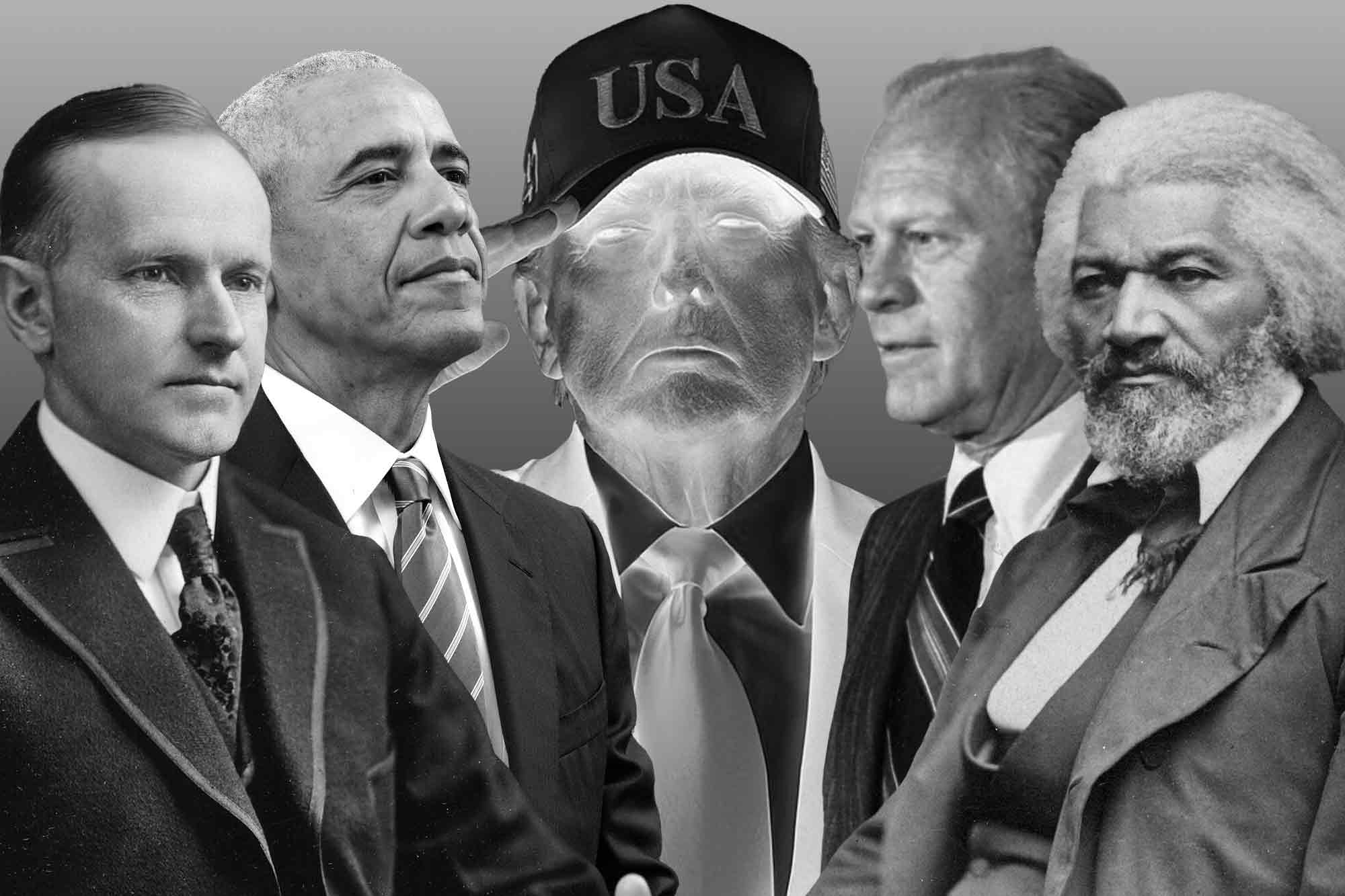
Fourths of July often bring out an orator’s verbal flights. Frederick Douglass used the occasion in 1852 to denounce the holiday in what would be a classic address. “What to the slave Is the Fourth of July?” he asked, before concluding, “The sunlight that brought light and healing to you, has brought stripes and death to me. This Fourth July is yours, not mine. You may rejoice, I must mourn.”
On our 150th anniversary, Calvin Coolidge — known for being taciturn, even monosyllabic — delivered a long speech, a speech surprisingly devoid of clichés and suffused with the meaning of the Declaration. “We must cultivate the reverence which they had for the things that are holy,” he said of the signers. “We must follow the spiritual and moral leadership which they showed. We must keep replenished, that they may glow with a more compelling flame, the altar fires before which they worshiped.”
On our 200th anniversary, Gerald Ford spoke movingly of immigrants at a naturalization ceremony: “You came as strangers among us, and you leave here as citizens, equal in fundamental rights, equal before the law, with an equal share in the promise of the future.”
And then we have Donald Trump on our 250th anniversary.
Here are samples from his address on the National Mall after a rainstorm had postponed it for two hours:
“They estimated they had 375,000 people before everybody had to leave. And they now have 150,000 people. It’s the craziest thing anyone’s ever seen, at least.”
And: “The entire world has been on notice that Americans will never let anyone take our freedom away. Won’t happen. And all these talks from the communists, they haven’t got a chance. Not even a chance. We don’t want communists in our country. Never worked, and it never will work.”
And: “You know, to get into our military now is tough. Two years ago, we couldn’t fill a job, and now it’s overflowing. We have so many. Setting records. We’re setting records. It’s actually hard to get in. That includes our great police forces and our firemen. They couldn’t hire anybody. Nobody wanted to do it. Now it’s hard to get those positions…”
And so it went. Impromptu. Gibberish. False. Boastful. Sneering. Empty. Barely one step up from “nyah nyah.” Not exactly words to be carved in stone.
Of course, Trump is something of an imbecile, and he mutilates language as he mutilates everything. But as my colleague at WhoWhatWhy, Jonathan Simon, has noted, this desecration of English is not a hindrance to Trump but rather a boon. To his supporters, eloquence is for elitists, phonies, liberals, and communists. Great speeches are un-American. Not to be able to string two sentences together is a sign of authenticity.
In the sense that the bark of a dog or the caw of a crow is authentic. But such “authenticity,” put to the service of division and degradation, hardly elevates us as a nation. It titillates a tribe.
Related: Donald Trump’s Simpering Superpower
Trump understands this all too well. On some level, he knows that, while his stream-of-consciousness nonsense may appeal to MAGA by leveling language to the lowest common denominator, it cannot stir the soul, which is what great leaders do.
He wants to be a king. But, unlike his much-envied predecessor, Barack Obama, he can’t be majestic. He and his language are flat-out incapable of bringing people together.
In these right-wing populist times, eloquence may be obsolete, and those, like me, who mourn it jeered. But this 250th celebration, without verbal fireworks, even squibs, is a reminder of what eloquence may do.
There is a reason that a recent poll of America’s favorite politicians was headed by Obama. It wasn’t just because Obama knew how to deliver a speech, which he did. I think it was because Obama knew what a speech could do — not demeaning others while inflating the speaker’s ego, but ennobling others while doing all a speaker can to bring them together.
How we miss that now.