Election Truth Alliance: Conspiracy Theorist or Guardian of Election Integrity?
From statistical anomalies to a federal lawsuit, the Election Truth Alliance has spent two years building a case for election transparency.
|
Listen To This Story
 |
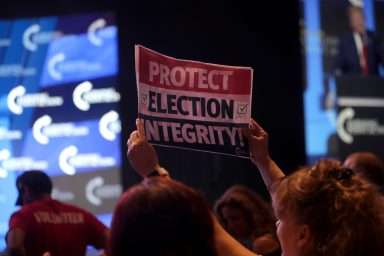
Soon after the 2024 presidential election, a group consisting of cybersecurity experts and forensic auditors began publishing reports about statistical irregularities in key battleground states that it believes warrant independent investigation.
The group, which calls itself the Election Truth Alliance (ETA), relied primarily on the same methodologies the US uses to monitor elections abroad, yet their analysis has been a tough sell.
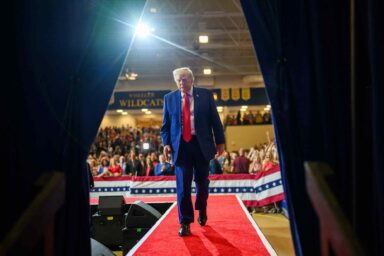
In part, that’s because allegations of voting irregularities and election denialism have been the domain of President Donald Trump and his supporters, who consistently claim that any race they lose was “rigged” or “stolen” and still haven’t acknowledged that Joe Biden won the 2020 election.
Therefore, any references to statistical anomalies that may indicate irregularities in the 2024 election have become taboo, as they are associated with kooks and conspiracy theorists typically found within the Republican Party, a connection that makes Democrats uncomfortable and is viewed as undermining confidence in US elections.
However, ETA’s analysis does not look like the typical ramblings of election denial. It is built on spreadsheets, publicly available cast vote records, and methodologies the US Agency for International Development applied to monitor elections abroad before it was shut down by the Trump administration in 2025.
The group says it advocates for transparency and greater access to election data and urges states to require independent third-party auditing of results, but it does not go so far as to say elections are stolen or rigged.
ETA’s work has garnered some attention, just not always in the way it had hoped. The group has received pushback from the wider academic community, which accuses it of misinterpreting data and promoting ideas that are similar to the types commonly promoted by Republicans.
An Election Watchdog
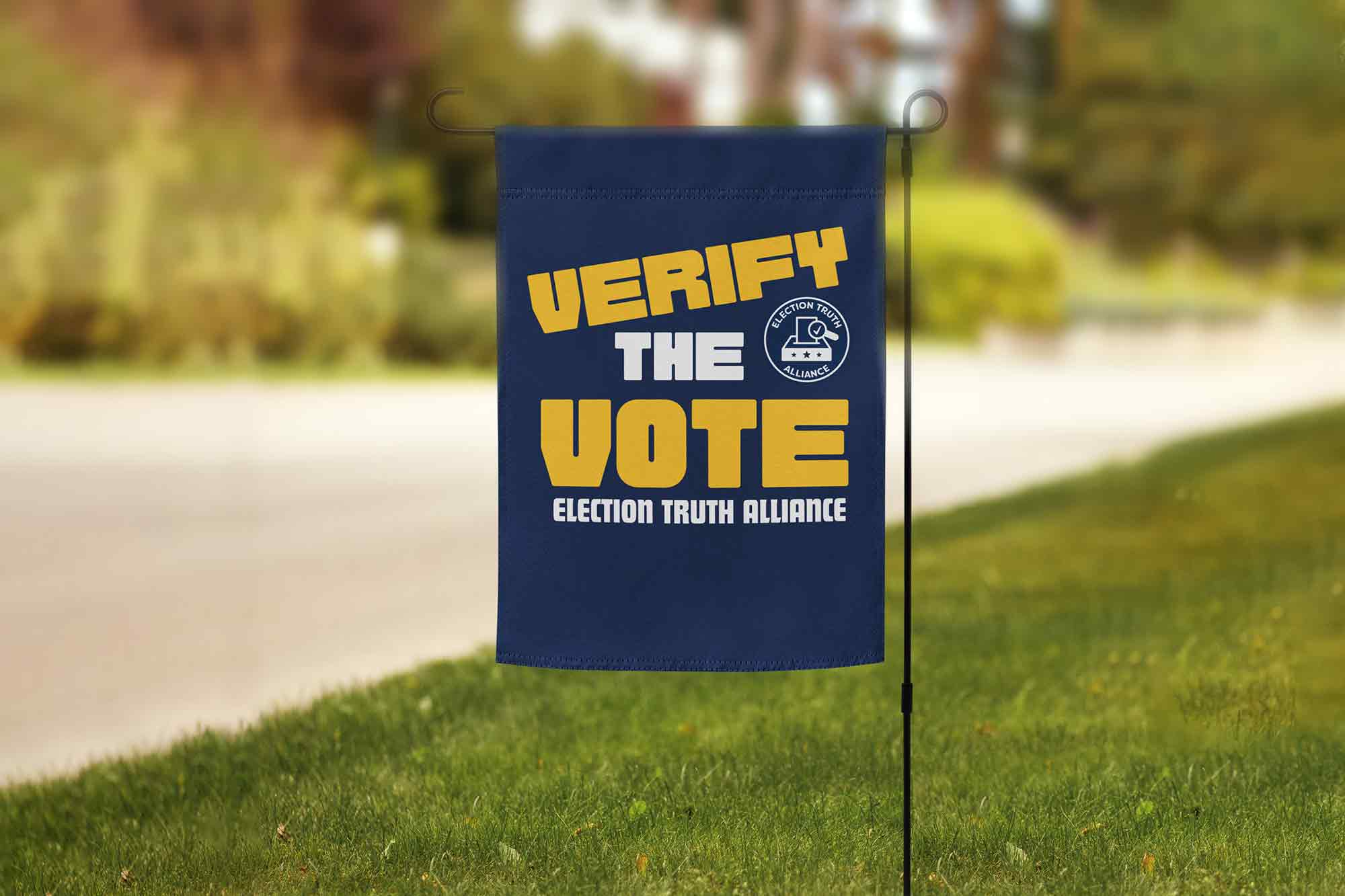
ETA describes itself as a volunteer-led, nonpartisan organization that ensures election integrity through data analysis and transparency. The group says its team includes more than 50 professionals with backgrounds in data analysis, statistics, cybersecurity, forensic auditing, and political science.
The organization analyzes publicly available voting data, identifies statistical patterns it argues warrant investigation, and pushes for government audits and transparency measures. It has published reports on the presidential elections of Minnesota, Michigan, North Carolina, and Pennsylvania.
Nathan Taylor, the organization’s executive director of Advocacy and Public Engagement, is careful about how he frames ETA’s mission. The group, he insists, does not declare elections stolen; it simply wants to raise awareness of the issues it has found.
“We can bring up evidence, and that evidence can point to where you really start looking, and what we are doing now is saying, ‘Hey guys, here’s where the problem is, and here’s how the problems can occur,’” Taylor said.
Reading the Data
At the center of ETA’s work is an eclectic set of statistical methods applied to anomalous voting patterns that, its analysts argue, can indicate vote manipulation. A pattern often seen in ETA’s early work is the “Russian tail,” in which the heat-map distribution of precinct-level vote shares, which should normally follow a bell curve, instead shows an elongated tail for the winning party. The pattern’s name comes from its consistent appearance in Russia and other former Soviet nations. Critics of the Kremlin say the Russian tail is indicative of ballot stuffing.
According to ETA, a pattern resembling the Russian tail appeared in states like Pennsylvania and Nevada in the 2024 election. But as ETA analysts delved deeper into voter data, they found that the results didn’t fully align with the traditional Russian tail.
“We’re not seeing a traditional Russian tail [anymore],” Taylor said. “A Russian tail would suggest manipulation away from the normal, impacting a handful of locations and creating a comet trail up into the right. We’re actually seeing the opposite.”
ETA claims that what it found is more alarming. Instead of a few outlier precincts showing these patterns, Taylor argues that anomalies appear spread across a majority of polling locations, making it difficult to identify what a normal baseline even looks like.
That scale of anomaly, Taylor says, points away from localized ballot box stuffing and toward something more systemic, involving the electronic voting machines themselves. He claims that the software commonly used for voting machines has long-known vulnerabilities and is not foolproof.
It is a concern ETA takes seriously enough to have brought to federal court.
“Some of the most common software and hardware used in the US — used in Pennsylvania — is highlighted in our lawsuit, and the concern is if there are vulnerabilities, people who know what they’re doing can exploit them; and to be honest, that’s a very powerful tool to have if you could change the outcome of an election,” Taylor said.
These concerns form the backbone of their ongoing federal lawsuit in the US District Court for the Western District of Pennsylvania. Filed in November 2025, the complaint targets Pennsylvania Secretary of the Commonwealth Al Schmidt and the boards of elections for Allegheny, Cambria, and Erie counties, alleging failures in equipment testing, missing chain-of-custody documentation, ballot discrepancies, and irregularities that deprived voters of equal protection under the law. It seeks a hand count of ballots and a full reconciliation with machine tallies to ensure accurate results.
The Pushback
ETA’s analysis has attracted a fair amount of criticism. Among the critics is Justin Grimmer, a political science professor at Stanford University. In an interview with The Atlantic, Grimmer called the group’s approach similar to the type of election denialism seen during the 2020 election among Trump voters.
“The most remarkable thing is the similarity in the analysis that we’re seeing from the bad claims made after 2020 and these similarly bad, really poorly set up claims from 2024,” Grimmer said.
In an article in the Michigan Advance, Grimmer goes further, claiming that Trump could use ETA’s work to dispute the results of the upcoming midterms. Such concerns, while possibly valid, risk allowing Trump’s own Stop the Steal election denialism to have a chilling effect upon even scrupulous inquiries into anomalous-seeming election processes and results.
Taylor rejected the accusations of conspiracism, arguing that public perception has started to shift as more data and facts have come to light. He pointed to the cybersecurity, auditing, and political science expertise of ETA’s several dozen volunteers. Additionally, he emphasized that anyone can replicate their work using publicly available data.
Another criticism was voiced by Michael Siegrist, a clerk from Canton Township, MI, in the same Michigan Advance article. Siegrist stated that many of the irregularities identified by the ETA — particularly those related to Michigan — can be attributed to “socioeconomic factors.”
The Case for Reform
For ETA, identifying irregularities is half the battle. The other half is pushing for systemic changes that would make future elections harder to manipulate.
The group says it is looking for practical solutions, not the type of “fixes” proposed by Republicans, like disenfranchising millions of voters to combat a problem for the existence, let alone the claimed scale and scope, of which little or no evidence has been offered.
For Taylor, the most meaningful reform would be a fundamental overhaul of how votes get counted in the first place.
“Obviously, the biggest reform would be using voting systems that are open source and secure and independently audited and not falling under one ownership and umbrella,” he said. “That would be the biggest change we can make in the US — or just going back to hand-counted paper ballots across the board, which is a bit more of a struggle because we do have a lot of contests on many ballots.”
Election transparency groups like ETA have warned that the consolidation of the US market for voting machines among a handful of vendors has created a production vulnerability that pre-election certifications don’t adequately address.
Taylor said a bad actor with access to the update distribution process could theoretically upload malware sophisticated enough to go unnoticed.
“Supply chain risk is what we would say, because if you could compromise that supply chain — if you could put people inside of these companies or figure out how to maybe introduce malware through the systems or the processes they use to distribute updates — that would be a supply chain risk; and by not diversifying, it’s a monopoly,” he explained, meaning that it becomes easier to have major impact from a single infiltration.
In the United States, three private companies — ES&S, Liberty Vote, and Hart InterCivic — own 90 percent of all voting machines, none of which are required to allow third-party auditors.
Liberty Vote’s ownership is both new and noteworthy. Before it became Liberty Vote, the company was known as Dominion Voting Systems, which faced numerous false claims of election fraud related to the 2020 election. Dominion subsequently won hundreds of millions of dollars in defamation settlements against Fox News and Newsmax.
After Trump and his allies spread conspiracy theories about Dominion’s voting machines in the 2020 election, former GOP election official Scott Leiendecker bought the company and renamed it Liberty Vote, in a deal finalized in late 2025. Leiendecker, who previously served as a Republican election director in St. Louis, also owns KNOWiNK, a major nationwide provider of electronic poll book technology, giving a single Republican-aligned official significant control over both voting machines and voter check-in systems used across thousands of jurisdictions.
The pedigrees of both ES&S and Hart InterCivic can also be traced back to politicians and businessmen with Republican and right-wing ties.
For ETA, that level of concentration is precisely the problem, regardless of who owns the companies involved. This small number of suppliers leaves supply chains insecure and allows malicious actors to compromise voting machines at scale.
Those concerns are reinforced by a years-long track record at DEF CON, the annual Las Vegas hacking conference, where participants have repeatedly exposed weaknesses in electronic voting systems. Their work falls into two broad categories: discovering backdoors and vulnerabilities already embedded in the code by manufacturers and demonstrating how hackers could bypass existing security protections to introduce vote-altering exploits of their own. Only some of those vulnerabilities have since been addressed.
The fact that hackers found these vulnerabilities, which were overlooked or ignored by voting equipment companies and the government, exposes serious flaws in the current system.
Looking Forward
With the 2026 midterms months away, ETA says it will keep working and continue identifying vulnerabilities. The organization says it has several projects in development aimed at strengthening its analytical abilities for November.
According to Taylor, ETA is creating a free toolkit that anyone can use to examine election data and independently identify irregularities.
For him, the midterms represent both an opportunity and a test. The organization wants to move quickly, identifying vulnerabilities before votes are cast.
“The thing we should be looking at is how we can take steps prior to the midterms to secure those systems if able. Or if not able, then how can we actually flag problems and have investigations, hand counts, and audits after the results are counted in the midterms?” Taylor said.
The group says it plans to expand operations and examine elections in other countries, as it did in 2025 with the Canadian elections.
Given that academics like Grimmer have warned that Trump could point to groups like ETA to justify disputing future election results, the organization finds itself navigating a terrain of uncertainty and election denialism that might possibly backfire on its work. For Taylor, that uncertainty doesn’t change their mission.
“By publishing the things we are finding now — the problems with the systems, publishing the data that’s showing abnormal voting behavior — that is all in the goal of changing things for the better,” Taylor said.
“Every American needs to understand the problems we’re bringing up so that we can fix them and so that we can make sure our elections — the results of our elections — are the will of the people. And that will be the most important thing for a continuing functional democracy in the US.”
This story was written by a member of our Mentor Apprentice Program (MAP). It gives aspiring journalists an opportunity to hone their craft while covering national and international news under the tutelage of seasoned reporters and editors. You can learn more about the MAP and how you can support our efforts to safeguard the future of journalism here.