Have We Lost Sight of What Politics Is For?
Can we defend democracy without sacrificing the friendships and human connections that make it worth saving? The paradox of political obsession.
What if one of the greatest threats to democracy isn’t political extremism itself, but the disappearance of the human relationships that make democracy possible? What if, in our determination to defend the country, we’re slowly destroying our ability to share it?
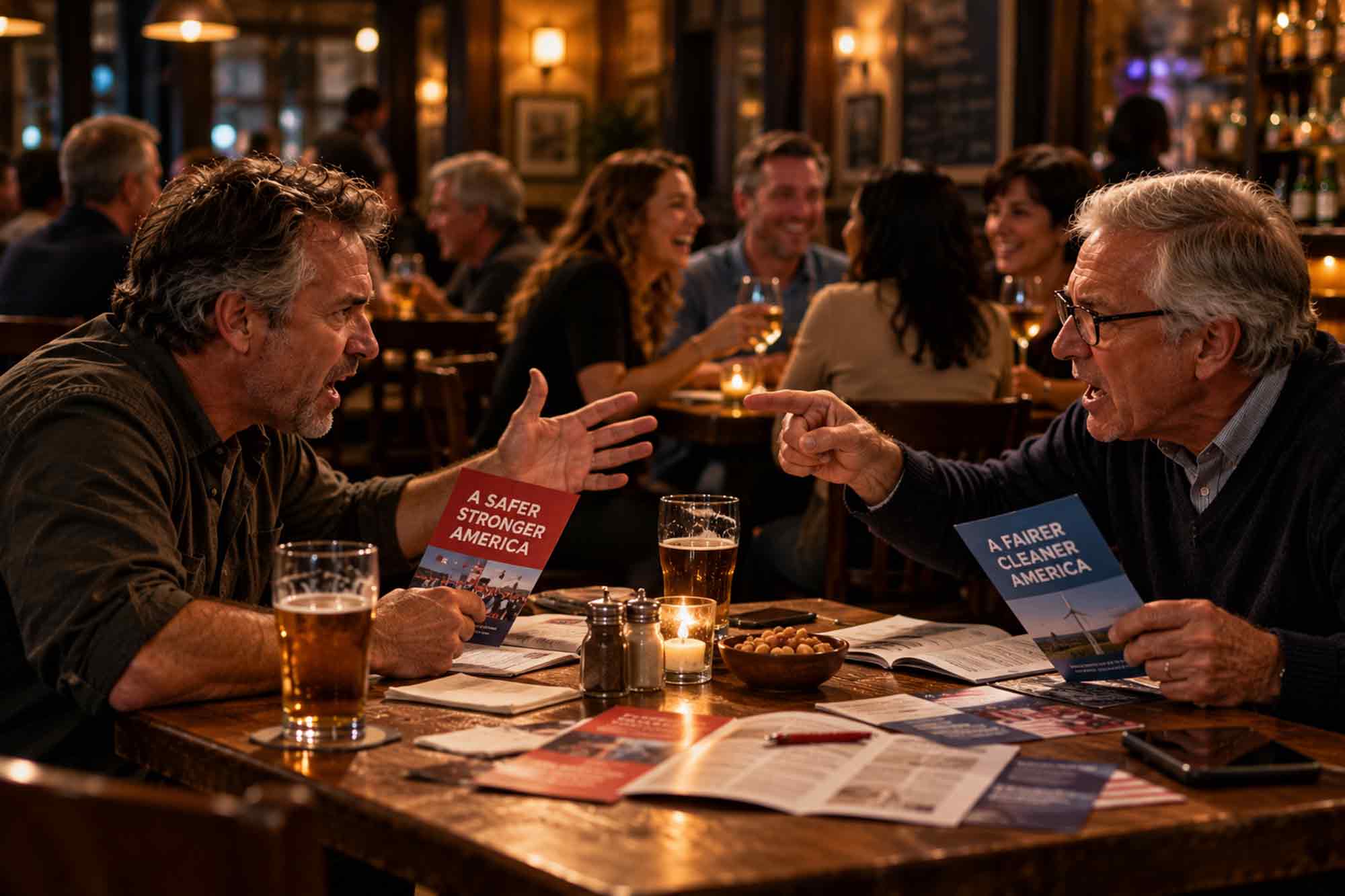
We live in an age when political convictions increasingly determine whom we trust, whom we love, even whom we’re willing to speak to.
Outrage has become a measure of moral seriousness, and every disagreement seems to demand a verdict on someone’s character. But is this constant state of political mobilization making us better citizens, or simply making us less capable of living together?
In this week’s WhoWhatWhy podcast, political philosopher Roger Berkowitz — founder of Bard College’s Hannah Arendt Center and author of A World We Share: Hannah Arendt and the Power of Friendship in a Broken World — explores a provocative idea: Perhaps democracy’s survival depends as much on our capacity for friendship as on our political convictions.
Drawing on Arendt, the Jewish refugee who became one of the 20th century’s most penetrating thinkers about totalitarianism, Berkowitz argues that friendship isn’t simply a private pleasure. It’s a civic necessity, rooted in the recognition that human beings are worth more than their opinions.
But this is no sentimental plea for everyone to get along. Berkowitz confronts the difficult boundaries between disagreement and moral complicity, between the obligation to resist political wrongdoing and the responsibility to understand those with whom we disagree.
And there is an equally troubling danger on the other side: When politics consumes every relationship and every waking hour, what becomes of the families, communities, work, and ordinary human attachments that democracy exists to protect?
The question running through this conversation is not whether we have a duty to defend democracy. It’s whether we can fulfill that duty without surrendering the very humanity, friendship, and freedom that make democracy worth defending.
 Apple Podcasts
 Google Podcasts
 RSS
Full Text Transcript:
(As a service to our readers, we provide transcripts for all of our podcast episodes. Please note that due to resource constraints, transcripts may not always be available at the time of publication. We appreciate your patience and will post the transcript here as soon as it becomes available.)
Transcript Coming Soon…