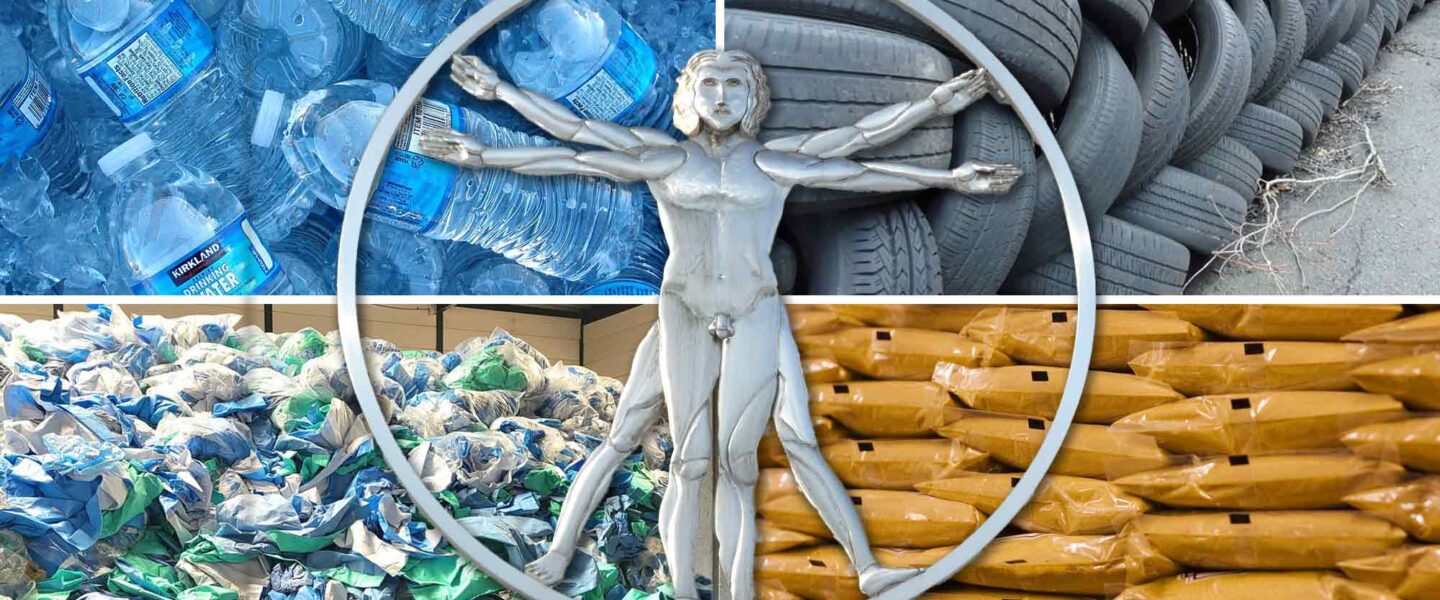
Two garbage trucks of plastic hit the ocean every minute. Microplastics are in your brain. Recycling doesn’t work. What the plastic industry never told you.
You think you know about plastic pollution. You’ve heard about ocean gyres, you recycle diligently, maybe you switched to a reusable water bottle. But here’s what they haven’t told you: Two garbage trucks worth of plastic enter the ocean every minute. Recycling? It’s a lie — only 5-6 percent of plastic actually gets recycled, and the industry has known this since the 1970s.
Chemical recycling, the new salvation, doesn’t work. And those microplastics aren’t just in fish anymore — they’re in your brain, your heart arteries, your kidneys, your most private areas, with no known way to get them out.
In this WhoWhatWhy podcast, former EPA Regional Administrator Judith Enck pulls back the curtain on an industry built on deception. Her new book, The Problem with Plastic, connects dots most people miss — between fracking booms and plastic floods, between what you’re told to recycle and what actually happens, between industry promises and courtroom battles that reveal decades of lies.
ExxonMobil didn’t become America’s largest plastic producer by accident, and the reason has everything to do with geology, not demand.
Enck doesn’t offer easy answers because there aren’t any.
We can’t eliminate plastic — it’s woven into medical devices, food safety systems, the infrastructure of modern life. But she reveals which plastics pose the greatest threat, why your choice of bed sheets matters more than your water bottle, what the fertility data actually shows, and why the health crisis we’re ignoring now will become obvious in five years.
She also explains why 171 trillion pieces of ocean plastic might be less urgent than what’s happening along Louisiana’s “Cancer Alley” — an 80-mile stretch of the Mississippi River where petrochemical plants concentrate in low-income communities — and what actually might work now that federal regulation is all but dead.
This isn’t another dire environmental warning. It’s a clear-eyed look at a problem we can’t wish away, told by someone who knows both the limits of federal power and the potential of local action.
 Apple Podcasts
 Google Podcasts
 RSS
RSS
Full Text Transcript:
(As a service to our readers, we provide transcripts with our podcasts. We try to ensure that these transcripts do not include errors. However, due to a constraint of resources, we are not always able to proofread them as closely as we would like and hope that you will excuse any errors that slipped through.)
[00:00:00] Jeff Schechtman: Welcome to the WhoWhatWhy podcast. I’m your host, Jeff Schechtman. In the grand theater of modern convenience, plastic has played the role of silent revolutionary, transforming how we package, preserve, and consume everything from our morning coffee to our most essential For 75 years, it’s been the miracle material that made products cheaper, food safer, and modern life possible at scales we now take for granted. One word, plastics. Remember that advice to Dustin Hoffman in The Graduate? Turns out it wasn’t wrong, just incomplete. But here’s the thing about revolutions, they tend to eat their children. The microplastics now coursing through our bloodstream, lodging in our organs, even crossing into our brain, those weren’t in the brochure. Neither was the inconvenient truth that recycling that civic sacrament we faithfully performed for half a century actually recycles less than 6% of what we dutifully sort and rinse and haul to the curb. My guest today, Judith Enk, has spent 40 years fighting the good fight as EPA Regional Administrator under President Obama, as founder of Beyond Plastics, and now as author of The Problem with Plastic. She’s dedicated to eliminating plastic waste, mobilizing communities, pushing for the regulation and systemic change she believes can solve this crisis. And then there’s reality. We’re not eliminating plastics. It’s too woven into medical devices, food safety, transportation, the entire infrastructure of modern civilization. Federal regulation? That era seemed to have ended. And as Annie Lowry recently pointed out in The Atlantic, we literally cannot live without this stuff. But here’s the real question. If science and technology got us into this mess, can they get us out? What about less toxic plastics, new generations of materials that don’t accumulate in our bodies, substitutes that actually work at scale? What are the incentives driving innovation forward, rather than just punishing us for what’s already happened? Today we’ll explore not just the crisis, but the path forward that might actually exist between the urgency that Judith Enk sees and the constraints the rest of us live with. Where is the technology heading? What solutions might actually happen? Not just the ones we wish for. Where does hope meet innovation, meeting the hard wall of what’s real? It’s a conversation worth having, even if the answers aren’t what we expect or want to hear. It is my pleasure to welcome Judith Enk here to the WhoWhatWhy podcast to talk about the problem with plastic. Judith, thanks so much for joining us.
[00:02:50] Judith Enck: Jeff, I’m so pleased to be with you. And that’s the best introduction I’ve heard in a very long time. Thank you.
[00:02:57] Jeff Schechtman: Well, thank you. I appreciate that. I want to start with, and I’m sure you’ve recited this a million times, but just how big the problem is, how dangerous the situation has become, the extent of the proliferation of not just plastic, but microplastics and the health consequences from it?
[00:03:18] Judith Enck: Well, it is a significant problem in many ways. And that’s why we wrote the book, The Problem with Plastic, because you can’t just cover it in a fact sheet or a brochure. Plastics is a climate change issue because it’s made from fossil fuels. Plastics is a health issue because we are finding little shards of plastic called microplastics in many different parts of our human bodies. Plastics is an environmental justice issue because it is mostly manufactured in low-income communities and communities of color that are being poisoned by plastic pollution. Plastics is very much an ocean conservation issue. In the book, in Chapter 5, entitled Beneath the Surface, we detail how over 171 trillion pieces of plastic are in the ocean today. And unfortunately, once it’s there, it’s all but impossible to get back because it doesn’t float on the surface of the ocean like an island that we’ve seen of plastic, but most of it falls to the seafloor. And today, on average, two garbage trucks of plastic enter the ocean every minute. So that’s 33 billion pounds of plastic entering the ocean every year, and hopefully we can talk about how it got there. And then finally, the plastics industry has been deceiving the public about the solution, which they believe is plastics recycling. As you noted, only 5 to 6% of plastics actually get recycled because they’re not designed to be recycled. And then more recently, since the 80s, the plastics industry has been touting a technology called chemical recycling, which doesn’t work and is highly polluting and expensive. Yet the industry is out over their skis saying that we don’t need to reduce plastics, we can just send it to chemical recycling facilities. So fundamentally, what we argue in the book is the only realistic solution is to stop making so much plastic and recognize that there are viable alternatives. We don’t need a space age breakthrough. I mean, I love mycelium, which is a type of mushroom for an alternative to plastic packaging. There’s research and actual commercialization of using seaweed as a replacement for plastic. But remember, for years, a lot of material used, a lot of items used for plastic were made from old fashioned paper, cardboard, metals, and glass. The nice thing about all of those materials is they can be made from recycled material. And then when you put them in your recycling box at home or in your workplace, there’s a really good chance they actually get recycled. Now, you know, there’s no free lunch on any use of materials. But that is why we also emphasize the serious need to reduce waste across the board. Also invest in refillable and reusable products. But if you can’t reduce, refill, reuse, you can avoid plastic by using paper, cardboard, glass, and metal. It is not rocket science.
[00:07:20] Jeff Schechtman: Is part of the problem that the scope of it, and you delineated this in terms of the manufacturing, the use, the disposal of, the lies that have been told by the industry, there’s so many things, that there are so many elements to this that it results in a kind of paralysis with respect to the problem.
[00:07:42] Judith Enck: I think that’s somewhat true. You know, none of us voted for more plastic. And yet, if you looked at your own home or apartment 20 years ago compared to today, you will see a dramatic increase in plastic. It is definitely complicated, but also not complicated at the same time. We’ve got to make and use less of it. And the reason why we’re seeing so much plastic in the economy today is because traditionally plastic was made from oil and chemicals. Today, it’s made from 16,000 different chemicals and ethane, which is a byproduct of hydrofracking. There is a glut of fracked gas on the market. It’s been like that for a number of years. And so, it’s the hydrofracking boom, which is giving us so much more plastic. So, if we didn’t have such generous subsidies for fossil fuels, we would see less plastic. But of course, the federal government is going in the absolute opposite direction, which means we’ve got to tackle this from a policy perspective at the state and local level, because the federal government is affirmatively doing really terrible things to the environment on climate change, on toxics, on drinking water across the board. So, this is a challenging time to be working on the plastics issue, but at the same time, a hopeful time, because people really care about it. We’re getting new data on health impacts, and it’s an opportunity for state governments to really step up.
[00:09:33] Jeff Schechtman: I want to come back to the health issues, because arguably, because it is such a personal aspect of this, that it is the one area that people actually might respond to.
[00:09:45] Judith Enck: Yes, you’re right. And the health issues are quite serious, and I worry about them every day. I teach a class on plastic pollution at Bennington College in Vermont. And after COVID, we started offering the class not just to really smart Bennington undergrads, but we opened it up to the community, so people can audit this class. And I invite everyone to go to our website beyondplastics.org to get information on auditing the class. It’s on Zoom on Wednesday nights, just seven weeks. And what you’ll see is I cover all the topics in the book, but in much greater depth. And right from the beginning, when I started offering the class about five years ago, I wanted to do a class on plastics and health. And I found a lot of important information about what is happening to health of people living near plastic production facilities. So most plastics are produced in Louisiana, Texas, and Appalachia. And there’s a stretch of the Mississippi River called Cancer Alley. It’s 85 miles between New Orleans and Baton Rouge, where there’s a concentration of petrochemical facilities, including many that make plastic. Those facilities are making people sick. In fact, Johns Hopkins recently did a study and found the cancer rate in Cancer Alley is up to seven times higher than the national average. So we are poisoning people living near these plastic production facilities. So there’s important information on the health impacts. What I couldn’t find five years ago was the health impacts on the rest of us who do not live in Louisiana, Texas, or Appalachia. But that has all changed. Almost monthly, there are new peer-reviewed scientific studies showing the presence of microplastics in various parts of the human body. So this is not theoretical. This is physical science. So microplastics, unfortunately, have been found in our bloodstream, in our lungs, in our kidneys. And what you hear a lot from the plastic industry is, well, just because it’s in your body doesn’t mean it’s doing harm, which I have to categorically disagree with. We do excrete some of these microplastics, but not all of them. And it’s important that people understand microplastics are five millimeters or less. We also have nanoplastics. And the way they get into our body is we breathe them in or we swallow them. And the microplastics often have toxic chemicals hitchhiking on them. It’s not just the physicality of the piece of plastic. It’s also that toxic chemicals like PFAS chemicals or lead or formaldehyde attach to the little pieces of microplastics. So microplastics have been found in numerous parts of our body. And the question is, what is it doing to us? Well, there was an important study by the New England Journal of Medicine, the most well-respected medical journal in the country, many co-authors, and scientists found that we have microplastics attached to plaque in our heart arteries. And when they examined the plaque and found the microplastics, they also found that it is associated with an increased risk of heart attack, stroke, or premature death. And then there was another study that looked at microplastics in the brain and unfortunately documented microplastics crossing the blood-brain barrier. And if you have microplastics in your brain, you have an increased risk of Alzheimer’s disease and different neurological damage. So we need more studies. And every time they do a study, they find a problem. I might also add that microplastics have been found in the human placenta and human breast milk, both the fetal side and the maternal side of the placenta and also in testicles.
[00:14:41] Jeff Schechtman: When we look at the totality of this, is this, this is coming from the use of plastics, from a particular kind of plastic? To what extent are those kinds of things avoidable with different kinds of plastic or different technology?
[00:14:58] Judith Enck: Well, a lot of it is coming from plastic packaging that our food and beverage come in. And it’s a greater risk if you heat the plastic with the food together, for instance, never, ever, ever put microplastic in your microwave at home. Do not put hot water for a cup of tea in a plastic cup. So, you know, it’s, there’s such a chemical concoction of, of different chemicals in different types of plastic. It’s hard to say the styrene from the polystyrene cup that you put your hot tea in is responsible for this, but there are definitely some general guidelines that we can, we can follow. And I really urge listeners to look at their kitchen. Do you have a plastic cutting board? If you do, get rid of it because little bits of plastic will wind up in your food when you’re cutting with knives. Do you have black plastic utensils in the drawers of your kitchen? Get rid of that because black plastic is made from mostly electronic waste, your old iPhone, your old computer. So, you know, the, the harm can be done by packaging that you use regularly, but there’s also microplastics in carpet in your home. You’re probably breathing some of that in upholstery. There’s microplastic in your clothing. 70% of clothing is, is made from plastic and they’re shedding when you wash it or put it in the dryer. So there are many different exposure pathways. So again, you know, the rule of thumb is to look for the alternatives, but we’re not getting the alternatives at scale on certain things. Certainly the packaging stuff is not hard. It’s paper, cardboard, metal, glass is your alternative, but companies are not utilizing that because there’s no law or regulation that requires them to do that, at least not yet.
[00:17:26] Jeff Schechtman: And also because of cost in many cases.
[00:17:30] Judith Enck: In some cases, yeah. Plastic packaging is cheaper for the company than say even glass or metal, but they don’t pay the disposal cost. You and I do as taxpayers. So when they’re deciding what material to package their products in, they’re looking at shelf appeal. They’re looking at efficacy because, you know, you don’t want food to spoil. Obviously they’re looking at color. Um, they’re not really thinking about what happens to the packaging after we buy it. And 40% of plastic is used to make single use plastic packaging. So it may be cheap for them, but it’s not cheap for taxpayers. And then if you factor in the health damage and the environmental damage, it’s certainly an expensive option.
[00:18:24] Jeff Schechtman: I want to come back to the health damage because it is so pervasive. The things that you talked about in the kitchen and carpets and clothing, that the scope of it is just so large and it’s easier in some cases, I think, for people to just say it’s impossible to deal with this and we can’t figure out what is and isn’t dangerous and therefore ignore the whole thing.
[00:18:48] Judith Enck: Yeah, that is definitely a worry. And that’s one reason I wrote the book. You know, the subtitle is How We Can Save Ourselves and Our Planet Before It’s Too Late. Here’s the good news. 50% of plastic was made in the last 18 years. So, you know, I remember 18 years ago. This is a relatively newer pervasive problem, even though plastic was used in a more widespread way after World War II. It’s because of the hydrofracking gas glut. We’re seeing more of it today. So this is a modern problem that we can solve. There’s only so much you can do in your personal life. You cannot shop your way out of the plastic pollution problem. You should try, particularly if you’ve got kids or you’re trying to get pregnant. There’s a real concern about reproductive toxins in plastics. But what we really need to do and what we talk about in the book is the need for systemic change. So I’m a former federal regulator and I think the way we get systemic change is by adopting new laws and have strong enforcement of those laws. And so the book, for instance, has some model legislative policies. You can go to your town board meeting and say, I’m tired of seeing all of these plastic bags in the trees in my community and littering and them getting into storm drains. We want to shift to reusable bags. Let’s ban plastic bags in town X. We tell you how to do that in the book. What I recommend for people is, if you’re concerned about plastics, which is most of us, start with trying to reduce plastics in your own home, in your own life. There are some easy hacks and there are some harder ones. Work on it in your own life. Then climb the ladder. Look at your kids or your grandkids’ school. Look at your church, your synagogue, your mosque, your faith community. Can we stop using so much plastic there? Look at civic organizations. And then before you know it, you’re at a town board meeting or a city council meeting saying, what authorities do we have as elected officials to reduce plastics? And there are literally hundreds of impressive new laws all over the United States. And then we need to tackle this at the state level. In New York state, for instance, and in New Jersey, we’re working on a comprehensive packaging reduction bill that would require that companies use less packaging across the board over a reasonable amount of time, that they get the most toxic chemicals out of packaging, and that they pay a modest fee on packaging with that money going to local governments to fund waste reduction, reuse, and recycling programs. So I actually think this is more of a political science issue than a science issue. We have the solutions.
[00:22:18] Jeff Schechtman: Let me look at it a slightly different way relative to some of the things you were saying earlier, that this is a global problem. When we think about the environmental dangers, the amount of stuff that is in the oceans, that is in the broader environment, in our water systems, etc., it’s hard to imagine that a problem of such global scale is going to be dealt with by dealing with it in arguably 23 states in the U.S. Talk about that.
[00:22:48] Judith Enck: Yeah. Well, we hear this a lot on the climate change issue. You know, why should the United States do anything if China and Russia…
[00:22:57] Jeff Schechtman: Well, China’s doing a lot more at the moment.
[00:22:59] Judith Enck: Yes. Yes. It’s changed. So on the plastics issue, my view is we’ve got… Look, I prefer federal policy, but today the federal government has checked out on the important job of protecting health and the environment. So all we can do at the federal level is play whack-a-mole and beat back bad proposals, and there are many. So yeah, what does it matter if 23 states do good things? It matters a lot because it’s going to reduce the demand for plastics. I don’t live in Cancer Alley or Fort Arthur, Texas or Appalachia, but I can work to improve health there by reducing the demand for plastics. So, you know, you ban plastic bags or polystyrene food packaging in a big city or a big state, that has an impact. It also shows that it can be done, and the United States is the number one producer of plastic waste. You know, there’s much more progress in Europe, for instance. If we can get more laws adopted in the United States, I think it’ll change the market and it’ll change the trajectory, which right now is, according to a recent study by Pew Charitable Trusts, we are on track to significantly increase plastic production by about half by 2040. So we need to change that trajectory, and the way we do it is with new laws.
[00:24:50] Jeff Schechtman: How much of that, though, is going against a pretty substantial lobbying effort on the part of the plastics industry and the oil industry?
[00:24:59] Judith Enck: Well, you put your finger on it, Jeff. That is the problem. So, for instance, we are working very hard at the state capital of New York, Albany, New York, where it is very cold, and we are working on one of the more pioneering packaging reduction bills in the world. We came very close to passing it last legislative session. It has passed the New York State Senate two years in a row, and it made it all the way to the assembly floor, but the special interest lobbyist killed it at the 11th hour. I have done a lot of advocacy in Albany because it’s not far from where I live, and years ago I worked in the New York Attorney General’s Office and the New York Governor’s Office, and I kind of understand Albany. I have never seen such a large army of special interest lobbyists opposing this bill. So, in October, we issued a report, it’s on our website, called Follow the Money, the David v. Goliath battle to pass the New York Packaging Reduction and Recycling Infrastructure Act, and all we did was look at lobbying registration records, and we counted up how many lobbyists were registered opposing the bill and how many were supporting. There were 106 lobbyists opposing this bill, and they weren’t just phoning it in. I mean, they were at the state capital the last night of the legislative session. They were really working it. So, it was 106 versus 24, so that’s about a four to one ratio, and, you know, the 24 supporting are local governments, environmental groups, health groups, medical doctors, but we are definitely outgunned in legislative bodies, and yet we came very, very close to passing this bill, and we’re starting all over again this January, and I’m excited and cautiously optimistic that we might see some progress, because we need a big state like New York to do it right, and, you know, what I want to emphasize to folks is this is the long game. When you work on plastics policy, you are going up against the fossil fuel industry, the chemical industry, the plastics industry, big consumer brand companies like Kraft and General Mills and McDonald’s and Amazon, so it’s not for the faint of heart, and the only way you win is with a massive grassroots mobilization of average people who don’t want to turn their river into a landfill, and that’s how you get progress.
[00:28:01] Jeff Schechtman: That really is the question. What winning represents?
[00:28:05] Judith Enck: I think winning is whenever you can adopt a policy that reduces plastic. Winning is if a big company decides our consumers are unhappy with all of the plastic they’re receiving, we’re going to use less. You know, winning is getting people involved in the democratic process. At Beyond Plastics, we have a structure called local groups and affiliates. You can become a local Beyond Plastics group. If you’re an existing group, you can be an affiliate of Beyond Plastics. We do regular trainings. What I find so interesting is a lot of the people involved are really smart. They’re really engaged, but they haven’t really been in the political arena, so I was just on a call two nights ago with these really savvy women, and I might add it’s mostly women working on the plastics issue, and they had a meeting with their state assembly member. It actually was with a staffer, and they revealed to us that they were really nervous about it. They had never done a meeting with their elected official before, and it was a great meeting, and they’re energized, and they want to do more. I can’t emphasize how few people roll up their sleeves and get directly involved in the democratic process. It’s not just voting, and the nice thing about the plastics issue, and we have polling on this, is it is nonpartisan. Democrats, Republicans, Independents all want less plastic in the environment, and everyone, even plastics lobbyists, want less plastics in their bodies.
[00:30:06] Jeff Schechtman: To what extent are we not focusing enough on the alternatives? You mentioned a few before, and the possibility that any of them could actually scale.
[00:30:18] Judith Enck: They’re scaling today. It’s just a matter of who pays. As I said, there’s a lot of alternative materials, stuff we’re all familiar with, paper, cardboard, metal, glass. There’s a company in upstate New York called Ecovative Design. They make materials from mycelium, and it’s from agricultural waste. It’s mushroom based. I recently met the head of a company that’s not making packaging, but they’re making lining of packaging from seaweed rather than plastic. It doesn’t scale up unless there’s a strong demand, and we don’t have the demand until we have new laws.
[00:31:14] Jeff Schechtman: To what extent does there have to be more focus on these health issues that affect people personally?
[00:31:22] Judith Enck: I think there needs to be much more focus on the health issues, including getting doctors and nurses educated and engaged. When I started doing environmental work many decades ago, I never thought we would be in a place where you have peer-reviewed scientific papers telling us we’ve got microplastics in our brains, our heart arteries, our blood, our kidneys, et cetera, as I recited in the show. This is incredibly concerning, and I actually think in about five years, that’s my prediction, policymakers and regulators are going to look back and say, oh my goodness, why didn’t we do more? Why did we allow for the proliferation of so much plastic, knowing in 2025 how much health damage was associated with plastics? It reminds me a little bit of the tobacco issue. We all remember the tobacco executives testifying in Congress, raising their right hands to tell the truth, and then saying there’s no credible data linking secondhand smoke and tobacco to health.
[00:32:46] Jeff Schechtman: Tobacco, to a certain extent, although there was an addiction aspect to it, certainly, that we were lied to about. But to a certain extent, tobacco was elective, whereas plastic is simply something, whether as you said before, whether it’s the carpet or all of the things in our homes or offices or what have you, that we are just surrounded with.
[00:33:08] Judith Enck: Yeah, our choice has been taken away from us. But what is the same with the tobacco issue is the industry has deceived the public. So another reason why we haven’t seen more progress is because the plastics and petrochemical industries have spent millions of dollars telling us through advertising, don’t worry about all the plastic you’re using, just toss it in the recycling bin and you can feel good about it and recycle it. But unlike other materials, plastics, most plastics are not really recyclable. And here’s why. You can have an aluminum can, you recycle it into a new aluminum can. You can have a copy of a newspaper, you can recycle it into new paper products, paper, cardboard. That doesn’t work with plastics because there are so many different types of plastic polymers, so many different colors and 16,000 different chemicals. So for instance, in your own home, you might have a bright orange hard plastic detergent bottle near your washing machine. And then you might have a plastic bag in your dining room and a black plastic takeout food container in your refrigerator. None of that plastic can be recycled together. It all needs to be sorted by color, by polymer, by chemical, which means it’s impossible. And that’s why the plastic recycling rate in the United States right now is hovering around five to six percent because you can’t do all of that sorting. It’s just too much. And yet you continue today to have advertising on major networks telling us just recycle all of your plastics. And the people who know this the most are the plastic companies, the people who make plastic. The situation is so serious that the California Attorney General Rob Bonta sued ExxonMobil in September of 2024 and charged them with deception around plastics recycling and chemical recycling, that they were deceiving the public about what recycling of plastics can actually achieve. ExxonMobil tried to get the case dismissed. They failed. Now they’re trying to get it moved from state court to federal court. Eventually, this case will be heard. And I think Attorney General Bonta has a really good chance of winning.
[00:36:05] Jeff Schechtman: To what extent are there efforts being made to figure out how we deal with plastics in our system, in our bodies, and how to eliminate them?
[00:36:15] Judith Enck: You know, medical experts are looking at that. And, you know, it’s not like if you’re lead poisoned, there’s a really painful procedure called chelation. We don’t have that for microplastics. You will excrete some of it, but not all of it. So today, there is not a viable technology to get microplastics out of your body.
[00:36:44] Jeff Schechtman: And is that something that you understand is being worked on or might be evolving at this point?
[00:36:51] Judith Enck: No. I’m not hearing much on this. Every so often, a venture capitalist guy calls me and tells me what they’re thinking of doing, and it doesn’t always make sense. I hope someone comes up with an approach like this, particularly if you’re trying to get pregnant. You want to get as much plastics out of your system as you can. But, you know, I think it’s really hard. It’s not just in your blood. It’s in your heart arteries. It’s in your kidneys. It’s in your lungs. So it’s not like you can, like, have a rotarooter and get rid of all of the microplastics. You’d probably need a different approach for the different organs.
[00:37:36] Jeff Schechtman: And talk a little bit about the grassroots effort that you were detailing before and what’s going on and really how widespread is it? You were talking about what’s going on in New York, but how active is this movement right now?
[00:37:50] Judith Enck: It’s nascent, and it’s ordinary people being worried about plastics and wanting to do something about it. You know, my book has only been out since December 2nd, and we’re hearing from a lot of people who want to get involved. What happens is you try to get rid of plastics in your own life, and you find that it’s virtually impossible. And so then you become a reluctant advocate. And it is growing. I mean, I, you know, from my perch, I see it. I hear from people all over the country, you know, is it sustained enough? Is it big enough? Is it funded enough? No, no, no, on all of those grounds. But it’s happening, and it’s growing. And there are a lot of truly wonderful, dedicated people who care about their environment, they care about their kids’ health, and they’re jumping in with two feet. So I see it, I see more people getting involved every year, right? The chart is more and more involvement. It’s, and it hasn’t peaked yet. So I have to admit, I may have a distorted view of this, because I hear from people who want to do something. But we absolutely do not have enough people involved. We don’t have enough leadership from the business community. We need more doctors and nurses involved. And we need legislators to really pay attention to this. You know, one thing I’ve noticed in interacting with legislators is more than ever before, they’re like the rest of society, they have a very short attention span. And in their defense, they’re dealing with a lot of daunting issues coming at them all at the same time. When they take the time to really focus on plastics, they want to do something about it. But the challenge is getting their attention for a sustained period of time. And that’s where constituents come in. Every lawmaker has to get reelected. So if they hear from constituents, they’re more likely to get engaged.
[00:40:20] Jeff Schechtman: Judy, thank you. Her book is The Problem with Plastic. I thank you so much for spending time with us here on the WhoWhatWhy podcast.
[00:40:27] Judith Enck: Thank you, Jeff. It was my pleasure. Thank you.
[00:40:29] Jeff Schechtman: And thank you for listening and joining us here on the WhoWhatWhy podcast. Hope you join us next week for another WhoWhatWhy podcast. I’m Jeff Schechtman. If you like this podcast, please feel free to share and help others find it by rating and reviewing it on iTunes. You can also support this podcast and all the work we do by going to whowhatwhy.org/donate.