The Maasai are being pushed aside for luxury safaris and carbon-credit deals that promise to save the planet, but threaten to erase a people.
|
Listen To This Story
 |
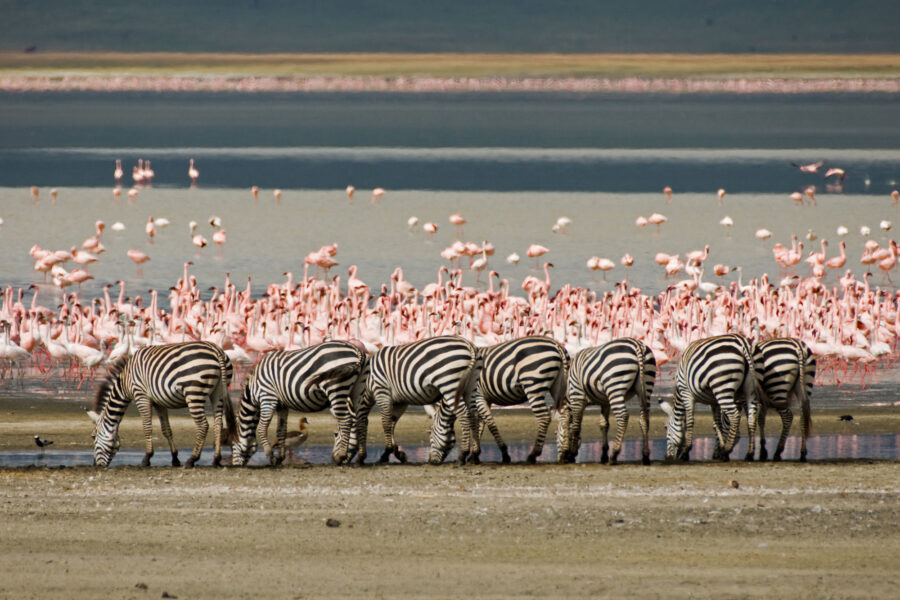
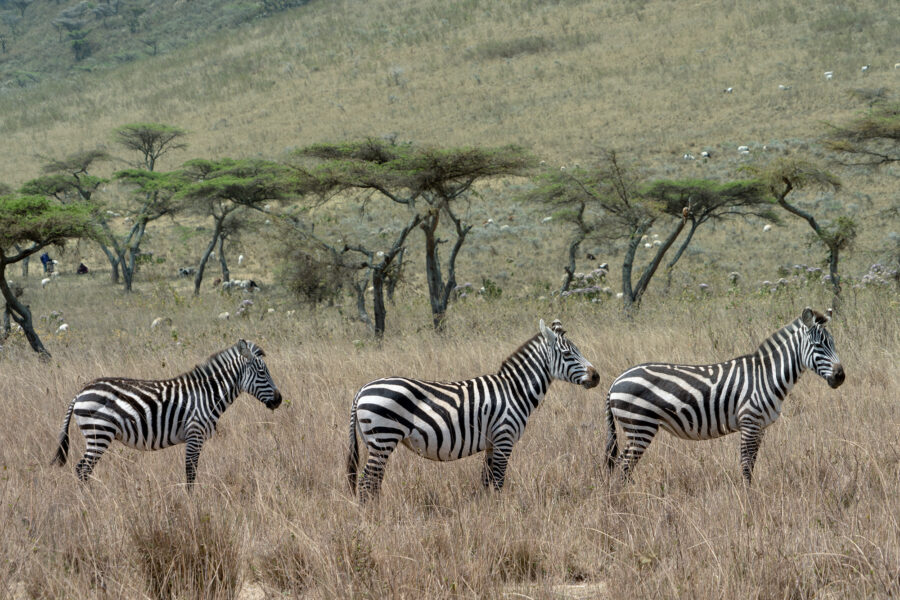
TANZANIA — When the evening light settles over Tanzania’s savanna, the air turns to gold. A herd of zebras drifts casually through the tall grass toward a salt lake brushed pink with flamingos. On the far bank, two giraffes stretch in an effort to nibble at the crown of a lone acacia. Behind them, a volcano looms over the Rift Valley, its slopes wrapped in clouds.
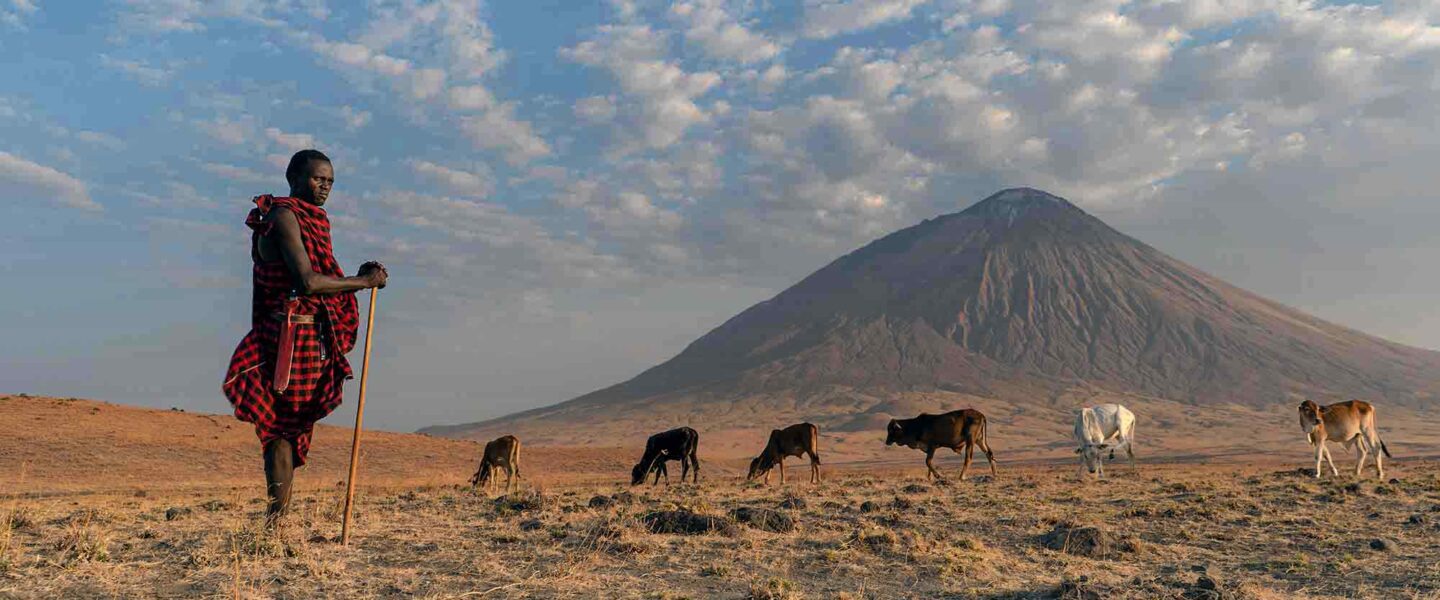
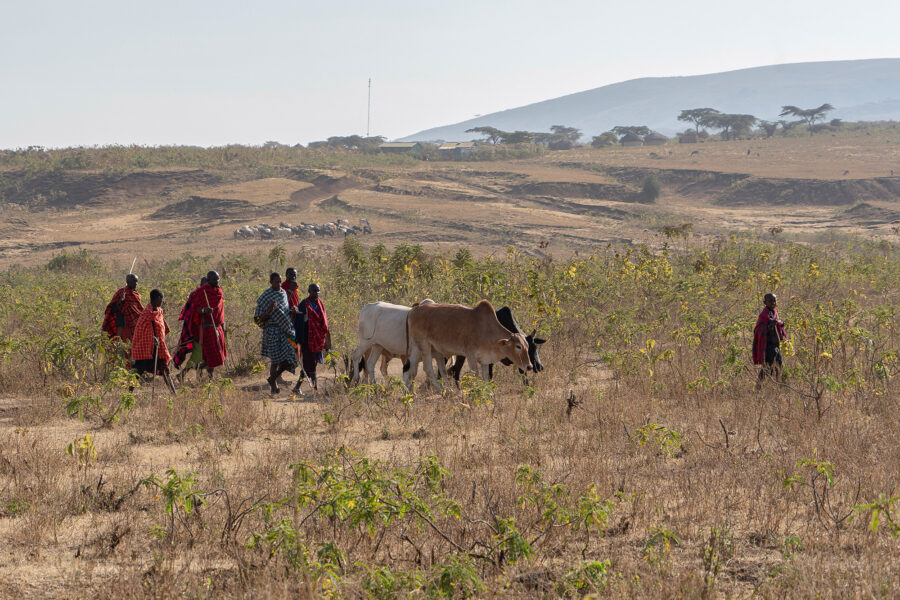
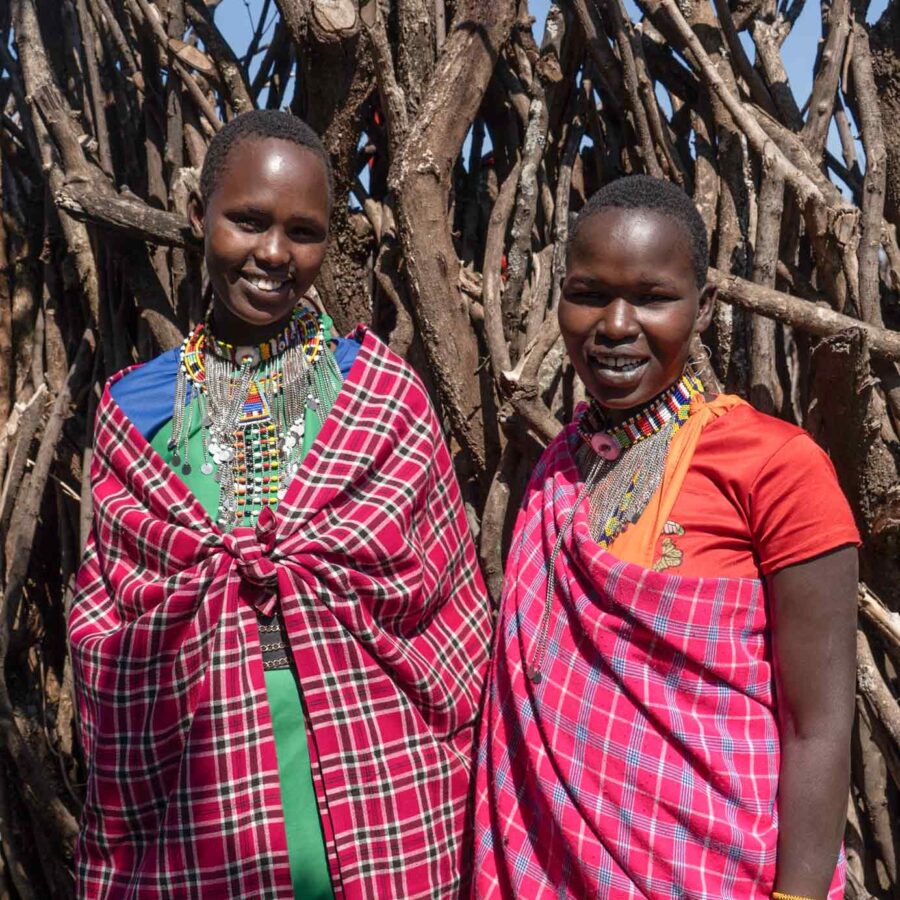
The handful of red and white figures moving slowly through the fading light down on the plain are Maasai herders, dressed in bright shúkàs. They guide their pale-coated cattle toward a boma — a circular homestead. A fence with thorns is intended to keep out lions.
The Maasai began migrating south from the Nile Valley in the 17th century, settling on the vast grasslands of East Africa which presented an endless pasture where they could follow the rain and grass with their herds.
This nomadic culture was disturbed in 1890, when European colonial powers began a land grab that reached across the African continent. First came the colonial borders: The British claimed Kenya; the Germans took Tanganyika, now Tanzania. The lines drawn by the Europeans split the world of the Maasai in two.
Since then, East Africa has been beset by world wars, struggles for independence, socialism, capitalism, and the arrival of millions of tourists in safari trucks. Through it all, the Maasai have endured, managing to hold onto an old way of life. About a million Maasai still live across Kenya and Tanzania, herding cattle under the same vast sky.
Their ancestral way of life, however, is increasingly under threat. In the name of conservation, Maasai lands are being seized, villages uprooted, and the profits of “green” tourism and carbon trading are flowing into foreign hands — from Dubai’s royal family to multinational corporations. What began as a promise to protect nature has become a new scramble for Africa’s wealth, this time camouflaged in the language of preservation.
The Day the Land Turned Red
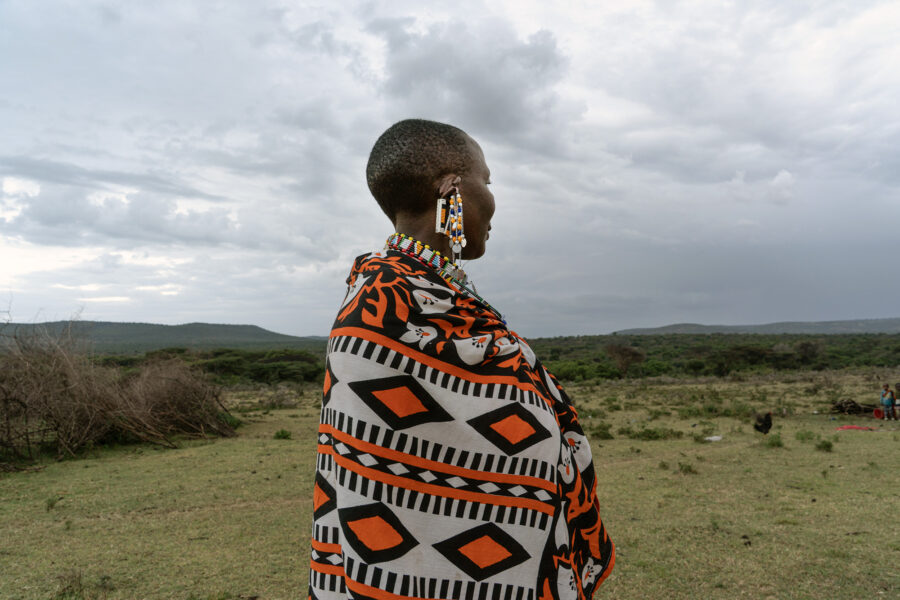
For Noorkishili Naing’isa, a farmer and mother of six, life collapsed on June 8, 2022. That morning, several hundred police officers and soldiers arrived on the outskirts of Ololosokwan, her village in northeastern Tanzania. Without warning, they began hammering white wooden stakes into the grassland around the village. The Maasai didn’t need an explanation — their ancestral land was being taken.
By nightfall, 600 square miles of grazing territory — twice the size of New York City — had been reclassified as a “game reserve,” a protected area open to trophy hunting and high-end tourism. None of the 14 affected villages had been consulted, a clear violation of Tanzanian law.
“This vast area was suddenly forbidden to us,” Noorkishili told me when I met her near the edge of the famous Serengeti National Park, hours from the nearest town along a dirt track. Thunder rolled across the plains as she stepped into her hut, a low structure of mud and branches. Inside, a small fire flickered in the center of a windowless room. Her six children sat quietly on a thin mattress as she poured goat’s milk into a blackened pot.
“Our village leaders gathered to protest,” she said, filling a tin cup and passing it to one of her children. “They were arrested right away. The herders wanted to tear up the boundary markers and chase the police out. A few of us women tried to calm things down.”
Her voice broke. “When we got close, the police opened fire. We ran in every direction. My neighbor, Oriais Ng’yio, was shot in both legs. They took him toward the river where there are crocodiles. We think they threw him in — we never saw him again.” She stared at the fire. “Thirty-two people were injured, about 10 badly. Another man disappeared. In the days that followed, several women lost their pregnancies.”
The government insists the area was set aside for conservation — to “protect the migration of wildebeests and zebras” and “preserve the integrity of the Serengeti National Park.” But the Maasai see something else at work. Tourism drives nearly 17 percent of Tanzania’s GDP, and since the eviction, gleaming lodges have sprung up across the plains, financed by investors from the United States, South Africa, and the Gulf.
Hunt for Profit
Human rights groups tell a counter-story. Amnesty International found that the operation was carried out with help from the Otterlo Business Corporation (OBC) — a company tied to Dubai’s royal family that has organized high-end hunting trips in the region for more than two decades. OBC’s private airstrip and luxury compound, known locally as the Dubai camp, hosts annual expeditions for wealthy Emiratis who arrive by chartered jet.
Witnesses told Amnesty that the company supplied vehicles, fuel, and tents to security forces during the eviction. Since then, new roads and fenced compounds have appeared across the reserve, while nearby villages lie in ruins. For many Maasai, OBC has become the clearest symbol of how “conservation” can become a business for the powerful — a green pretext for taking land in the name of profit.
“The government says we threaten the wildlife,” said Noorkishili. “But we don’t hunt, and we’ve lived alongside these animals for centuries. Meanwhile, dozens of wild creatures are trapped and shipped to zoos in Dubai. They’ve even put up cell towers inside the reserve — when you get close, your phone switches to a Dubai network.”
Since the evictions, the grazing lands around the Serengeti have shrunk to a fraction of what they once were. Then came the drought. Between 2022 and 2023, the rains failed, and the plains turned to dust. For villages cut off from their ancestral pastures, it was devastating. Cattle collapsed where they stood; goats wandered in circles seeking waterholes, only to find them gone dry.
At night, some herders tried to slip their animals past the new boundary fences in search of grass or water. Rangers caught them all. In just three years, villagers estimate their herds have fallen to a sixth of their former size. About a third of those losses came from confiscations — nearly 20,000 head of cattle. “I had 400 cows,” said Simanga, a herder in his 40s. “Now I have 20. I’m ruined. I had to pull my children out of school.”
The Emptying Crater
At Arusha International Airport, gateway to Tanzania’s safari circuit, travelers step into a world designed to soothe. Billboards beam with wide smiles — Maasai men in crimson robes posing against golden plains, their spears catching the light. For most visitors, it’s the first face of Africa they see: proud, timeless, welcoming.
Few imagine that behind those images lies a harsher reality. The story of Ololosokwan is not an exception but emblematic of a pattern — one that stretches across northern Tanzania, even into its most celebrated landscapes.
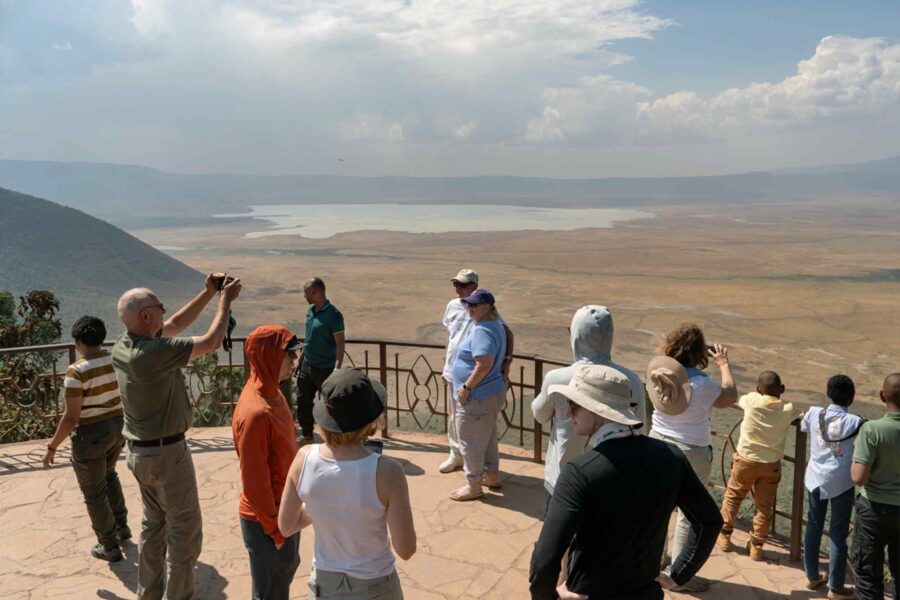
Nowhere is the pattern clearer than in the Ngorongoro Conservation Area, a UNESCO World Heritage site and the crown jewel of the nation’s safari trade. Inside a vast volcanic crater, lions prowl through mist, elephants move like gray shadows, and the last black rhinos of East Africa survive under constant guard — one of the densest wildlife sanctuaries on Earth.
Unlike in Ololosokwan, the government moves more cautiously here, careful not to stain the park’s global image. Hundreds of new houses have been built to relocate Maasai families to Msomera, a village more than 200 miles from their ancestral land, with plans to move 82,000 people. Since 2022, only a few thousand have gone — many under pressure — and several hundred have already returned.
“We were never consulted,” said Longoï, a 70-year-old village elder from Endulen, a settlement tucked into the folds of Ngorongoro’s vast crater highlands. “The government picked land that already belongs to another tribe. There’s no room. No one can build a real life there.”
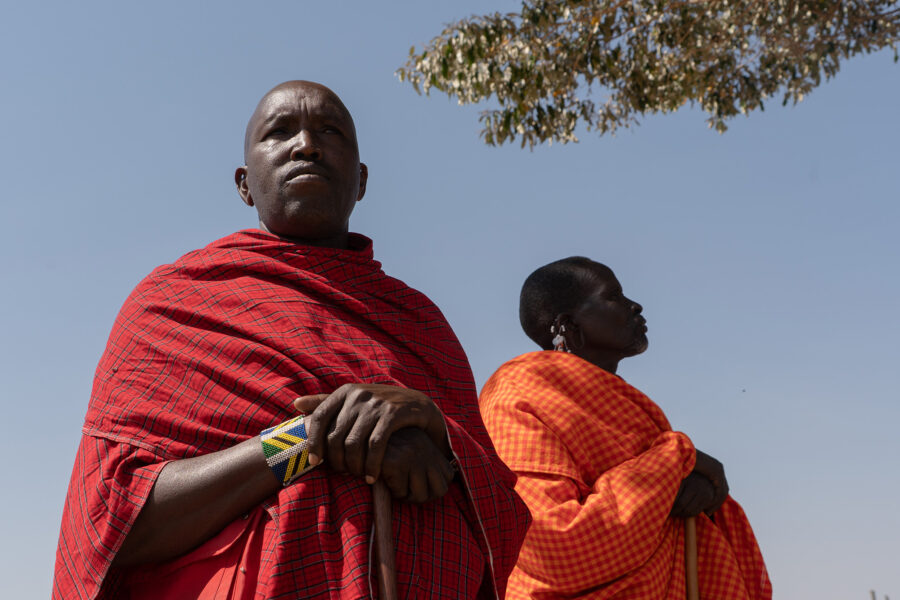
For those who refuse to leave, the pressure comes in quieter ways. “We’re not allowed to build or dig wells,” Longoï told me, sitting under a tree with other elders, their faces lined by years of sun and wind. “Public services have stopped — the hospital is closed, the maternity ward too. Grazing areas keep shrinking, and poverty is rising. The young go to the city.”
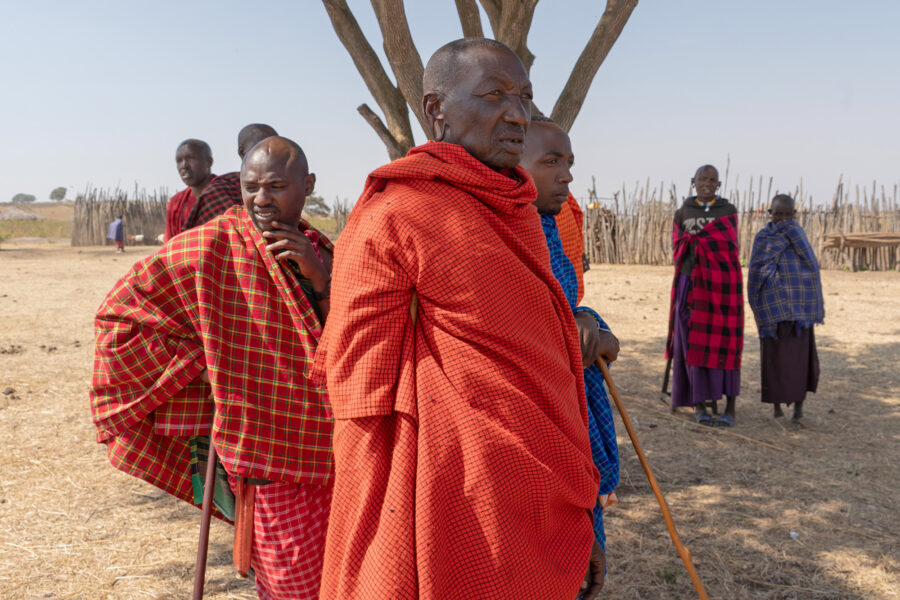
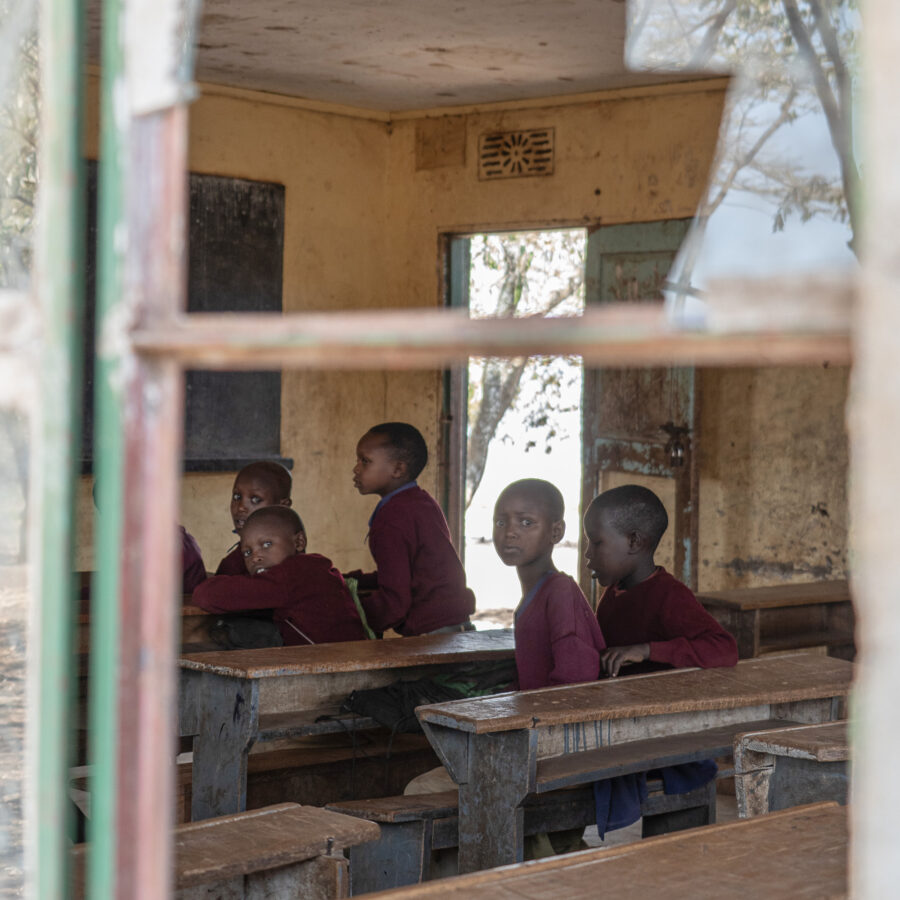
A few meters away, the only school left is crumbling. Children study in a room streaked with cracks and mold, its windows shattered by storms. “When it rains, the water and the cold wind come straight through. It’s impossible for the pupils to focus,” the headmaster said, asking not to be named. “I asked for help to fix it, but the authorities refused.”
Speaking to foreign journalists is risky. Maasai activists and reporters have been beaten, detained, or disappeared. Still, Longoï spoke softly. “I’m not afraid anymore,” he said. “If we keep our heads down, we’ll vanish. Our culture is dying. The world must know what hides behind the safaris.”
Fortress Conservation
Once again, the government invokes conservation. In 2022, President Samia Suluhu Hassan declared that “Ngorongoro is being lost” because of the Maasai’s “uncontrolled population growth.” UNESCO echoed the concern, noting that when the site was listed in 1979, about 20,000 Maasai and 275,000 cattle lived there — considered sustainable. Today, the government estimates nearly 100,000. “Future population growth and herd sizes must remain within limits,” UNESCO warned, citing overgrazing and encroachment.
To Edward Porokwa, executive director of the Pastoralists Indigenous NGOs (PINGOs) Forum, this repeats an old mistake. “Telling Indigenous people how to live on their own land is a colonial vision of nature — what we call fortress conservation,” he said. “A postcard wilderness emptied of its people, where you can drive them out at gunpoint.”
Porokwa knows the cost of speaking out. He has fled to Kenya more than once to avoid arrest. “This isn’t new,” he said. “In the 1950s, colonial authorities expelled the Maasai from the Serengeti — also in the name of wildlife protection.”
The pattern has drawn international criticism. Experts from the UN, African Union, and European Parliament, along with human rights groups, have condemned the evictions. UNESCO has since tried to distance itself, saying it “never requested” the relocations — but it has stopped short of denouncing them. The Maasai have called for Ngorongoro to be delisted until their rights are restored. So far, nothing has changed.
Now, many fear what comes next. On October 29, 2025, Hassan was reelected with a proclaimed 97.7 percent of the vote, after an election marked by censorship and mass arrests. Protests erupted nationwide, including in the city of Arusha. Human rights groups and opposition parties say security forces opened fire on demonstrators, killing hundreds. Videos reviewed by WhoWhatWhy show bodies piled in morgues, many with gunshot wounds.
For the Maasai, Hassan’s new mandate feels ominous. “She has free hands now,” said one community leader from Ngorongoro. “They’re already building new houses in Msomera — why, when the others are still empty?”
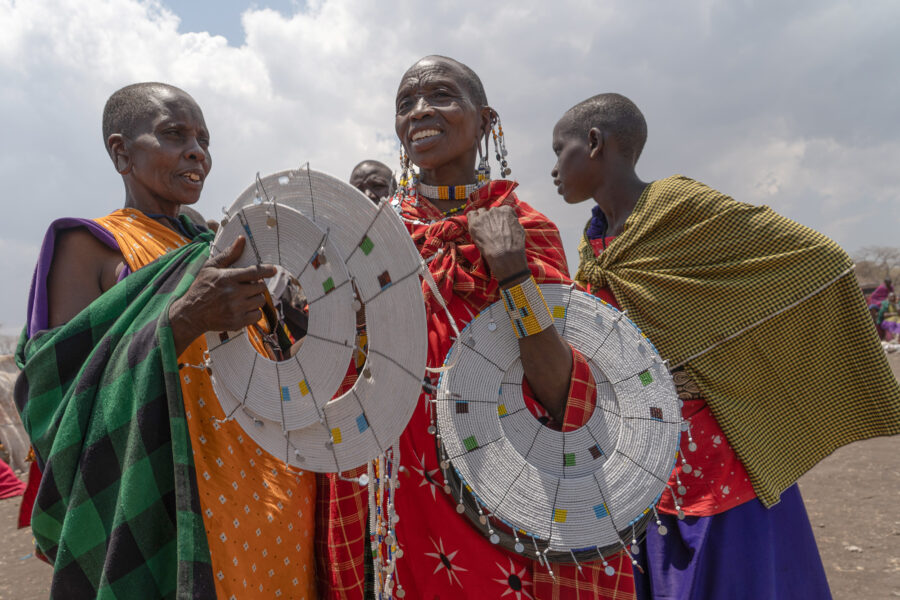
The New Predators
Leaving Ngorongoro, we drove east toward Eluai, a small village on the edge of the savanna. The dry season had stripped the land bare, leaving the acacias gray with dust and the horizon wavering in the heat.
Eluai lies far from conservation zones and the reach of Emirati royals, yet even here new predators are circling. They don’t arrive with guns or eviction orders, but with contracts and promises — speaking the language of climate action. Their proposal wasn’t about tourism, but about “carbon capture.”
Mirihai Kibori and Kayang Kisiyongo, two herders in their 40s, remember the first time they heard of carbon capture. It was in the fall of 2023. The village chief had called a meeting beneath an acacia tree. He looked unusually excited.
“A company came to see me,” the chief said with a smile. “They’re offering us a deal: If we use less of our communal land, they’ll pay us $20,000 to start, then an annual amount depending on results.”
A murmur ran through the circle. In this region, where poverty nears 80 percent, such a sum could rebuild the school — maybe even dig a new well.
“Our cows and goats will graze in designated areas while the rest of the land lies fallow,” the chief continued. “After a few years, we’ll rotate. The goal is to keep the soil covered with grass so it can absorb carbon and fight global warming.”
Mirihai and Kayang only half understood. They’d heard of climate change but couldn’t see what it had to do with their land. The idea of “designated areas” clashed with everything they knew — for the Maasai, livestock must move freely, following the rain and grass for miles.
The elders agreed to think it over, but in the days that followed, the chief kept bringing it up, urging them to sign. Something felt off. Mirihai and Kayang began to ask questions.
“The contract was dozens of pages long, full of legal jargon,” Kayang recalled when I met him at the edge of the village in September 2025. “It said we’d give up our land for 40 years and cut our herds for vague payments. Our whole way of life would change.”
“With rules like that, how could we move our animals if drought came — which happens more and more often?” Mirihai added. “We’d lose our land and our freedom.”
In early 2024, they sought help from local advocates and discovered the company behind the offer: Soils for the Future (SFF). Based in the United States, SFF sells carbon credits from regenerative agriculture — techniques meant to restore soil and trap carbon dioxide — to corporations offsetting their polluting emissions. Volkswagen is its main client.
Projects like this aren’t unique to Tanzania; they’re spreading worldwide. Poorly managed, they can devastate local communities. In Cambodia, a UN-backed reforestation plan barred the Chong people from their traditional forests. In Brazil and Colombia, Indigenous groups in the Amazon denounced similar deals signed without local consent. In Zimbabwe, a project around Lake Kariba — meant to preserve 700,000 hectares and fund schools — largely enriched foreign companies.
In rural Tanzania, where most Maasai cannot read or write, such projects carry real risks. Since 2022, SFF has moved from village to village, signing dozens of deals.
“Their method is always the same,” said Yonas Masiaya, a Maasai lawyer who heads the Maasai International Solidarity Alliance (MISA). “They send a Maasai intermediary to win the chief’s trust and offer a big upfront payment. People sign without understanding the consequences.”
According to MISA, which investigated SFF’s work, the company has violated the principle of free, prior, and informed consent — a cornerstone of Indigenous rights. These projects, the group warns, risk repeating old patterns of dispossession: turning communal pastures into privately contracted lands, weakening traditional land ownership, and limiting herd mobility — vital during droughts. In time, the Maasai could lose their ancestral lands entirely.
MISA has called for a five-year moratorium on carbon-credit projects in northern Tanzania’s pastoral areas — time, it hopes, to create legal protections for land rights and community consent.
In the village of Eluai, the chief eventually signed SFF’s contract. Outraged, Mirihai ran for village chair a few months later — and won. One of his first acts was to cancel the deal.
“The district chief was furious,” he said. “He insulted me and threatened me. It’s because part of the money from these carbon credits goes to the central government. The state is robbing the Maasai for its own profit.”
In March 2025, Volkswagen said it took the Maasai’s concerns “very seriously” and promised to investigate. Contacted by WhoWhatWhy, Soils for the Future Tanzania (SftFTZ) said it operates with the free, prior, and informed consent of every community involved. The company said meetings are held in local languages and contracts are reviewed by villages before signing. It rejected any claim of coercion or harm, arguing that its program strengthens traditional grazing systems, keeps land in community hands, and brings long-term benefits to pastoral families.
Whether called conservation, carbon capture, or climate mitigation, the logic often sounds the same: protect the planet, invest in nature, save what’s left. On paper, it’s hard to argue with. But in villages like Eluai and Ololosokwan, the line between protection and control has blurred. “They tell us it’s for the good of the Earth,” Mirihai said, watching the endless savanna. “But whose Earth?”