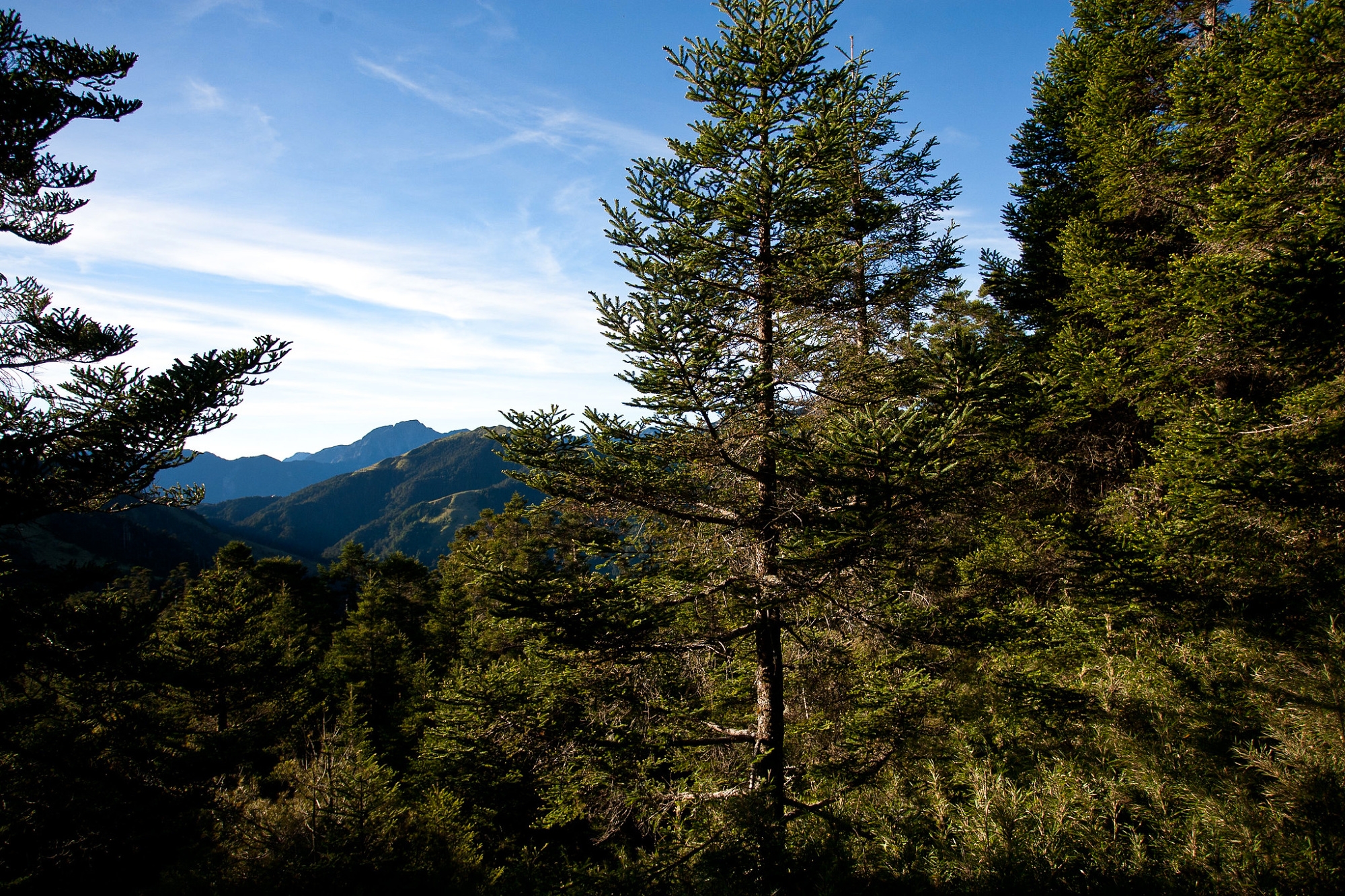
Scientists Looked for Giant Trees in Taiwan and Found a Lost World
PICKS are stories from many sources, selected by our editors or recommended by our readers because they are important, surprising, troubling, enlightening, inspiring, or amusing. They appear on our site and in our daily newsletter. Please send suggested articles, videos, podcasts, etc. to picks@whowhatwhy.org.
|
Listen To This Story
 |
Scientists Looked for Giant Trees in Taiwan and Found a Lost World (Maria)
The author writes, “Taiwan’s steep, remote mountains have sheltered extraordinary forests containing hundreds of giant Taiwania firs. After years of difficult expeditions, mapping and citizen science work, researchers discovered a 276-foot tree, the tallest known in East Asia. They also found dense ‘temples of giants’ where dozens of enormous trees grow. These ancient forests rank among the world’s most carbon-rich ecosystems.”
‘Paycheck to Paycheck’: 63% of Americans Have Under $500 Left Each Month After Paying Their Bills (Sean)
The author writes, “Nearly two-thirds of Americans are now living paycheck to paycheck, according to the latest SurveyMonkey Quarterly Money Survey, underscoring the financial strain many households continue to face despite a resilient labour market and slowing inflation. The survey found that 63% of US adults rely on each paycheck to cover monthly expenses, while most have little or no financial cushion after paying for essentials such as housing, food, utilities and transportation. The findings suggest that millions of Americans remain financially vulnerable, with many saying they would struggle to absorb even a modest unexpected expense or a temporary interruption to their income.”
Google Is Censoring Reviews of ICE Detention Centers (Laura)
From The Intercept: “In the past year, Google Maps was deleting all the reviews for dozens of ICE jails, a new study found. While they’re not as common as reviews for cafes and dry cleaners, reviews have poured into Google Maps by the thousands for the growing network of jails operated by U.S. Immigration and Customs Enforcement. The reviews have come from internet users sharing their often harrowing experiences in the detention facilities. Google then purges these reviews and blocks the ability to write new ones, according to newly published research. ‘Google actively suppresses carceral information, narratives, and digital trace data related to the U.S. Immigration and Customs Enforcement’s (ICE) detention facilities,’ wrote Muira McCammon, a professor at Tulane University’s Department of Communication who has been scraping and analyzing self-reported accounts of ICE imprisonment posted to Google Maps since last year.”
Breathable Air Is a Luxury. Paying Out of Pocket Could Be Next (Sean)
From Salon: “As wildfires spread every summer and pollution intensifies, fresh air may become a luxury commodity.”
How a ‘Savvy’ S.F. Renter Lost More Than $18K in an Elaborate Real Estate Scam (Reader Steve)
From the San Francisco Chronicle: “The unit, a second-floor flat in a three-unit Victorian on a leafy street in the heart of the Duboce Triangle, seemed like just what Alvin Tran was looking for. At $6,200 a month, it was within the price range he and his prospective roommate were hoping to pay and seemed worth the money to live in one of San Francisco’s most charming neighborhoods. He toured the unit July 25, and the pair submitted their applications later the same day. They were accepted and, within a week, Tran had wired $18,600 to a bank account to cover a $6,200 security deposit and two months of rent. On Thursday, he went to meet his new landlord and pick up the keys. He waited and waited. No one showed up.”
Three Millennia Ago, Humans May Have Spoken Thousands More Languages Than We Have Today, During a Linguistic ‘Golden Age’ (Dana)
The author writes, “From Mandarin and English to the many Indigenous languages spoken around the world, humans today communicate via roughly 7,500 tongues. But humanity’s linguistic diversity may once have been far greater, according to a new study published in the journal Science. Researchers think humans may have spoken as many as 20,000 to 75,000 different languages during a period they’ve dubbed the linguistic ‘golden age.’ But that linguistic abundance did not last. As multinational states like the Roman Empire expanded, scientists think their languages spread too, wiping out many others.”