Saturday Hashtag: #TrackedBySharedDatabases
Welcome to Saturday Hashtag, a weekly place for broader context.
|
Listen To This Story
 |
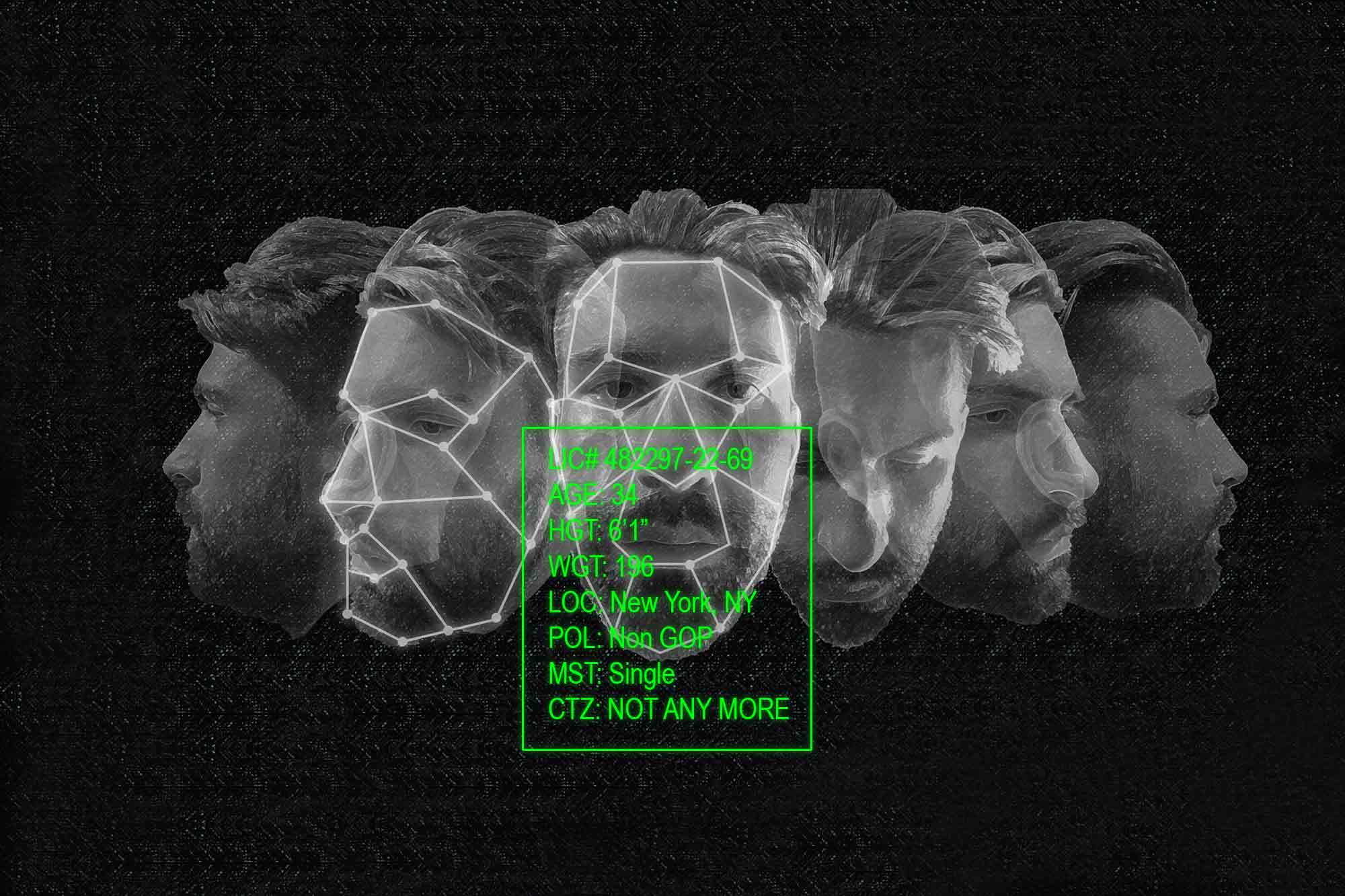
Amid debates over voter registration/fraud, deportations, and surveillance, few Americans know about the system that is sharing data on everyone — Nlets, the National Law Enforcement Telecommunications System, a private nonprofit run by law enforcement officials that links all 50 states, US territories, and key federal and Canadian agencies.
Ostensibly built for legitimate criminal investigations, Nlets now grants real-time access to driver’s licenses, Department of Motor Vehicle photos, vehicle registrations, addresses, criminal records, warrants, and other sensitive data — hundreds of millions of transmissions each year — spreading personal information far beyond its original purpose, all under minimal oversight and near total secrecy.
The system began with stolen car alerts, warrant checks, and identity verification. It now includes extensive “Message Keys” that cover nearly anyone with a state-issued ID or registered vehicle.
A recent Criminal History Parser pilot program, funded by Immigration and Customs Enforcement and the Bureau of Justice Statistics, created a standardized format for criminal history records across all states.
Civil rights groups, including the National Immigration Law Center, document how ICE and the Department of Homeland Security misuse Nlets to illegally gather driver’s license data, vehicle records, and physical descriptions of people simply for being in public spaces.
ICE is already accessing the Flock Safety’s camera system, tracking license plates of innocent individuals with no warrants. This violates the Driver’s Privacy Protection Act of 1994 (DPPA); the Voting Rights Act of 1965; civil rights statutes under 42 U.S.C. § 1983; the Privacy Act of 1974, particularly its SORN requirements; and the Fourth Amendment.
In 2025, 40 Democratic lawmakers, led by Sen. Ron Wyden (OR), warned that Democratic-led states may have unknowingly provided ICE with access to DMV systems, despite state privacy restrictions.
Nlets processed about 290 million DMV queries last year, including hundreds of thousands by ICE and Homeland Security investigations. This is a quasi-legal loophole that grants federal agencies broad access to state records.
Nlets insists it merely “routes” data and claims no ownership, letting it operate in the shadows while agencies freely access vast personal information.
In the same way, major tech platforms like Facebook evade responsibility by portraying themselves as neutral conduits, misusing data while dodging privacy and copyright laws. Both exploit the fiction of passivity to avoid scrutiny and accountability.
Like many agencies, the Department of Justice is overreaching — as shown by its request for voter lists from more than 20 states. This wholesale, warrantless collection by multiple agencies includes names, addresses, birth dates, driver’s licenses, partial Social Security numbers, and voting histories.
Through Nlets, these records can be cross-referenced with DMV files, criminal histories, immigration data, and physical descriptions, creating de facto nationwide citizenship checks and turning the system into a shadow national ID.
Operating with minimal oversight for over 50 years, Nlets has evolved into a secretive national surveillance network. Far beyond its original role in traffic or criminal enforcement, it now enables unchecked interagency data sharing and expands its reach into the daily movements of ordinary people, recording them merely for existing in public view.
Hashtag Picks
Most Immigrants Arrested in City Crackdowns Have No Criminal Record
From The New York Times: “The federal deployments that have swept through major cities as part of President Trump’s immigration crackdown have led to thousands of arrests. But they have been less effective at apprehending immigrants with a criminal record than more routine operations elsewhere, new data shows.”
Homeland Security Wants State Driver’s License Data for Sweeping Citizenship Program
The author writes, “The Trump administration wants access to state driver’s license data on millions of U.S. residents as it builds a powerful citizenship verification program amid its clampdown on voter fraud and illegal immigration. The U.S. Department of Homeland Security seeks access to an obscure computer network used by law enforcement agencies, according to a federal notice, potentially allowing officials to bypass negotiating with states for the records.”
ICE Can Access Most State Driver Databases. States Have the Power To Stop It, These Federal Lawmakers Say.
From Smart Cities Dive: “Federal agents can access driver’s license photos and records through a little-understood interstate network, the elected officials said in a letter to governors. Five states have restricted access.”
ICE Wants to Go After Dissenters as Well as Immigrants
The authors write, “U.S. Immigration and Customs Enforcement has embarked on a spending spree, signing contracts worth up to $25 million for a smorgasbord of spy technology: social media monitoring systems, cellphone location tracking, facial recognition, remote hacking tools, and more. It’s nothing new for ICE to use these to find people to deport, a practice that raises a host of concerns, including heightened surveillance of immigrant communities and the wide-ranging capture of Americans’ personal data.”
Federal Judge Blocks HHS From Sharing Medicaid Data With ICE
The author writes, “A federal judge has ordered the U.S. Department of Health and Human Services (HHS) to stop sharing the data of Medicaid enrollees with Immigration and Customs Enforcement (ICE) at the Department of Homeland Security for immigration enforcement purposes. … Anyone living in the United States illegally is not permitted to enroll in the federal Medicaid program, although seven states permit non-U.S. citizens to participate in their state Medicaid programs, but do not bill the federal government for the costs.”
Your Private Data Is Building Trump’s Voter Purge Machine
From Mother Jones: “Over the last six months, [the DOJ] has demanded full, unredacted voter rolls from dozens of states in an effort to create the federal government’s first-ever national database of registered voters, accompanied by their private information: party affiliation, voting history, Social Security numbers, driver’s license information, even physical characteristics. The DOJ has formally sued 14 states for the data so far, 12 of which are led by Democrats.”
How Cops Can Get Your Private Online Data
From the Electronic Frontier Foundation: “Can the cops get your online data? In short, yes. There are a variety of US federal and state laws which give law enforcement powers to obtain information that you provided to online services. But, there are steps you as a user and/or as a service provider can take to improve online privacy.”
From 2021: Federal Study Acknowledges Failures in Police Surveillance Oversight
The author writes, “A study, conducted by the Federal Judicial Center, the research branch of the judicial branch of the U.S. government, says the federal court system’s annual Wiretap Report — which compiles information on local and federal law enforcement interceptions of people’s communications — is riddled with inaccuracies. Reporting requirements, the study found, fail to incorporate new technologies, further leaving the public and lawmakers in the dark as to how police use devices like stingrays and how often they collect things like text messages and cellphone data.”
From 2020: When Police Surveillance Meets the ‘Internet of Things’
From the Brennan Center for Justice: “Connected devices add eyes and ears around our homes, inside our cars, and on our bodies. Through sensors, cameras, microphones, and other technology, they are constantly collecting data and sending it to company servers for analysis and storage. Police have already come calling for this information generated by the so-called ‘internet of things,’ with significant privacy implications for Americans.”