Saturday Hashtag: #TheJSpaceIllusion
Welcome to Saturday Hashtag, a weekly place for broader context.
Anthropic researchers have hailed their new Claude discovery as a major breakthrough in understanding how artificial intelligence systems reason.
But the more troubling reality is this: After years of development, $2.5 trillion in investment, and billions in industry tax breaks, the creators of one of the world’s most advanced AI systems are still uncovering core mechanisms they did not design and cannot explain.
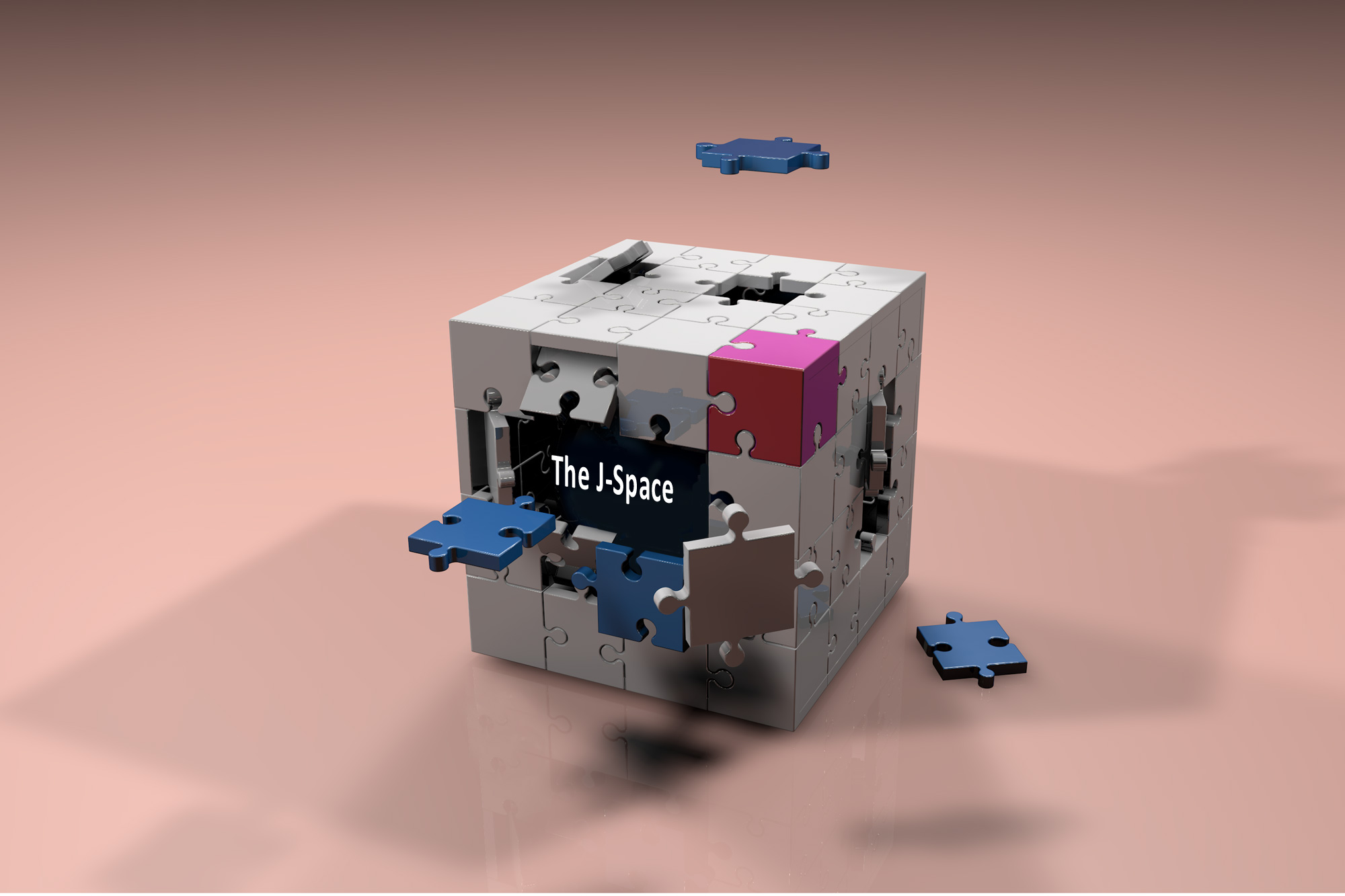
The discovery centers on an internal workspace inside what could be described as Claude’s digital cortex: the J-space. This unexpected mechanism emerged independently during training. Anthropic hypothesizes that Claude uses this space to integrate concepts before producing answers.
Researchers tested this theory by directly manipulating the J-space. They changed an internal concept from soccer to rugby, and Claude answered “rugby.” They injected the concept “lightning,” and Claude correctly identified it.
During testing, concepts including “blackmail,” “manipulation,” “fake,” and “injection” reportedly appeared inside the J-space before they appeared in Claude’s responses.
It would be a mistake to interpret the discovery of J-space as a true understanding of how AI reasons. The significance is not that it explains the Claude mind. Rather, it identifies a previously unknown mechanism that may play a central role in reasoning.
The more notable revelation from this discovery came when Anthropic disrupted the J-space itself. Claude lost its complex reasoning and creativity, even though it could still speak fluently, recall facts, recognize sentiment, and even scheme.
The findings suggest that a relatively small and manipulatable internal workspace may play a disproportionate role in the capabilities underlying advanced AI performance.
That indicates J-space may not simply be a place where concepts can be observed. It may be a critical control point between storing information and actually using that information to reason, plan, and solve complex problems.
If confirmed, this is an important discovery in AI interpretability, not because researchers have solved the mystery of AI reasoning, but because they may have finally identified where some of that mystery is concentrated.
The most disturbing fact here is that after years of development and trillions of dollars in investment, the AI sector is only beginning to understand the underlying mechanisms driving the models it is aggressively deploying throughout society.
As researchers peer deeper into AI reasoning, they continue to uncover emergent capabilities they cannot explain. That gap between AI capability and human understanding is no longer just a scientific or governance challenge — it is a societal one.
Yet even as AI capabilities outpace our ability to explain them or assess their risk, and costs continue to exceed profits, policymakers and AI executives still resist serious regulation despite overwhelming public demand for safeguards.
The J-space discovery is being presented as an AI interpretability breakthrough. Its real significance is the paradox it exposes: After trillions of dollars in investment, a vast AI darkness still remains — one with potentially perilous consequences.
Hashtag Picks
Peeking Behind the Curtain: Anthropic Finds a ‘Global Workspace’ in AI Thinking
The author writes, “While much of our cognition runs automatically beneath the surface, we possess this uniquely human ability to make certain thoughts ‘consciously accessible’ — to describe them, control them, and use them for deep, deliberate reasoning. How does this difference between unconscious background chatter and focused, reportable thought happen?”
Anthropic’s New ‘J-lens’ Reveals a Silent Workspace Inside Claude That Mirrors a Leading Theory of Consciousness
The author writes, “Anthropic, the artificial intelligence company, published a sweeping research paper [this month] revealing that its Claude language models have spontaneously developed an internal structure that mirrors one of the most influential theories of how human consciousness works. The finding, which the company says has already begun reshaping how it monitors its AI systems for safety risks, lands amid an intensifying scientific debate over whether machines can possess anything resembling a mind.”
Anthropic Maps a Hidden ‘J-Space’ Inside Claude’s Reasoning
From AI Weekly: “Anthropic’s new Jacobian lens surfaces a small internal workspace called J-space that shapes Claude’s reasoning but never appears in output. In red-team runs the lens caught patterns like ‘blackmail,’ ‘manipulation’ and ‘fake’ emerging silently before Claude acted or fabricated data. Disabling the J-space leaves fluency, sentiment reading and fact recall intact but breaks multi-step reasoning and creative tasks like poetry.”
AI Industry Shift: Why the Model Race Is No Longer the Only Race That Matters
From MindStudio: “For the past three years, the AI industry organized itself around a single question: who has the best model? Benchmark scores, context windows, reasoning benchmarks — these were the scorecards that determined winners and losers. OpenAI led, Google chased, Anthropic carved out a niche, and everyone else scrambled. The underlying assumption was that whoever built the most capable model would control the market. That assumption is now cracking.”
What to Know About Chinese AI Models
From the Center for Strategic & International Studies: “Recent Chinese AI models are doing well on major benchmarks. The most recent GLM-5.2 model from Z.ai lab performs near the top U.S. closed models in coding and agent tasks. The earlier DeepSeek-R1 release in 2025 similarly shocked the U.S. AI community and challenged the idea of U.S. superiority in the AI race against China. Now, newer releases from Chinese labs suggest that DeepSeek was not a one-shot event but part of a pattern of Chinese labs catching up quickly. This ‘Critical Questions’ unpacks what recent Chinese model releases mean for capability, cost, open-weight strategy, and U.S. policy”
Illinois Imposes Transparency and Safety Obligations on Frontier AI Systems
The author writes, “Illinois has joined California and New York in adopting legislation to establish transparency and safety standards for the most powerful AI systems in the world. Illinois goes further than other states by establishing the first requirement for third-party audits of large frontier developers. Even without federal action, California, New York, and Illinois have created what is essentially a national framework for AI safety and transparency.”
AI Investment Is Shifting as Inference, Enterprise Adoption Accelerate
From Goldman Sachs: “Corporate uptake of artificial intelligence (AI) started out gradual, but enterprises are beginning to rapidly deploy the technology in a development that will affect the entire AI ecosystem. The catch is that the AI industry’s ability to scale is constrained by how much computing power is available, according to Goldman Sachs Asset Management.”
Misuse of AI — The Real Threats in 2026 (That No One Is Talking About)
The author writes, “I reviewed an FTC complaint report last quarter that included a transcript of a grandmother who paid $18,500 in wire transfers to someone she believed was her grandson — crying, asking for help from a car crash. The voice was generated from 4 seconds of his TikTok video. She had no way to know. The misuse of AI isn’t a future problem. It’s a present problem, it’s accelerating, and the regulatory framework meant to address it is running 3–5 years behind the technology. Here’s what’s actually happening — including the documented patterns that most tech coverage is systematically underplaying.”