Welcome to Saturday Hashtag, a weekly place for broader context.
|
Listen To This Story
 |
In late November, The New York Times published a front-page story implying COVID-19 vaccines caused the deaths of 10 children. The claim relied only on an internal FDA memo, not peer-reviewed science.
Experts had warned the document was unsupported. Hours later, the Times quietly rewrote the article, but the original had already spread through Reuters, aggregators, and across social media with the New York Times headline.
Public Perception and Extremist Exploitation
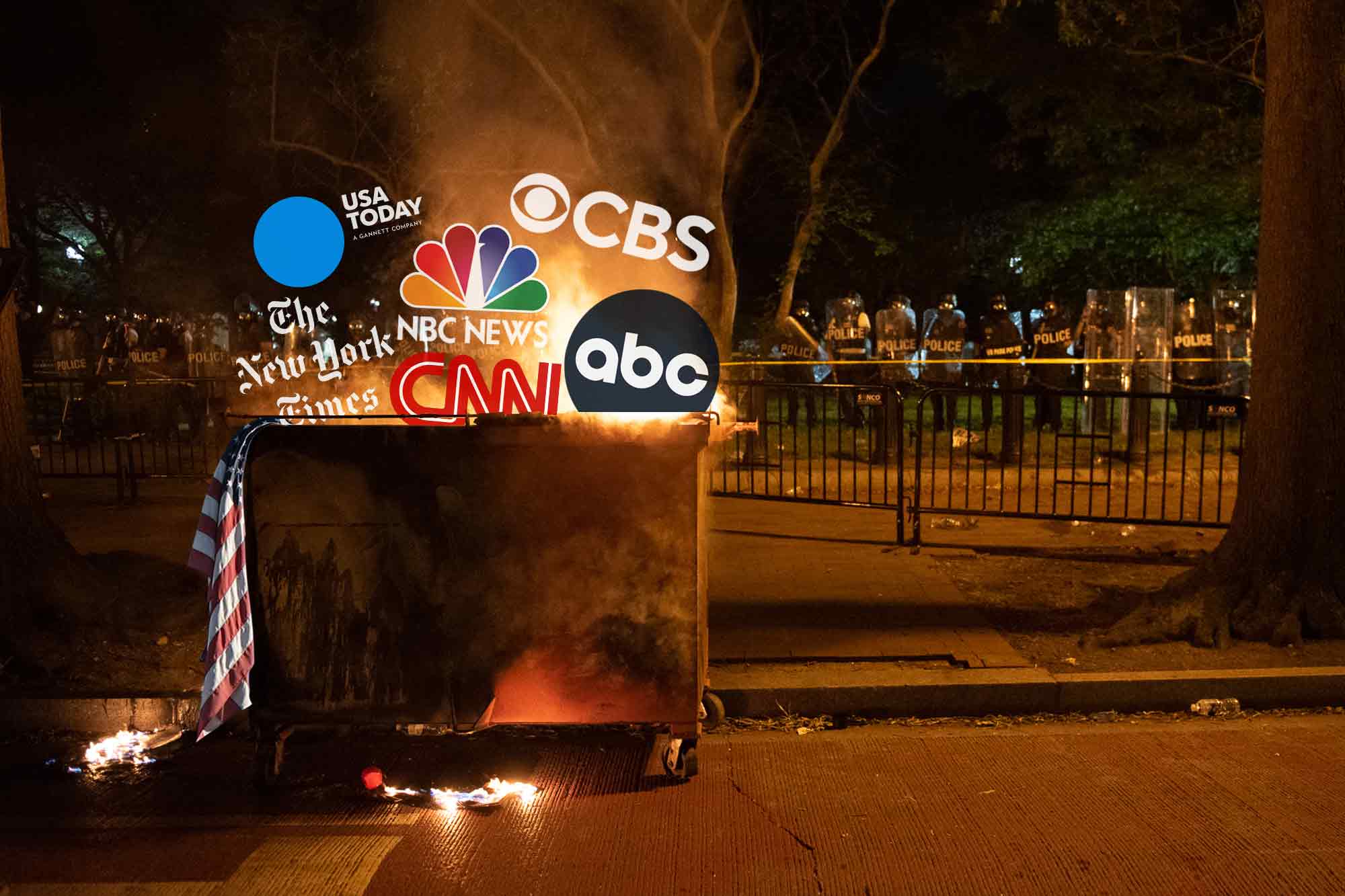
Publishing unverified claims on matters of life and death arms right-wing and extremist platforms with propaganda: They use these claims to shred legacy media credibility, legitimize fringe narratives, and recruit followers. In doing so, the Times is accelerating its own collapse.
The outcome is predictable. The public remembers the headlines, not the rewrite. These mistakes, along with right-wing framing, fuel extremism. When elite outlets are both inept and playing ideological games, media trust collapses further.
CBS News now exemplifies this collapse of journalistic integrity under the new agenda-driven ownership of Skydance Media, led by David Ellison, son of Oracle’s Larry Ellison. The elevation of Bari Weiss within the network exposes the decisive shift of legacy media away from evidence-based reporting toward ideologically engineered narratives.
Weiss, whose CV includes deception and subsidy, functions less as a journalist than as a partisan political operative, promoting extreme Zionist views. Her Erika Kirk town hall made this starkly evident: Every question was carefully orchestrated to channel the audience toward predetermined conclusions, collapsing journalism into a vehicle for advocacy and public relations.
Systemic Shift
This is incompetence and bias masquerading as neutrality across both news media and large language models (LLMs). Opinion now parades as journalism, objectivity has disappeared, corrections are rare, and accountability is optional.
In the past, when a major outlet was exposed as unreliable or agenda driven, regaining public trust could take years, but it was still mostly possible. Today the media landscape is far more complex and precarious.
Agendized, unregulated digital media with baroque ownership operate with impunity, serving not just corporate profit but also foreign powers advancing political or economic propaganda.
Societal Implications
Trust in the media has dropped to 28 percent, while confidence in government has plummeted from 77 percent in 1964 to 19 percent in 2025. Social trust has eroded as well: 60 percent of Americans once trusted their neighbors; today only 34 percent do, among millennials and Gen Z, the figure is only 19 percent. Faith in institutions and each other has all but collapsed.
Trust is a measure of a functioning society. When leaders and media dismiss lived reality, legitimacy erodes. For example, telling people higher grocery bills are a conspiracy only accelerates distrust.
The real danger is not isolated falsehoods. It is the destruction of a shared factual ground on which democratic society depends. When institutions entrusted to inform begin to persuade, facts become optional and agendized narratives become standard operating procedure.
In this situation the public is left unable to tell truth from propaganda, and power fills the resulting trust vacuum. Bad actors flourish, accountability disappears, and fact-based journalism decays into irrelevance.
Hashtag Picks
Is Legacy Media Dead?
The author writes, “In an era marked by rapid technological advancements and shifting audience preferences, the question arises: Is legacy media dead? While traditional media outlets still exist, their influence and trustworthiness have significantly declined.”
An Obit for Journalism
From City Journal: “Most observers blame the Internet, broadly construed, for killing journalism — and not without reason. Following the digital migration of people, news and advertising transitioned onto digital platforms. Yet New York University journalism professor Jay Rosen acknowledges that the news industry has managed neither to find a ‘stable business model’ nor to ‘reestablish the connection’ that it once had with its audience.”
Behind the Curtain: The Power of Real Reporting
The author writes, “The era of Big News is over — the days of networks and newspapers and traditional media alone setting the agenda are long past. Influencers, podcasters, social media stars, and independent thinkers and journalists are often just as powerful as old-line media in shaping how most people see reality day to day. But these newer players often feast on old-fashioned reporting to provide their daily buffet of content on new platforms.”
Why Smart People Fall for False Information and What to do About It
From the University of California San Francisco: “In a post-truth world, this false belief researcher offers a simple three-step recipe for building trust and finding common ground. Hint: It starts by recognizing you might be wrong.”
Amid Shifting Perceptions, Journalists Must Return To Basics To Revive Integrity Through Honest Reporting
The author writes, “Now more than ever reporters are constantly navigating polarized political climates, shrinking newsrooms and increased media restrictions. For journalists to continue fulfilling their purpose of informing society and playing a role in the checks and balances systems of their local communities, they must make a significant shift back to journalism basics.”
Objectivity, Independent Media and News Avoidance: The Terms You Need To Know To Understand News Today
From The Conversation: “You may have come across terms describing (or deriding) sources as ‘new media,’ ‘independent media’ or ‘biased.’ These words can be opaque and sometimes used to discredit valuable sources. Here are a few key concepts to understand today’s news environment.”
Media Freedom Coalition Statement on the International Day To End Impunity for Crimes Against Journalists 2025
From the Media Freedom Coalition: “On the International Day to End Impunity for Crimes Against Journalists, the Media Freedom Coalition draws attention to the growing threats that journalists and media workers face, in particular women journalists, due to artificial intelligence and technology-facilitated gender-based violence. Journalists and media workers are exposed to an unprecedented level of harassment, reprisals, attacks and violence, that have far-reaching implications for the freedom of the press and violate their human rights.”
From 2018: Indicators of News Media Trust
From the Knight Foundation: “The news media, like many other major U.S. institutions, has suffered from a decline in public confidence in recent years. A key question for the future of the news media, as well as for U.S. democracy, is whether that trust is lost for good. In this report, part of the John S. and James L. Knight Foundation’s Trust, Media and Democracy initiative, Gallup asked a representative sample of U.S. adults to discuss key factors that make them trust, or not trust, news media organizations.”