Saturday Hashtag: #AIBookScans
Welcome to Saturday Hashtag, a weekly place for broader context.
|
Listen To This Story
 |
Thus far, artificial intelligence has trained primarily on humanity’s accumulated knowledge, which is freely available online. However, with the rise of AI-synthesized “knowledge,” the industry is racing to acquire and digitize physical books — a troubling sign that the information ecosystem that enabled AI’s meteoric rise is beginning to break down.
Beyond well-documented financial warning signs like circular financing (money cycling between companies to appear like real funding), the monetization gap (earning less revenue than projected), and hidden debt loads (debts that are not fully disclosed), the scramble for printed books reveals a more structural weakness in the AI industry.
As the online ecosystem becomes saturated with synthetic AI slop, companies are turning to offline sources — books, archives, and private collections — as the last major reserves of untainted original human thought.
The problem is that these finite repositories are now being subjected to a new wave of eliminative digitization that consumes the very sources from which modern AI emerged.
Eating Seed Corn
The irony is difficult to ignore. The industry urgently searching for authentic human thinking is wiping out the physical artifacts that verify it.
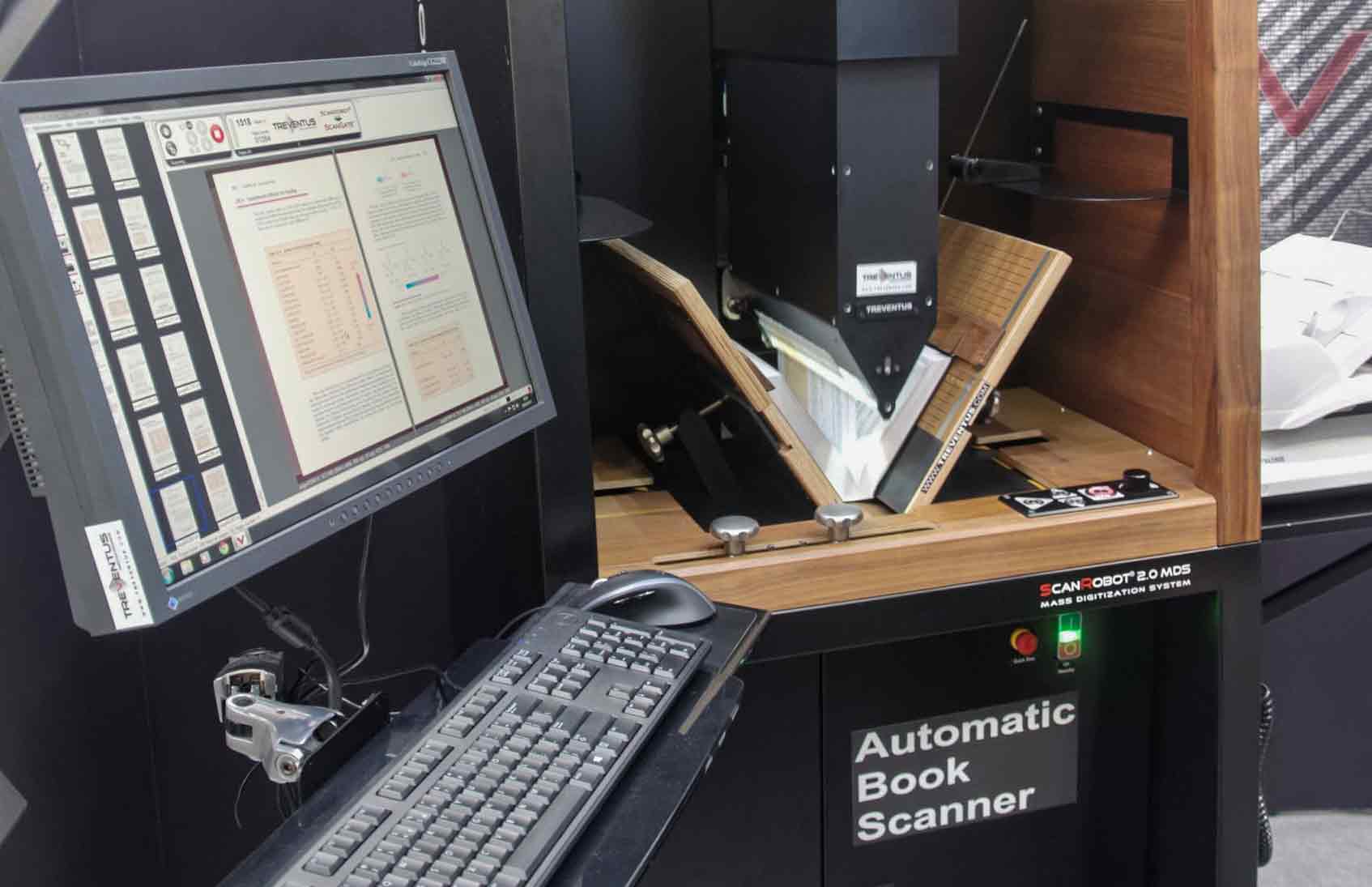
Court records reveal that Anthropic hired a company called Datamation to cut book bindings, scan pages, and discard originals. Although Datamation is named in the services agreement, legacy media has continued referring only to an unnamed “vendor,” leaving the contractor largely invisible in its reporting.
Public reporting, including several substacks, has exposed Anthropic Vice President Tom Turvey’s leading role in the company’s clandestine “Project Panama,” which was tasked with acquiring and digitizing massive book collections precisely because they were free from AI slop — followed by disposal of the originals.
The central question is not whether book content can be preserved through digitization — it can. The question is why companies are choosing a method that eliminates the slop-free original artifact, despite the risk of losing irreplaceable copies.
Libraries and archives have spent decades proving that digitization does not require the annihilation of the original record.
When organizations still choose destructive scanning, it’s not about efficiency — it’s about the deliberate and irreversible removal of the physical source. The critical result is not the preservation of history but the extraction of its content while eradicating the reference point against which it could later be verified.
Ownership and Control
The big debate over whether AI training is a copyright violation or fair use is valid, but it misses the larger question: Who should control humanity’s intellectual record when private companies can extract its contents, destroy the original records, and define the digital versions that remain?
This also exposes a deeper contradiction in information ownership: Consumers are no longer granted true ownership of the digital content they purchase, while corporations gain unprecedented power to access, alter, and remove it. Once the source artifact disappears, ownership becomes secondary to a more fundamental question: Who controls the surviving record?
A digital file preserves words. It does not preserve the evidential artifacts of history: handwritten notes, ownership records, printing differences, physical condition, or the material evidence of its origin.
Unlike printed records, digital data can be altered, corrupted, lost, or erased at a scale and speed impossible for physical records. Once the original is gone, there is nothing left to independently verify the surviving version.
Accountability Gap
The unanswered questions are becoming harder to ignore:
- Who decides which books are destroyed?
- What happens when originals no longer exist?
- Who controls the surviving digital record?
- Can digital archives be covertly altered?
- Are profits and speed destroying printed books?
- Are corporations becoming the gatekeepers of history?
- Does legal permission remove ethical responsibility?
- Will destructive scanning become the default?
The accountability gap extends beyond the destruction of original artifacts. It also raises questions about how this story has been reported, including legacy media’s (possible litigation based) reluctance to name Datamation, despite its identification in public court records.
New Gatekeepers of History
The loss of these artifacts raises a larger question: whether control over the surviving digital record will become a form of control over history itself.
AI industry leaders claim they are “preserving” humanity’s intellectual record, yet the destruction of source material exposes a troubling contradiction. Anthropic’s Turvey understands how these actions will be perceived by a public already deeply concerned about AI, yet he continues regardless.
The elimination of source artifacts fuels the perception that AI development is not simply about preservation but about controlling access to information and reshaping the historical record.
The greatest danger may not be that AI forgets or manipulates human history, but that it becomes the de facto authority over it — and the reason some of that history no longer exists.
Hashtag Picks
Anthropic Settles Book Piracy Case for $1.5B, Exposing Secret Project Panama
The author writes, “A federal judge on July 20th approved a $1.5 billion copyright settlement covering pirated books acquired by Dario Amodei (@DarioAmodei)-led Anthropic, closing the case that exposed the AI developer’s secretive Project Panama book-scanning operation. The final order arrived years after Anthropic’s founders concluded that books were among the most cost-effective sources for building a competitive large language model.”
Millions of Books Are Being Destroyed to Train AI — What Could Be Lost Forever?
From SemiVision: “AI companies are reportedly buying used books, out-of-print titles, and even rare historical works in enormous quantities. These books are not being sent to libraries or carefully preserved by collectors. Instead, they are shipped to industrial scanning facilities, where high-speed machines cut off their spines, feed the loose pages into scanners, convert the text into digital training data, and then discard, recycle, or shred what remains of the original books.”
Physical Books Have Become AI’s Newest Commodity
The author writes, “The latest disclosure in the artificial intelligence industry is arguably the most concerning, and it’s taking place on our bookshelves. According to recent reporting, AI firms are buying books in bulk, removing their bindings, scanning them, and then destroying the originals to create data used to train large language models. It’s a process called destructive scanning.”
The End of Reading Is Here
From The Atlantic: “Optimists once believed that universal literacy was inevitable. Now it seems that the age of reading might be a short anomaly in human history.”
Digital vs. Paper Documents: Pros, Cons, & When To Choose Each
The author writes, “In an ongoing debate about paper documents and digital documents, the latter seem to be winning, as most companies, agencies, and organizations are transitioning to a digital format. The reason is that electronic documents are accessible, cost-effective, and take up significantly less space. However, the benefits of paper documents can’t be overlooked, either, especially when they are still widely used. In many cases, they are still considered more official and safer than the digital ones.”
The Archive Becomes Infrastructure — But It Doesn’t Stop Being Memory
The author writes, “China’s new Five-Year Plan for archives reads like a blueprint for digital government. The more consequential question is who gets to write the standards underneath it.”
When Does Post-Production Editing of e-Books Cross the Line?
The author writes, “A recent article in The New York Times has ignited a debate over the morality of post-production changes made to e-books without the knowledge or consent of the author. E-book post-production changes, also known as ‘post-publication modifications,’ are edits, tweaks and adjustments made to the content of an e-book without the author’s knowledge or consent. Oftentimes, these stealthy post-production changes can significantly alter the author’s original work, leading some to question the morality of such changes being made without the author’s knowledge or consent.”
Digital Books wear out faster than Physical Books (2022)
The author writes, “Ever try to read a physical book passed down in your family from 100 years ago? Probably worked well. Ever try reading an ebook you paid for 10 years ago? Probably a different experience. From the leasing business model of mega publishers to physical device evolution to format obsolescence, digital books are fragile and threatened. For those of us tending libraries of digitized and born-digital books, we know that they need constant maintenance — reprocessing, reformatting, re-invigorating or they will not be readable or read. Fortunately this is what libraries do.”