Reintroduced Carnivore Impact On Yellowstone Ecosystems Still Coming Into Focus
PICKS are stories from many sources, selected by our editors or recommended by our readers because they are important, surprising, troubling, enlightening, inspiring, or amusing. They appear on our site and in our daily newsletter. Please send suggested articles, videos, podcasts, etc. to picks@whowhatwhy.org.
|
Listen To This Story
 |
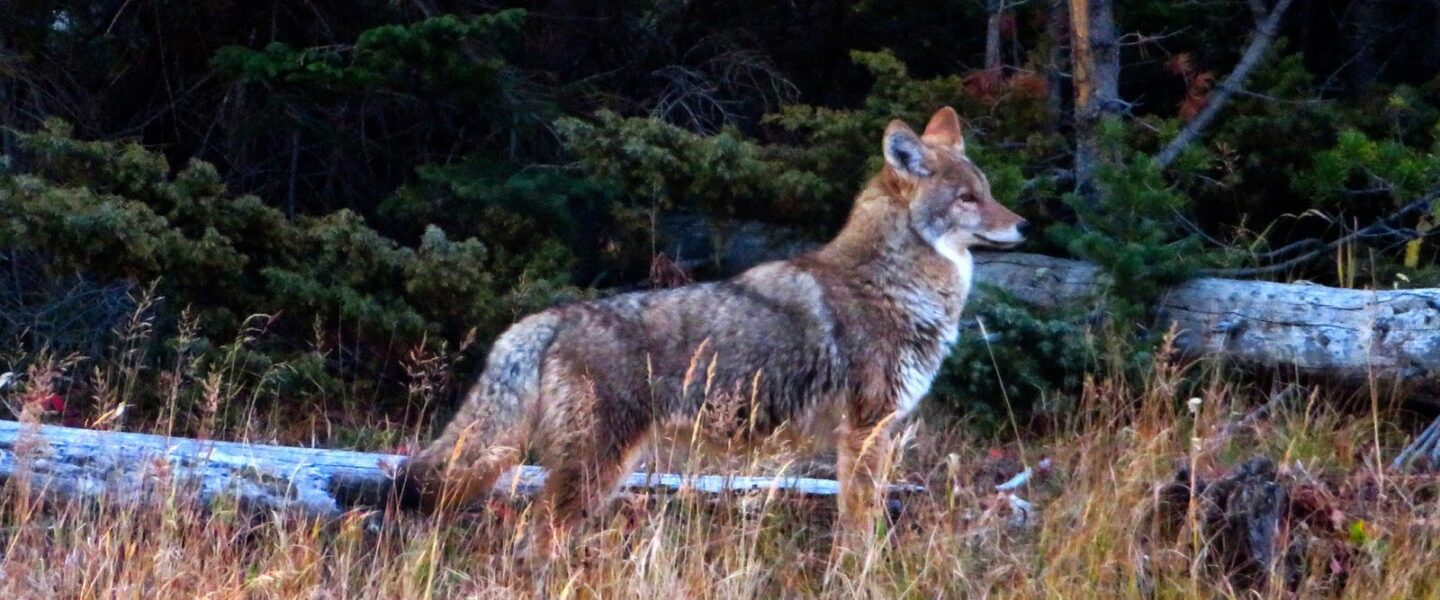
Reintroduced Carnivores’ Impact On Yellowstone Ecosystems Still Coming Into Focus (Maria)
The author writes, “When the US Fish and Wildlife Service reintroduced 14 gray wolves to Yellowstone National Park in 1995, the animals were, in some ways, stepping into a new world. After humans hunted wolves to near-extinction across the Western US in the early 20th century, the carnivore’s absence likely altered ecosystems and food webs across the Rocky Mountains. … Scientists are still debating the impact large carnivores have on vegetation and other animals, according to a new paper published this month.”
Hegseth Conscripts the Pentagon for Trump’s ‘Retribution Campaign’ (Russ)
The authors write, “After Donald Trump’s reelection last year, a retired Army general who’d been critical of the president in the past made a list of the ways that the incoming administration could come after him, should he speak out again. He identified three scenarios: a civil suit, an IRS audit, or a recall to active duty where, conceivably, he could face criminal charges in the military’s justice system. The retired general, speaking on the condition of anonymity out of fear of retaliation, recalled that exercise after Trump’s defense secretary, Pete Hegseth, said Monday that the Pentagon will investigate Mark Kelly, a Democratic senator from Arizona and retired Navy officer, for his role in making a controversial video reminding service members of their duty to disobey unlawful orders.”
Special Air Service War Crime Evidence Suppressed, Inquiry Hears (Sean)
From the BBC: “Two former heads of all UK Special Forces suppressed evidence of possible SAS war crimes, a former high-ranking officer has told a public inquiry in closed evidence sessions. The officer, who was among the most senior in special forces, said he had passed what he called ‘explosive’ evidence suggesting ‘criminal behaviour’ to the then-director special forces in 2011. He also told the inquiry that the subsequent director special forces, who took over in 2012, ‘clearly knew there was a problem in Afghanistan’ and failed to act. The claims come from testimony published on Monday by the Independent Inquiry relating to Afghanistan, which is examining allegations the SAS murdered detainees and unarmed civilians, including children, during operations.”
Conservative Judge Caught Inserting ‘Make-Believe’ Supreme Court Quote in Dissent (Reader Steve)
From Alternet: “Elections have consequences, and [last] Tuesday, Slate reports the liberal majority Wisconsin Supreme Court took a major step in striking down the state’s Republican gerrymandered map that disenfranchises Democratic voters. … But their decision drew dissent from the court’s conservative members, who used to hold a majority before frustrated Wisconsin voters installed a new liberal justice in a special election earlier this year. Conservative Justice Annette Kingsland Ziegler — now in the minority — argued that the use of a more balanced map would violate the US Constitution. She cited a 2022 Supreme Court decision, Moore v. Harper, for the proposition that state courts’ role in congressional redistricting is “exceedingly limited.’ ‘There is just one problem,’ said Stern. ‘Moore said no such thing. That quotation appears nowhere in the ruling.’”
Trump’s Pardon of Honduras’s Ex-President Shows Counter-Drug Effort Is ‘Based on Lies and Hypocrisy’ (Reader Jim)
The author writes, “He was a Latin American president accused of colluding with some of the region’s most ruthless narco bosses to flood the United States with cocaine. ‘[Let’s] stuff the drugs right up the noses of the gringos,’ the double-dealing politician once allegedly bragged. … The description might sound like a sketch of Venezuela’s authoritarian president, Nicolás Maduro, who Donald Trump’s administration has accused of being a ‘narco-terrorist’ kingpin and is trying to topple with a $50m bounty and a huge display of military might off the South American country’s Caribbean coast. But it is actually a portrait — painted by US prosecutors, no less — of the former Honduran president, Juan Orlando Hernández, who Trump last week pledged to pardon, despite the fact that Hernández was sentenced last year to 45 years in prison for allegedly creating ‘a cocaine superhighway to the United States.’”
A Surprisingly Powerful Tool to Make Cities More Livable (Dana)
From Mother Jones: “If you’ve spent any time on a roof, you know that it’s not especially pleasant up there — blazing in the summer, frigid and windy in the winter. Slap some solar panels up there, though, and the calculus changes: Shaded from gusts and excessive sunlight, crops can proliferate, a technique known as rooftop agrivoltaics. And because that hardware provides shade, evaporation is reduced, resulting in big water savings. … Long held in opposition to one another, urban areas are embracing elements of the rural world as they try to produce more of their own food, in community gardens on the ground and agrivoltaics up above. In an increasingly chaotic climate, urban agriculture could improve food security, generate clean electricity, reduce local temperatures, provide refuges for pollinators, and improve mental and physical health for urbanites, among other benefits.
Sunflowers May Be the Future of “Vegan Meat” (Mili)
The author writes, “A collaboration between Brazilian and German researchers has led to a sunflower-based meat substitute that’s high in protein and minerals. The new ingredient, made from refined sunflower flour, delivers excellent nutritional value and a mild flavor. Tests showed strong texture and healthy fat content, suggesting great potential for use in the growing plant-based food sector.”