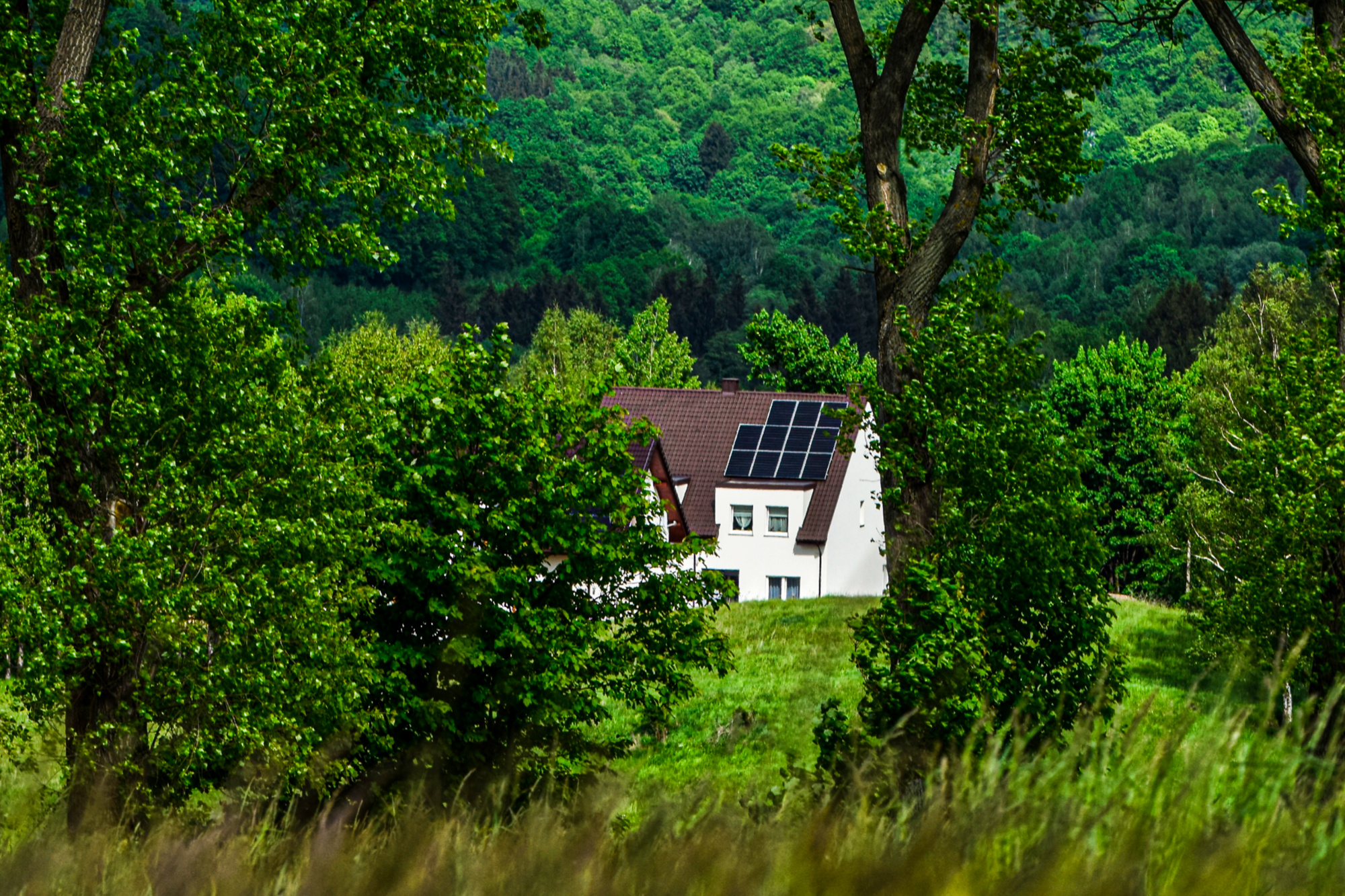
Power to the People: Small-Scale Solar Could Help Fight Rising US Utility Bills
PICKS are stories from many sources, selected by our editors or recommended by our readers because they are important, surprising, troubling, enlightening, inspiring, or amusing. They appear on our site and in our daily newsletter. Please send suggested articles, videos, podcasts, etc. to picks@whowhatwhy.org.
|
Listen To This Story
 |
Power to the People: Small-Scale Solar Could Help Fight Rising US Utility Bills (Maria)
The author writes, “If you feel like your electricity bill keeps climbing, you aren’t imagining it. Since 2020, U.S. residential energy prices have surged by about 30%, making power the largest household energy expense behind gasoline, according to the U.S. Energy Information Administration. But for residents like Alex Curtis [of Sunnyvale, CA], the days of feeling powerless against rising costs are coming to an end. Curtis is waging war on his electric bill, and his weapon of choice is a lightweight, thin-film solar panel.”
ICE Tried To Separate a San Francisco Mom From Her Baby. She Fought Back (Reader Steve)
From the San Francisco Chronicle: “Last May, the Trump administration approved arrests inside immigration courthouses as part of its maximalist strategy to ratchet up deportations. The unprecedented practice ensnared thousands of people showing up for their immigration proceedings and contributed to a historic rise in unlawful detention claims, known as habeas petitions. It also sparked at least five federal lawsuits, two of which centered on what was happening inside San Francisco’s immigration courts.”
Political Loser Perceptions Alter White American Views on Wealth Distribution (DonkeyHotey)
The author writes, “White Americans who feel they are on the losing side of politics are more likely to oppose economic redistribution programs. This effect only appears when people compare their political standing directly to that of racial minorities. The findings were published in the journal Research and Politics. Economic redistribution involves transferring wealth or income within a society, usually through taxation and social welfare programs. In many developed nations, high levels of income inequality usually lead to increased public demand for these programs. The United States is a notable exception to this trend. The country features high economic inequality, yet public support for government redistribution remains relatively low.”
Video: Study Shows Many Military Communities Becoming ‘News Deserts’ (Al)
From CNN: “Brianna Keilar speaks with Thomas Brennan from the nonprofit newsroom The War Horse and Zach Metzger from Northwestern’s Medill School of Journalism. They discuss the implications of their study showing many military communities are becoming ‘news deserts.’”
Sewage Is Threatening Coral Reefs Around the World, Even in Marine Protected Areas (Laura)
From Inside Climate News: “A new study finds that more than 70 percent of these protected zones are exposed to high levels of wastewater pollutants, making corals and other marine life more vulnerable to climate change.”
Wetware AI: Living Brain Cells Trained to Run Chaos Math (Sean)
The author writes, “The line between biology and computer science just got even blurrier. Researchers have successfully trained living rat neurons to perform complex machine learning tasks. The study integrated cultured neuronal networks into a ‘reservoir computing’ framework. Using a technique called FORCE learning, the team taught these biological circuits to generate intricate mathematical patterns — including the chaotic Lorenz attractor — proving that living ‘wetware’ can serve as a functional, real-time computational resource.”