As the seizing of Maduro reverberates around the globe, Noriega’s toppling offers few clear lessons for successful “regime change.”
|
Listen To This Story
 |
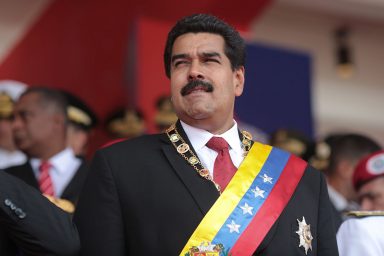
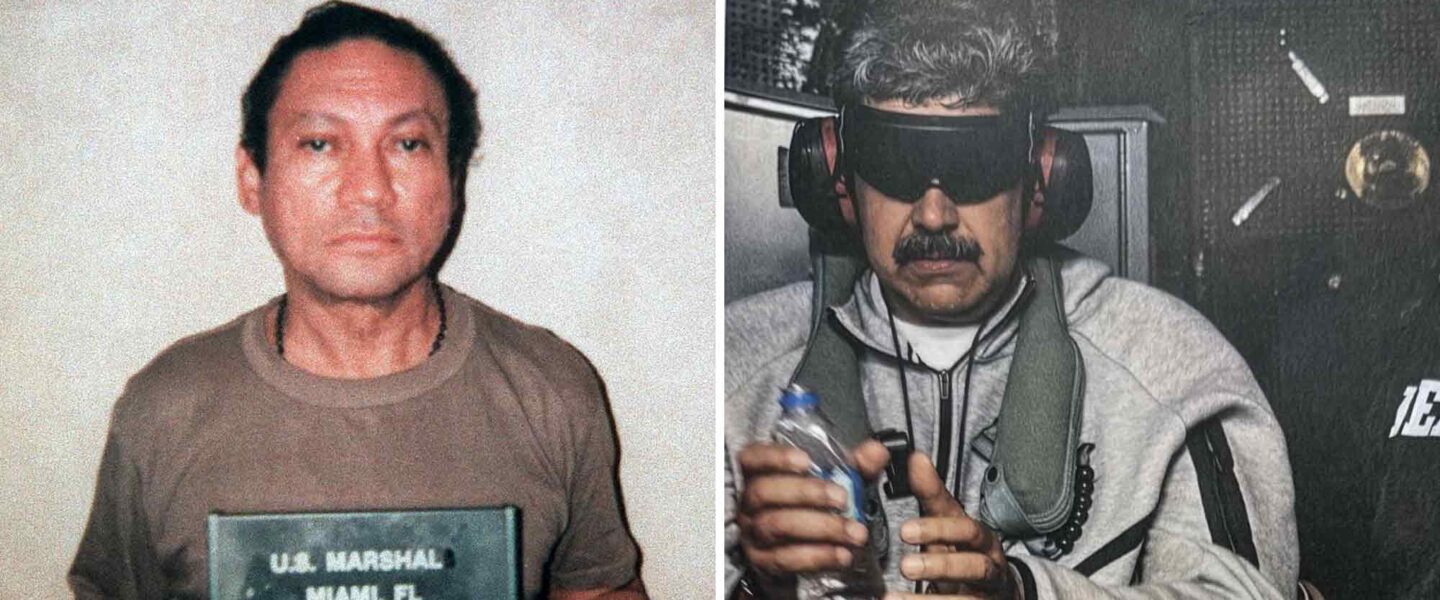
Before Nicolás Maduro was seized by US troops and spirited out of Venezuela, Panamanian strongman Manuel Noriega ranked as the last sitting Latin American head of state to be toppled by the United States and forced to face American justice on charges of drug dealing.
As such, Noriega’s successful ousting in 1989 might offer a template for a post-Maduro Venezuela.
But that’s unlikely. In fact, Noriega’s downfall illustrates why the apprehension of the Venezuelan leader may prove a far riskier gamble.
To topple Noriega, some 26,000 US troops invaded and took physical control of the Central American state as part of what the Defense Department dubbed Operation Just Cause, a quick and decisive action avoiding the later quagmires the US encountered in Somalia, Afghanistan, and Iraq.
The troops included 10,000 serving men and women already in place as part of the US Southern Command, hosted by Panama, a far less populous country than Venezuela and capable of efficiently managing a transition. The way Noriega’s capture was carried out made it clear that the intention was to put Panama on a firmer diplomatic footing and clear the way for eventual democratic elections. The current situation in Venezuela is far less clear.
Maduro and his wife, Cilia Flores, were detained in an in-and-out surgical operation that has left the Venezuelan regime in place, in the belief that its remaining leaders would be intimidated to a degree that they would bow to American demands.
In 2023, Venezuela’s opposition leader, María Corina Machado, won 93 percent of the opposition’s primary before she was barred from running by the government-backed Supreme Court. Her named successor ran for the opposition in the 2024 presidential election, but the Maduro administration falsified the results of the election in favor of Maduro.
While in hiding, Machado won the Nobel Peace Prize for her efforts to promote democracy in Venezuela. Two sources close to the White House told The Washington Post that Trump viewed Machado’s acceptance of the prize as an “ultimate sin.”
“If she had turned it down and said, ‘I can’t accept it because it’s Donald Trump’s,’ she’d be the president of Venezuela today,” one source said. Now, Machado says, Trump “deserved” the prize and she’d like to share it with him.
As things stand, however, Trump has suggested that Machado does not have enough “support” in the country to run a post-Maduro government.
That raised the question of what kind of support Trump was thinking about.
A likely answer is the Venezuelan army, which was the real power behind Maduro and which enabled him to falsify the results of the July 2024 presidential elections. Trump’s announcement that he is perfectly happy to have the current Venezuelan government continue as is — minus the recalcitrant Maduro — also suggests that Trump may be counting on the Venezuelan army to continue to run things in a way that serves the Trump administration’s interests.
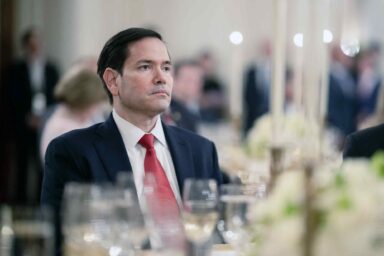
Secretary of State Marco Rubio has vaguely alluded to elections in Venezuela at some unspecified time in the future. Trump has made it clear that that time will not come until the US gets its oil — that is, until the oil-rich nation’s extraction and transport infrastructure is rebuilt and effectively under US control.
The big question is whether Venezuela’s problems were actually due to Maduro’s failings or whether they were due to a larger self-serving group who supported Maduro behind the scenes. If that is the case, straightening out Venezuela may prove more complicated than Trump expects.
A key consideration: During Trump’s first presidency, he tried, but failed, to fracture the Venezuelan regime when he supported Juan Guaidó, an opposition politician who challenged Maduro in the 2018 election.
Senior Venezuelan officials and military commanders, afraid they would pay the price for their past support of Maduro if he was ousted from power, remained united behind him.
To succeed this time, Trump will have to offer senior regime officials and the military command assurance that they will be shielded from retribution and that they will be allowed to retain at least some of their ill-gotten assets.
To be sure, a US armada remains offshore, ready to pounce if the regime under newly installed interim President Delcy Rodriguez refuses to play ball. Trump threatened to launch “a second wave” attack if Rodriguez refuses, but has suggested that further military action would probably not be necessary.
The Panama parallel offers few clues as to how that might play out. Back in 1989, the United States moved quickly to install a new Panamanian government and allow for post-Noriega elections four years later. In fact, Panamanian opposition politician Guillermo Endara was sworn in as president on a US military base on the first night of the invasion — even before Noriega had been apprehended.
The US invaded Panama, as in the case of Venezuela, after the regime was believed to have sabotaged election results to prevent the opposition from coming to office. But, in contrast to Venezuela — where the Trump administration is relying on force, coercion, and intimidation to impose its will — the US went to great lengths to win public backing for its military operation and the US-installed Panamanian government.
US military helicopters ferried popular politicians across the country to cement the support of a public that was generally happy to say goodbye to Noriega but was leery of US intervention.
However, unlike Panama, Venezuela is a country with a strong military, widespread public possession of weapons, and a proud history centered on the 19th-century liberation fighter Simón Bolívar.
Panama never had Venezuela’s resources, including the world’s largest oil reserves and rare earth minerals, although it did have the eponymous canal, which for a time was one of the world’s foremost maritime chokepoints. Yet, US control of the canal was not threatened at the time of the US invasion.
Venezuela, still revered across South America as the birthplace of Bolivar, the liberator of South America from Spanish imperial rule, may be a harder nut to crack.
James M. Dorsey is an adjunct senior fellow at Nanyang Technological University’s S. Rajaratnam School of International Studies in Singapore, contributing editor to WhoWhatWhy, and the author of the syndicated column and podcast, The Turbulent World with James M. Dorsey.